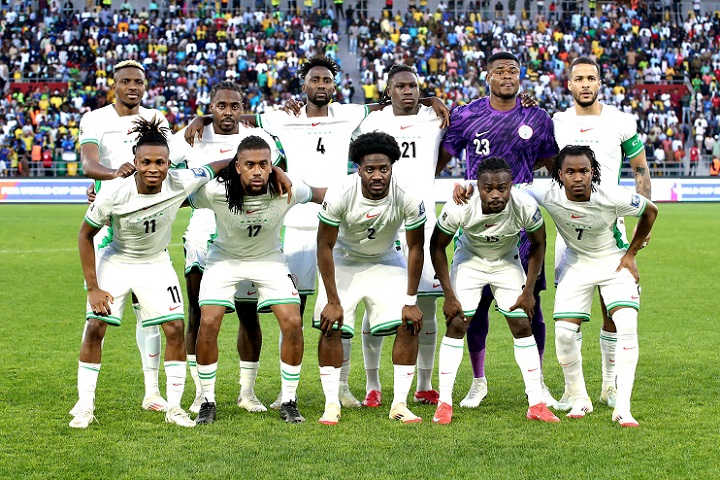
THIS DAWN — World football governing body FIFA has formally acknowledged Nigeria’s petition against the Democratic Republic of Congo (DR Congo) over alleged player eligibility violations and confirmed that disciplinary proceedings are underway. Contrary to reports suggesting the case has already been dismissed, FIFA clarified that no final verdict has been issued, and the matter remains under active review.

Nigeria’s Allegation
The Nigeria Football Federation (NFF) lodged a formal complaint after its recent encounter with DR Congo, raising concerns about the eligibility of several Congolese players. According to the NFF, these players had switched national allegiance but failed to meet all requirements under Congolese domestic law, which reportedly does not recognize dual citizenship.
Nigeria argues that FIFA was misled into clearing the players based solely on their possession of Congolese passports, without adequate verification of compliance with local nationality laws. The NFF insists that this oversight undermines the integrity of the competition and calls for corrective action.
DR Congo’s Response
The Congolese Football Federation has dismissed Nigeria’s protest, describing it as an attempt to secure victory “from the back door.” Officials in Kinshasa maintain that all players fielded against Nigeria were duly cleared by FIFA prior to the match and that the complaint is baseless.
DR Congo’s position underscores confidence in FIFA’s existing vetting process, with the federation insisting that Nigeria’s petition is a distraction from on-field performance.
FIFA’s Action
FIFA confirmed that disciplinary proceedings have been launched to investigate the claims. The governing body is conducting a detailed review of the players’ eligibility, including the documentation submitted and the interpretation of Congolese nationality laws.
While acknowledging the seriousness of the allegations, FIFA has not provided a specific timeline for its ruling. Officials emphasized that the process must be thorough to ensure fairness and transparency.
Potential Implications
If FIFA determines that DR Congo breached eligibility rules, the sanctions could be significant. Possible penalties range from fines and warnings to match forfeiture or outright disqualification from the intercontinental playoffs. Such a ruling could potentially reinstate Nigeria into the competition, reshaping the playoff landscape.
Analysts note that eligibility disputes are rare but carry high stakes, particularly in international tournaments where the margins between qualification and elimination are slim. A ruling in Nigeria’s favor would not only alter the sporting outcome but also set a precedent for stricter enforcement of nationality laws in football.
Broader Context
The case highlights ongoing challenges in global football governance, particularly around player nationality and eligibility. While FIFA regulations provide a framework for switching national allegiance, domestic laws often complicate the process. Countries with restrictions on dual citizenship, such as DR Congo, present unique legal hurdles that can clash with FIFA’s broader eligibility criteria.
Nigeria’s petition underscores the importance of aligning international football regulations with national legal systems to avoid disputes that can disrupt competitions. It also reflects the growing willingness of federations to challenge perceived irregularities through formal channels rather than accepting outcomes at face value.
Reactions
Within Nigeria, the petition has been met with cautious optimism. Supporters argue that the NFF is right to defend the country’s interests and ensure fair play. Critics, however, warn against overreliance on legal challenges, urging the team to focus on improving performance on the pitch.
In DR Congo, the complaint has sparked frustration, with officials and fans dismissing it as an attempt to undermine their progress. The federation’s firm stance suggests it will vigorously defend its players’ eligibility throughout the proceedings.
Conclusion
As FIFA continues its investigation, the football world awaits a ruling that could have far-reaching consequences for both Nigeria and DR Congo. The case underscores the delicate balance between international regulations and domestic laws, as well as the high stakes of player eligibility in global competitions.
For now, speculation about the outcome remains premature. FIFA’s acknowledgment of Nigeria’s petition confirms that the matter is being taken seriously, but until a verdict is delivered, both nations must prepare for all possible scenarios.