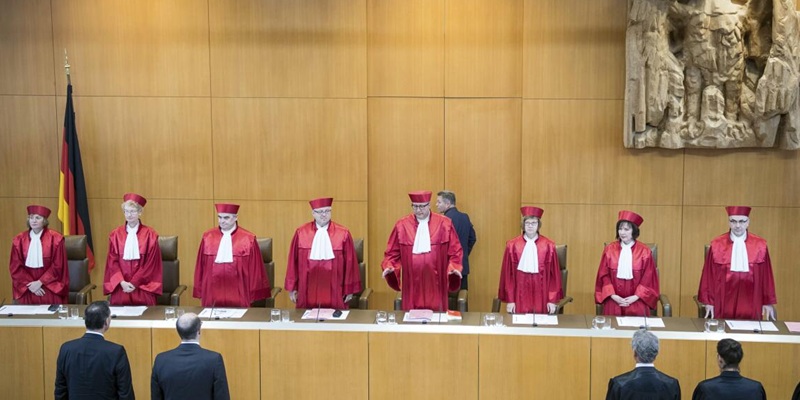
TDThe Federal Court of Justice (BGH) in Karlsruhe has moved closer to ending one of Germany’s most protracted cultural heritage disputes involving experiences under Nazi regime.

On March 13, the Court heard arguments in the case concerning the Annemarie Kusserow archive.
It involved a collection of over 1,000 documents and photographs chronicling the persecution of Jehovah’s Witnesses under the Nazi regime.
The Court urged both sides to reach an “amicable agreement” by May 22, warning that if no settlement is achieved, it will impose a judicial resolution.
At the center of the dispute is the legacy of Annemarie Kusserow, who, along with her family, endured relentless persecution during the Second World War.
Her brothers Wilhelm and Wolfgang were executed for their refusal to renounce their faith or support the Nazi war effort.
Among the archive’s most moving pieces is Wolfgang’s final letter to his family, written shortly before his execution in 1942.
It was a document that has become emblematic of the family’s steadfastness and moral courage.
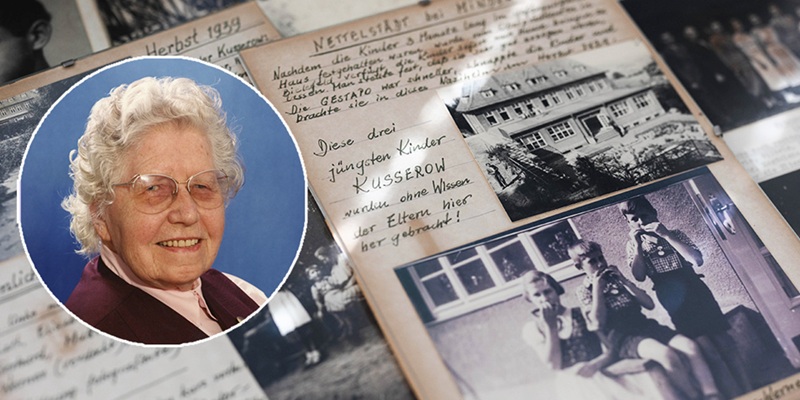
Chronicles of the Nazi Era by Annemarie Kusserow
Annemarie, who died in 2005, meticulously compiled the archive to preserve her family’s testimony of faith and integrity under Nazi regime.
In her will, she explicitly directed that the collection be entrusted to Jehovas Zeugen in Deutschland.
Yet, in defiance of her wishes, a relative sold the archive to the Bundeswehr Military History Museum in Dresden.
The museum has since refused to return the materials, sparking a legal battle.
The battle has stretched on for more than a decade and drawn international attention, including coverage in The New York Times and jw.org.

Appropriate Custodian — Military Museum or Jehovah’s Witnesses?
During the hearing, the BGH underscored the archive’s exceptional historical and moral significance.
The Court questioned whether a military museum was an appropriate custodian.
This was given the fact that the Kusserow family were conscientious objectors who suffered at the hands of the Nazi state.
In its remarks, the Court also referenced a parliamentary resolution recognizing the persecution of Jehovah’s Witnesses under the Third Reich.
That resolution included provisions for a national memorial, which is scheduled to be inaugurated in June 2026, further highlighting the importance of honoring the Kusserow family’s legacy.
Legal experts suggest that the Court’s comments signal a growing inclination to uphold Annemarie Kusserow’s final wishes.
For Jehovah’s Witnesses, the archive is not merely a collection of papers and photographs—it is a sacred record of faith, resilience, and integrity in the face of oppression.
Historical Values of the Nazi Experience
For historians, it represents a vital resource that illuminates the experiences of a religious minority often overlooked in mainstream narratives of Nazi persecution.
The case has become emblematic of broader debates in Germany about the rightful stewardship of historical memory.
Should archives documenting persecution be housed in institutions aligned with the persecutors, or should they be entrusted to communities that embody the victims’ legacy?
The BGH’s forthcoming decision may set a precedent for how Germany handles contested heritage in the future.
For further coverage, see Die Welt: BGH Examines Dispute Over Family Archive of Persecuted Jehovah’s Witnesses.