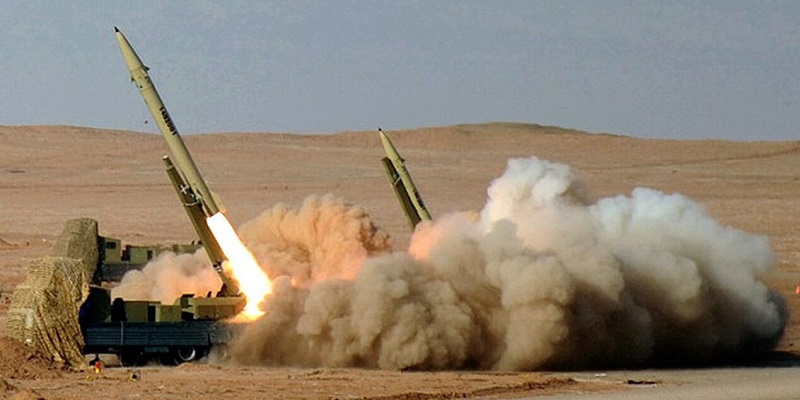
TDIran’s recent ballistic missile strike on the US-UK base at Diego Garcia in the Indian Ocean has sent shockwaves across the globe, especially NATO countries and Europe.

Not only because it marks the first direct attack on the strategically vital base, but because it demonstrates a missile range far beyond what Tehran previously claimed.
A Range That Changes Everything
Diego Garcia lies 3,800 kilometers (2,361 miles) from Tehran.
Until now, Iran had insisted its missiles could only reach 2,000 kilometers (1,240 miles).
The strike proves otherwise, revealing that Iran’s missile program is significantly more advanced than acknowledged.
This revelation has immediate implications for Europe:
- London — 4,425 km (≈ 2,750 miles)
- Paris — 4,200 km (≈ 2,610 miles)
- Berlin — 3,541 km (≈ 2,200 miles)
All three capitals are now demonstrably within Iranian missile range.
Strategic Shock for NATO
The strike challenges long-held assumptions about Iran’s military limits.
NATO allies, who had previously considered themselves outside the reach of Iranian missiles, must now contend with the reality that their major cities are vulnerable.
Security analysts warn that this changes the strategic calculus.
For decades, NATO’s deterrence posture toward Iran was based on the belief that Tehran’s missile arsenal was a regional threat, confined to the Middle East and parts of Eastern Europe.
That assumption has now collapsed.
The ability to strike deep into Western Europe means Iran could, in theory, threaten NATO’s political and economic centers directly.
London, Paris, and Berlin are not just symbolic targets — they are hubs of finance, diplomacy, and military coordination.
Implications for Global Security
The Diego Garcia strike is more than a military provocation; it is a geopolitical message.
By demonstrating extended-range capabilities, Iran is signaling that it can project power far beyond its borders.
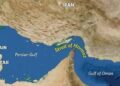
- Energy Security: Europe, already reeling from high energy prices due to instability in the Strait of Hormuz, now faces the added risk of direct attacks on its infrastructure.
- Diplomatic Fallout: European governments must reassess their engagement with Tehran, balancing calls for diplomacy with urgent demands for stronger defense measures.
- Military Posture: NATO may be forced to expand missile defense systems across Western Europe, a costly and politically sensitive move.
A Wake-Up Call for NATO
The strike on Diego Garcia underscores how quickly the balance of power can shift.
Iran’s missile program, long underestimated, now appears capable of reaching targets once thought safe.
For NATO, this is a wake-up call: complacency is no longer an option. The alliance must prepare for the possibility that Iran’s next demonstration of force could be aimed not at a remote island base, but at the heart of Europe itself.
In short, Iran’s reach is longer than advertised. Europe is now clearly within striking distance.
The Diego Garcia strike has shattered illusions about Iran’s limits, raising the threat level for NATO allies and global security to unprecedented heights.
The message is clear: Tehran’s missiles can no longer be dismissed as a regional problem. They are a global threat.
In the words of David Collier, “Iran just fired missiles at Diego Garcia – 2,361 miles from Tehran.
“So yeah, tell me again how Iran is not a threat!”