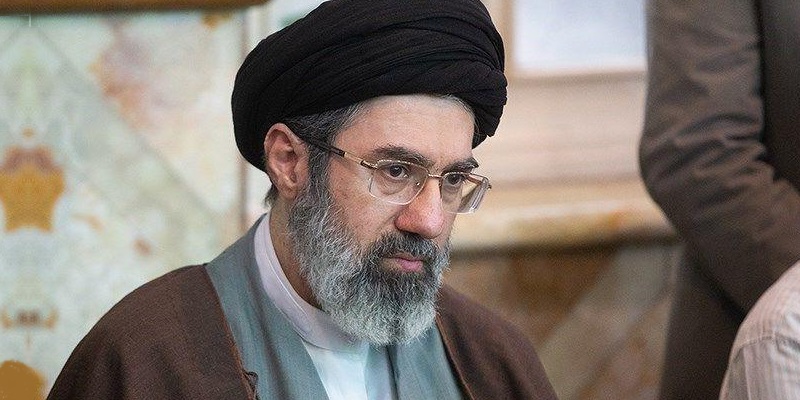
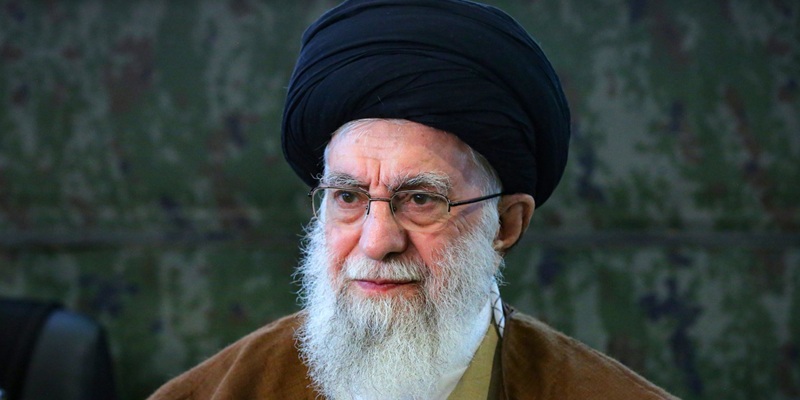
TDIran has entered a new and uncertain political era following the assassination of its longtime Supreme Leader Ali Khamenei, with his son Mojtaba Khamenei swiftly named as the country’s new Supreme Leader.

The transition came after Iranian authorities confirmed that the elder Khamenei had been killed.
Khamenei was killed during the first wave of the United States’ and Israeli joint military strikes against Iran.
The development has triggered shockwaves across the Middle East, raising fears of rapid escalation in an already volatile regional conflict.
Emergency Succession as Assembly of Experts Acts
Iran’s powerful Assembly of Experts, the body constitutionally responsible for appointing the Supreme Leader, convened an emergency session shortly after the assassination was confirmed.
Following deliberations, the assembly endorsed Mojtaba Khamenei as the new leader of the Islamic Republic of Iran.
His elevation represents an unprecedented moment in the history of the Islamic Republic.
It effectively establishes a dynastic transition within a system originally designed to avoid hereditary succession.
Political analysts note that Mojtaba had long been viewed as a powerful figure operating behind the scenes within Iran’s political establishment.
Close Ties to Iran’s Security Establishment
Observers say Mojtaba Khamenei maintains strong relationships with the Islamic Revolutionary Guard Corps (IRGC).
IRGC is a powerful military and political institution that plays a central role in Iran’s domestic security and regional strategy.
For years, he has been considered one of the most influential clerics within Iran’s inner political circle despite holding no formal executive position.
His supporters argue that his familiarity with Iran’s security apparatus and political networks could ensure continuity at a time of national crisis.
Critics, however, have questioned the transparency of the succession process.
They, thereby, warned that the transition could concentrate even more power within a narrow ruling elite.
Regional Shockwaves After Assassination
The assassination of Ali Khamenei has sent shockwaves throughout the Middle East, with several governments raising their security alert levels.
Iranian officials have vowed retaliation against what they describe as an act of aggression by foreign powers.
Analysts warn that the situation could escalate quickly, particularly if Iran launches counter-operations against U.S. or Israeli interests in the region.
Neighboring states have reportedly strengthened border security and increased military readiness amid fears that the confrontation could spread beyond Iran’s borders.
Global powers and diplomatic actors have meanwhile called for restraint in order to prevent the crisis from spiraling into a broader regional war.
Mixed Reactions Inside Iran
Within Iran itself, the announcement of Mojtaba Khamenei’s leadership has generated sharply divided reactions.
In Tehran, supporters of the government gathered in rallies pledging loyalty to the new Supreme Leader and condemning the killing of his father.
However, critics and opposition voices have raised concerns about the legitimacy of the succession, arguing that the rapid appointment leaves little room for transparency or debate.
Human rights organizations have also expressed concern that the leadership transition could usher in a more hardline political environment.
Leadership Test Begins Immediately
Political observers say Mojtaba Khamenei faces an immediate test of authority as he takes control during one of the most dangerous periods in Iran’s modern history.
He must now simultaneously:
-
Manage the political fallout from his father’s assassination
-
Respond to escalating military pressure from foreign powers
-
Maintain internal stability amid growing public scrutiny
The coming weeks will likely determine how firmly he consolidates power within Iran’s political system.
A Defining Moment for the Region
The assassination of Ali Khamenei and the rapid elevation of Mojtaba mark a historic turning point for Iran and the wider Middle East.
Currently, tensions are already high and retaliation threats are looming in the horizon.
Analysts warn that decisions taken in Tehran in the days ahead could reshape the geopolitical balance of the region.
For now, the world watches closely as Iran’s new Supreme Leader steps into power under the shadow of conflict and uncertainty.
Israel’s Warning
Meanwhile, Israel has warned that whoever is chosen as the next Iranian Supreme Leader will be considered a “target for elimination” from the moment of appointment.
Israel’ warning was considered as one of the most uncompromising statements yet in the ongoing confrontation with Tehran.
Israel declared that it is not only fighting the current regime but is prepared to confront any successor chosen by Iran’s Assembly of Experts.
The warning, it was understood, is meant to send a clear message: any replacement regime will face the same fate as the current leadership.