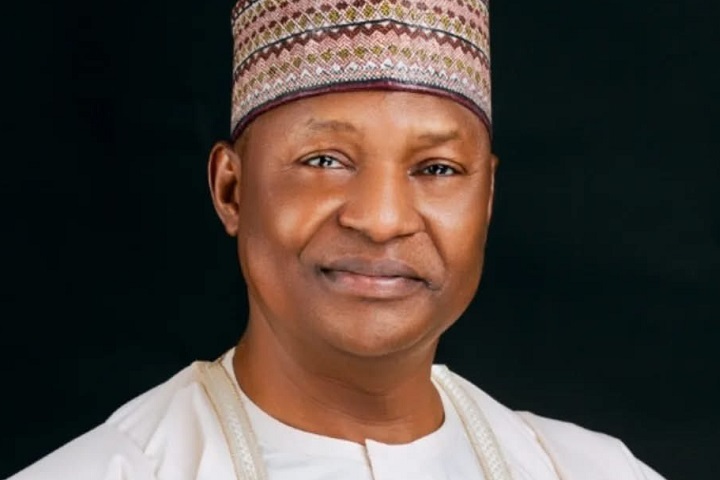
THIS DAWN — Former Attorney-General of the Federation Abubakar Malami (SAN) has been released on bail.

On January 7, 2026, the Federal High Court in Abuja granted him, his son Abdulaziz Malami, and his wife Asabe Bashir bail in the sum of ₦500 million each, with strict conditions attached.
A video footage seen by This Dawn showed Malami, his wife, and son arrive Kebbi with a private jet to a heroic welcome after meeting the N1.5 billion bail conditions imposed by the court.
Malami’s Bail Conditions and Implications
Malami, alongside his son Abdulaziz and wife Asabe Bashir, faces a 16-count charge filed by the Economic and Financial Crimes Commission (EFCC) over alleged money laundering and illicit acquisition of properties valued at approximately ₦212 billion.
Justice Emeka Nwite presided over the case, balancing the seriousness of the allegations with the constitutional right of the defendants to bail.
The court imposed stringent bail conditions to ensure compliance and prevent obstruction of justice:
- ₦500 million bail bond each: Malami, his son, and wife must each provide ₦500 million, totaling ₦1.5 billion.
- Two sureties per defendant: Each surety must own landed property in Abuja’s high-brow districts—Asokoro, Maitama, or Gwarinpa. Title documents must be submitted to the court for verification.
- Passport surrender: All defendants must deposit their international passports and travel documents with the court registry.
They are barred from traveling outside Nigeria without judicial permission.
- Affidavit of means: Sureties must provide two recent passport photographs and depose to an affidavit of means, confirming their financial capacity.
- Custody until perfection: The defendants will remain in custody until all bail conditions are fully met.
EFCC’s Position
The EFCC opposed bail, arguing that Malami could interfere with witnesses and obstruct justice if released.
Prosecutors emphasized the gravity of the allegations, which involve money laundering, illicit enrichment, and questionable property acquisitions.

Despite these objections, Justice Nwite ruled that bail was necessary “in the interest of justice”.
He stressed that Nigerian law entitles defendants to bail unless compelling reasons exist to deny it.
The EFCC’s charges center on:
- Illicit acquisition of properties: Alleged ownership of 57 properties valued at over ₦213 billion.
- Money laundering: Accusations of laundering ₦8.7–₦9 billion through proxies and family members.
- Abuse of office: Allegations that Malami used his position as AGF to enrich himself and associates.
The court has already ordered the interim forfeiture of 57 properties linked to Malami and his family, pending trial outcomes.
Implications of Bail
For Malami
- Temporary relief: Bail allows Malami to prepare his defense outside custody.
- Reputational damage: Allegations of corruption and money laundering tarnish his legacy as Nigeria’s chief law officer.
- Legal battle ahead: He must still face trial, with EFCC determined to prove its case.
For EFCC
- Test of credibility: The case is a high-profile test of EFCC’s ability to prosecute powerful figures.
- Public scrutiny: Nigerians will closely monitor whether EFCC secures convictions or the case collapses under political pressure.
For Nigeria’s Judiciary
- Balancing act: The judiciary must demonstrate independence, ensuring fair trial while resisting political influence.
- Precedent-setting: The case could set a precedent for how corruption allegations against top officials are handled.
Broader Context
Malami’s case comes amid Nigeria’s intensified anti-corruption drive.
President Bola Tinubu’s administration has pledged to strengthen accountability, and prosecuting a former AGF signals seriousness.
However, critics argue that selective prosecution remains a concern, with political calculations often influencing who faces trial.
The bail granted to Abubakar Malami, his son, and wife marks a significant development in Nigeria’s anti-corruption landscape.
While the stringent conditions reflect judicial caution, the case underscores the challenges of prosecuting high-profile figures.
As the trial proceeds, Nigerians will watch closely to see whether justice is served or whether the case becomes another symbol of impunity.
For now, Malami remains free under strict bail terms, but the allegations of ₦9 billion money laundering and illicit property acquisitions loom large over his future.