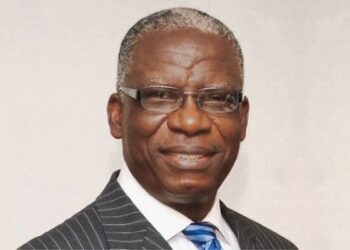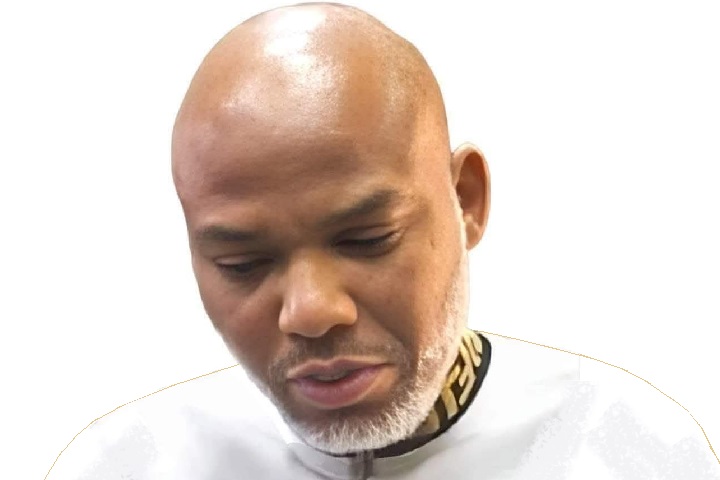
THIS DAWN — A former federal commissioner at the Public Complaints Commission (PCC), Chief Obunike Ohaegbu, has reacted sharply to the life sentence handed to Indigenous People of Biafra (IPOB) leader Mazi Nnamdi Kanu.

Chief Ohaegbu stated that the outcome was a direct consequence of decisions taken by Mazi Kanu himself and the wider culture of enabling extremism in parts of the South-East.
In an emotional reflection, Ohaegbu said the aspect of the case that “pains” him most is a truth many supporters refuse to confront.
He noted that Kanu was defended by some of Nigeria’s most respected legal heavyweights.
The legal heavyweights include:
- Dr. Onyechi Ikpeazu,
- Chief Echezona Etiaba,
- Chief Kanu Agabi and,
- Chief Mike Ozekhome, all Senior Advocates of Nigeria.
Yet, he “dismissed them” at the height of the trial.
According to Ohaegbu, the decision effectively ended any meaningful defence in favour of Nnamdi Kanu.
“Drama was coming. Defence was over. The opportunity for justice had been thrown away,” he said.
Ohaegbu recalled the moment Chief Agabi publicly announced that their legal services had been terminated.
He stressed that criminal defence requires strategic dismantling of the prosecution’s case, not theatrics.
“These Senior Advocates would have dismantled the prosecution’s case piece by piece,” he argued.
“But not with Nnamdi Kanu. He preferred a public performance over a legal defence,” he regretted.
How Kanu shot himself in the foot
Ohaegbu said that Kanu’s refusal to challenge the evidence left the court with only one legal conclusion: that the case had been proven.
He criticised what he described as a growing tendency to attribute the conviction to ethnic persecution while ignoring the defendant’s own actions.
“None of those shouting ‘because he is Igbo’ advised him to open his defence,” he noted.
He also drew attention to the violence attributed to Unknown Gunmen (UGM) in the region, referencing discussions by his brother, Ikechukwu Onyia.
Mr. Onyia had linked the insecurity to both spiritual and communal complicity.
He criticised communities alleged to have once celebrated UGM before suffering devastating consequences.
“The people of Orsumoghu in Ihiala LGA once invited UGM, celebrated their arrival, welcomed them, glorified them.
“They now hold thanksgiving that these men have finally been driven out after destroying homes, crippling livelihoods, destabilising families, and leaving the community in ruins that may take decades to rebuild.
“The hypocrisy is painful. We cannot build a prosperous future while glorifying those who destroy our land,” he said.
Ohaegbu concluded with a stark message to the South-East: Never again should criminality be defended on ethnic grounds or elevated under the banner of freedom.
“We cannot blame the world for the consequences of our own silence and complicity,” he surmised.