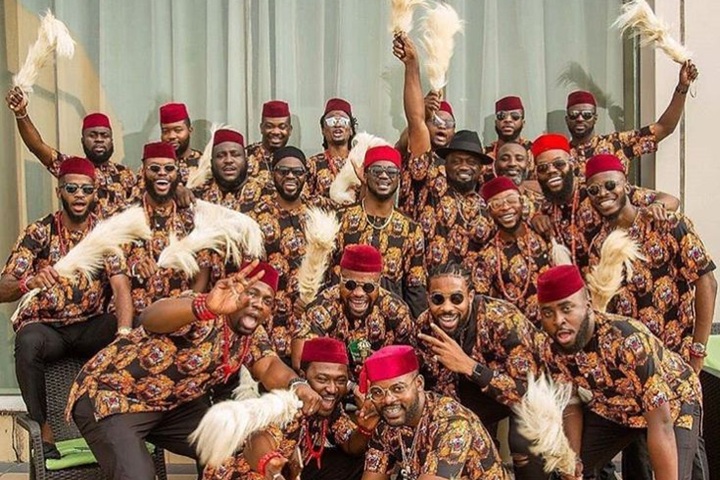
THIS DAWN — In a widely circulated essay, public commentator Maazị Tochukwu Ezeoke, Ichie Onye Njenje, has urged the Igbo people to distinguish between their ancient ethnic identity and the political label “Biafra,” arguing that the latter has outlived its historical function.

Maazị Ezeoke’s call came just as Peter Omonua, in a recent essay titled “Exclusion and Ostracization: Ndigbo Should Negotiate Settlement and Craft Exit Strategy”, reignited debate over ostracisation and marginalization of the Igbo people in Nigeria.
Omonua contended that decades of exclusion from key national decision-making positions, coupled with systemic ostracization, have left Ndigbo with limited options.
He called for a pragmatic reassessment of Igbo participation in the Nigerian project, including the possibility of negotiating a settlement and crafting an exit strategy.
On his part, in his article titled “We Are Ndi Igbo, Not Biafrans: A Political Name Has Served Its Purpose,” Ezeoke noted that the Igbo identity predates both colonial Nigeria and the Biafran state declared during the Nigerian Civil War.
He, therefore, contended that “Igbo” should remain the central marker of who the people are, not Biafra.
Igbo Identity Rooted in Antiquity
Ezeoke highlights archaeological findings from Igbo-Ukwu, Nsukka, and Afikpo to emphasize the deep historical roots of the Igbo civilization.
He described it as an indigenous culture that flourished millennia before colonial cartographers coined the name “Biafra.”
He also noted that when European explorers first encountered the Igbo in the 15th century, they attempted various spellings such as “Eboe” and “Ibo”.
However, that has always been in reference to a community that already knew itself as Igbo.

Biafra as a Political Invention
According to Ezeoke, the term “Biafra” originated in European atlases between the 15th and 19th centuries, used to label a coastal region that included parts of present-day Cameroon, Equatorial Guinea, and the eastern Niger Delta.
He stressed that the name was never exclusive to the Igbo ethnic group.
He further explained that Eastern Nigeria adopted the name “Republic of Biafra” in 1967 to unite its multi-ethnic population under a neutral, non-ethnic banner during a period of pogroms and political instability.
These included the Igbo, Efik, Ibibio, Ijaw, and others.
“Biafra was a wartime necessity, not an ethnic origin,” Ezeoke writes.
Concerns Over Contemporary Use of ‘Biafra’
Ezeoke raised alarm that the revival of “Biafra” in recent years, particularly by separatist groups, has overshadowed the broader and older Igbo identity.
He attributed the rising insecurity in the South-East—including sit-at-home enforcements, arson, kidnappings, and targeted killings—to armed actors operating under pro-Biafra rhetoric.
He argues that these activities increasingly victimize the very people they claim to protect.
“In the name of Biafra, Igbo people are now being terrorized in Igboland,” he states.
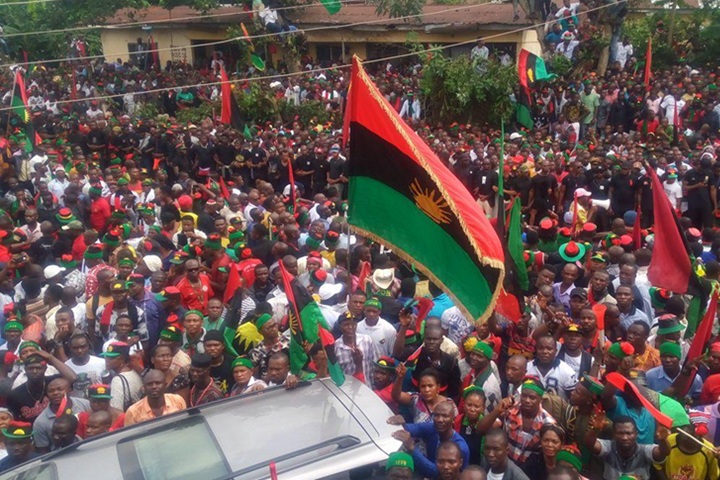
Biafra ‘Has Served Its Purpose’
The essay asserted that the Biafran identity played a crucial role during the civil war,
Meanwhile, the historical conditions that necessitated it have changed.
Ezeoke thus called for a renewed focus on the older, unifying identity of Ndi Igbo.
“A name that arose as an emergency political strategy cannot indefinitely substitute for a civilizational identity,” he argues.
Call for Unity and Clarity
Ezeoke urges Igbo leaders, communities, and the diaspora to re-establish a hierarchy of identity that places “Igbo” above “Biafra”.
He warned that any movement harming the region in the name of Biafra “has lost moral legitimacy.”
He encouraged continued advocacy for equity and justice within Nigeria, but insists such efforts be grounded in Igbo identity, not separatist labels.
A Message to Ndi Igbo
In closing, Ezeoke appealed for unity, cultural pride, and protection of the region’s social and economic future.
“Our future depends on education, enterprise, and unity – not fear, extortion, and violence.
“We are Ndi Igbo, and that is more than enough,” he concluded.