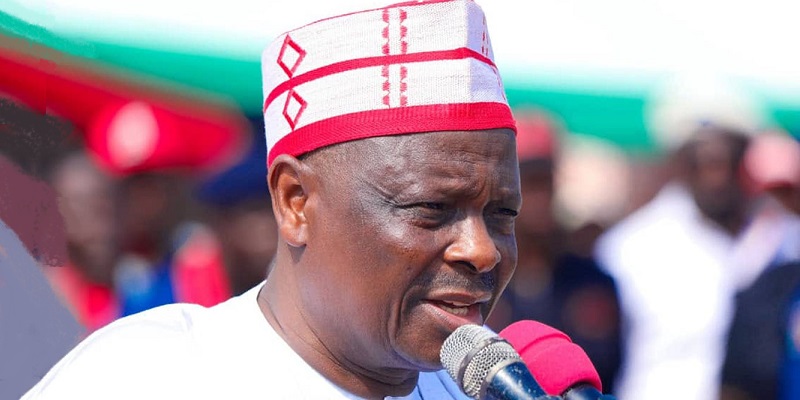
TDNigeria’s political arena is bracing for a seismic shift as the Kwankwasiyya Movement has formally announced that former Governor of Kano State, Senator Rabiu Musa Kwankwaso, will defect to the African Democratic Congress (ADC) on Monday, 30th March, 2026.

The move, widely anticipated in political circles, is expected to reshape opposition strategies and recalibrate the balance of power ahead of the 2027 general elections.
Consultations and Decision
Insiders reveal that Kwankwaso’s decision was the outcome of extensive consultative meetings involving ADC National Secretary Rauf Aregbesola and former Vice President Alhaji Atiku Abubakar.
These discussions reportedly focused on building a broad-based coalition capable of challenging the dominance of the ruling party.
The talks are said to have emphasized inclusivity, grassroots mobilization, and the need for a fresh political platform that resonates with Nigeria’s diverse electorate.
Formal Registration and Ceremony
Kwankwaso, a two-term governor of Kano State and former senator, is expected to formally register with the ADC during a high-profile ceremony in Abuja.
The event will likely attract party leaders, members of the Kwankwasiyya Movement, and supporters from across the country.
This Dawn News was also informed that all members of the Kwankwasiyya Movement have been instructed to join and register with ADC.
Political analysts note that the symbolism of the ceremony is critical—it signals not just a personal defection but the migration of a powerful political bloc into the ADC.
Kwankwaso’s Political Weight
Known for his charismatic leadership and strong grassroots appeal, Kwankwaso commands a loyal following in Kano and across northern Nigeria.
The Kwankwasiyya Movement, with its signature red cap, has become a formidable political identity, particularly among youth and working-class supporters.
His entry into the ADC is expected to energize the party’s base, expand its reach, and potentially transform it into a major contender on the national stage.
Implications for Nigerian Politics
Observers argue that Kwankwaso’s defection could alter the dynamics of opposition politics.
The ADC, traditionally seen as a smaller party, may now emerge as a significant force capable of negotiating alliances and influencing national discourse.
With Kwankwaso’s grassroots machinery, the ADC could position itself as a credible alternative to both the ruling party and other established opposition groups.
This development also raises questions about the future of opposition unity.
Will Kwankwaso’s move encourage other political heavyweights to join the ADC, or will it deepen fragmentation among opposition parties?
Analysts suggest that the coming months will be crucial in determining whether the ADC can consolidate its gains and present a unified front in 2027.
Awaited Reactions
As of press time, official statements from the ADC leadership are expected to outline how the party intends to integrate Kwankwaso’s political base into its broader vision.
Meanwhile, reactions from other parties are anticipated, with some likely to view the defection as a threat to their own electoral strategies.
Political commentators predict that Kwankwaso’s move will spark intense debate across Nigeria’s political spectrum, influencing intra-party negotiations, coalition-building efforts, and voter sentiment.
Looking Ahead
All eyes are now on Monday, 30th March, 2026, when Kwankwaso will make his official entry into the ADC.
The event is poised to mark the beginning of a new chapter in Nigerian politics—one that could redefine opposition strategies and reshape the country’s democratic contest in the years to come.
Further developments are expected as the defection unfolds.