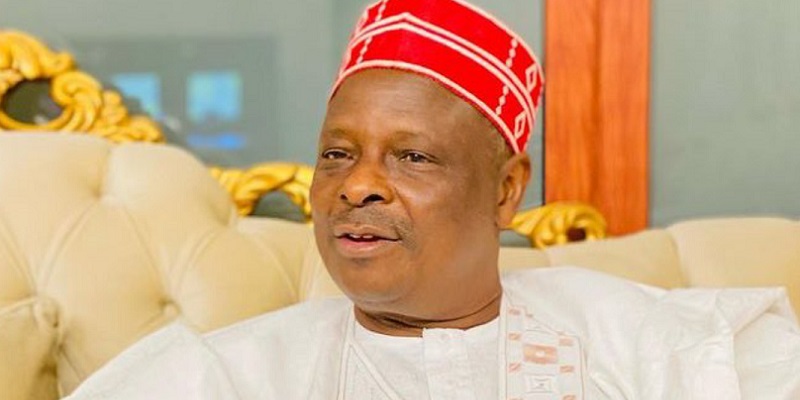
THIS DAWN — The anticipated entry of Rabiu Musa Kwankwaso into the African Democratic Congress (ADC) has the potential to fundamentally alter the balance of power within Nigeria’s emerging opposition coalition.

It may well force Atiku Abubakar to reconsider, or even abandon, his long-held presidential ambition.
The former Kano State Governor is not just another political heavyweight.
He brings with him a fiercely loyal northern base, an established grassroots machinery through the Kwankwasiyya movement.
He also brings a distinct political identity that neither PDP nor Labour Party has been able to fully neutralise.
His arrival in the ADC would immediately complicate the internal arithmetic of the coalition, particularly the question of who flies the presidential flag in 2027.
Implications for Atiku Abubakar
For Atiku, the implications are profound.
His current leverage within the ADC rests largely on seniority, name recognition, and the assumption that he remains the coalition’s strongest northern candidate.
Kwankwaso’s entrance disrupts that assumption.
Unlike Atiku, he commands organic mass followership in Kano and across large swathes of the North-West—numbers that are electorally decisive.
In a coalition built on cold calculations rather than sentiment, that advantage cannot be ignored.
More importantly, the profile of the former Kano State Governor fits neatly into a broader strategic alignment reportedly being encouraged by former President Olusegun Obasanjo.
Obasanjo is widely believed to be positioning him as the ideal northern counterweight to Peter Obi, with the long-term objective of a Peter Obi–Rabiu Kwankwaso presidential ticket.
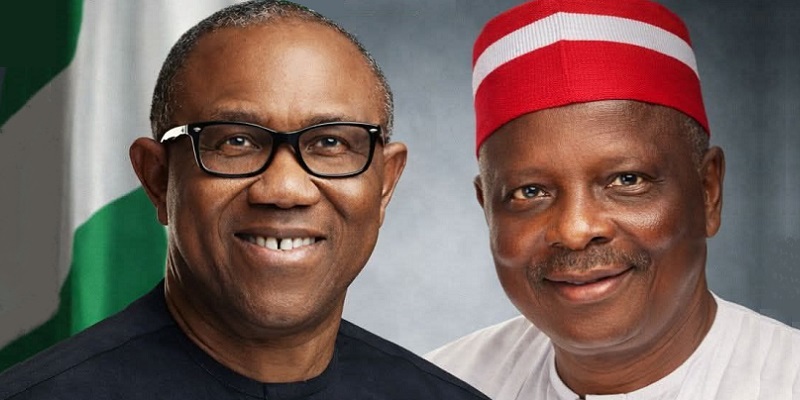
Kwankwaso Entry Disruptive
Such a pairing would instantly neutralise the APC’s regional dominance by combining Obi’s overwhelming support in the South and parts of the Middle Belt with Kwankwaso’s northern grassroots strength.
If that calculation takes hold within ADC power circles, Atiku’s path becomes increasingly narrow.
An Obi–Kwankwaso ticket would tick the coalition’s most pressing boxes:
-
generational appeal,
-
regional balance,
-
voter enthusiasm, and,
-
reduced internal resistance.
In contrast, an Atiku-led ticket continues to generate controversy:
-
over age,
-
repeated candidacies, and,
-
internal opposition fatigue.
This is why Kwankwaso’s potential entry is not merely additive; it is disruptive. It forces a reckoning.
Obi–Kwankwaso Ticket: Disruptive, Yet Attractive
Atiku would either have to accept a secondary role within a reconfigured coalition or step aside entirely in the interest of opposition unity.
The alternative—insisting on the ticket in the face of a more electorally attractive combination—risks deep fractures, walkouts, and a repeat of the opposition’s historic failures.
In Nigerian politics, ambition often yields only when reality becomes unavoidable.
Kwankwaso’s arrival in the ADC may be the moment when political reality finally confronts Atiku Abubakar.
And if Obasanjo’s quiet scheming succeeds, 2027 may no longer be about Atiku versus Tinubu.
It may rather be about whether an Obi–Kwankwaso alliance can finally crack the ruling party’s grip on power.