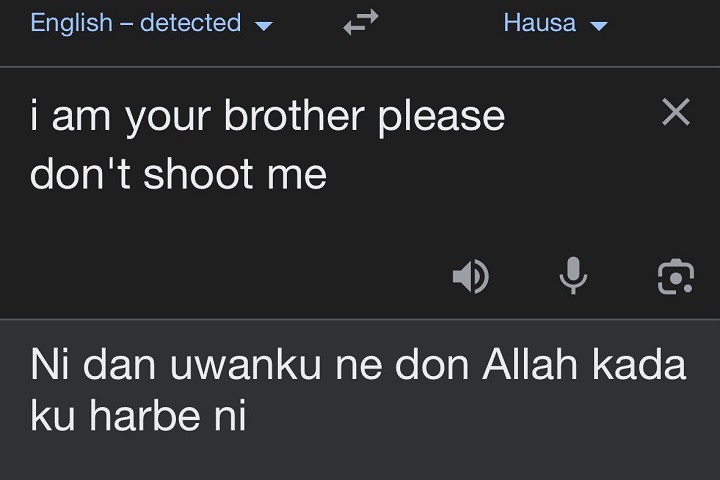
THIS DAWN — A new wave of dark humor swept across Nigerian social media weekend as users began sharing Hausa and Fulfulde phrases jokingly framed as “emergency lines” to plead with kidnappers.

The trend emerged after a screenshot translating desperate pleas—such as requests for mercy—into Hausa went viral.
It prompts hundreds of users to produce their own versions, including Fulani-language adaptations like “We are brothers. Don’t shoot.”
The posts, shared widely on X, Facebook, and WhatsApp, reflect a grim blend of fear and satire amid rising insecurity across northern and central Nigeria.
Bandit groups, many operating from forested enclaves and often associated with Fulani-speaking armed herders, continue to carry out kidnappings on highways, in schools, and in rural communities.
The recent abduction of 25 schoolgirls from Kebbi State has intensified public anxiety and rekindled debate over the government’s ability to secure vulnerable regions.
While the social media trend is couched in humor, many Nigerians say it captures the feeling of helplessness gripping parts of the country.
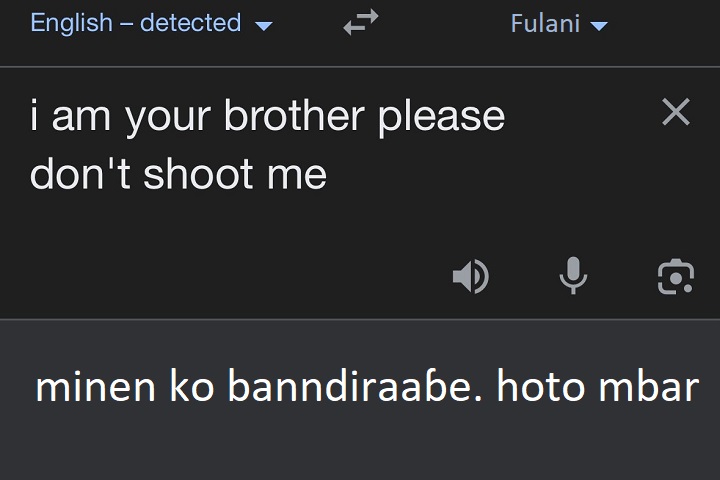
“Speak even small Hausa”
Some contributors shared anecdotes claiming that speaking Hausa—or attempting to—has helped victims humanize themselves during attacks.
“If you speak even small Hausa, they might calm down,” one user wrote, recounting a relative’s experience.
However, security analysts urging caution note that language use in such situations can cut both ways.
Some commenters warn that speaking Hausa or Fulfulde could raise suspicion among armed groups who may interpret it as an attempt to understand their conversations or affiliations.
Despite the risks, the meme-like sharing of “survival phrases” has become a coping mechanism for many Nigerians exhausted by years of kidnappings and banditry.
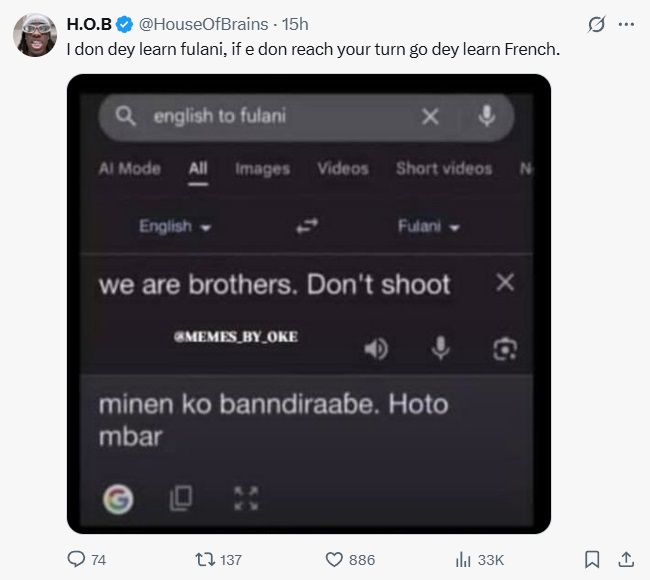
The practice mirrors previous online trends where humor softened the brutality of national crises, serving as both commentary and communal therapy.
Yet, beneath the laughter lies a sobering reality: the normalization of fear.
The willingness of citizens to joke about negotiating with kidnappers—an experience that should be unthinkable—highlights how deeply insecurity has permeated daily life.
As authorities continue battling armed groups across the northwest and north-central regions, the trend serves as a stark reminder of the psychological toll of prolonged violence, and the creative, if unsettling, ways Nigerians seek to endure it.