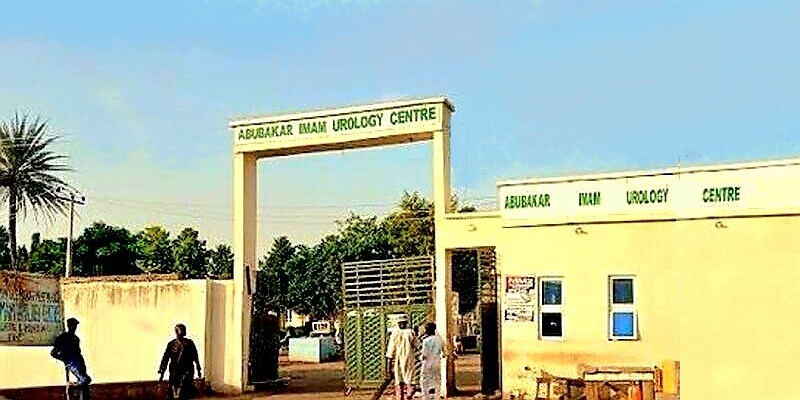
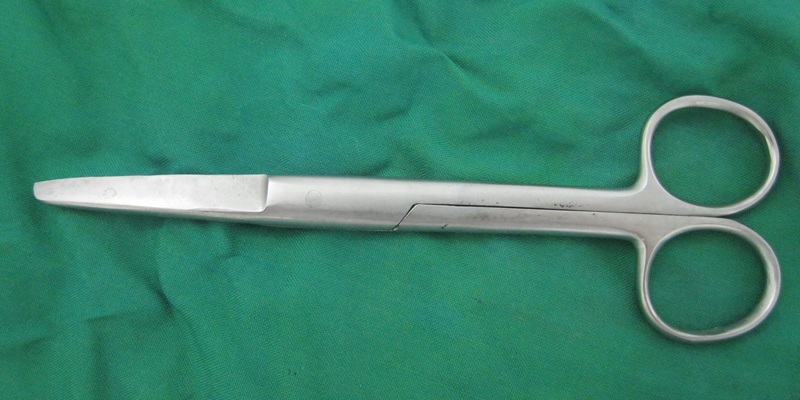
THIS DAWN — The Kano State Government has suspended three doctors following a shocking case of medical negligence at the Abubakar Imam Urology Centre, where surgical scissors were reportedly left inside a patient’s stomach during an operation.

The incident, which has drawn widespread outrage, was linked to the death of Aishatu Umar, a mother of five.
According to reports, Aishatu underwent surgery at the government-owned hospital in September 2025.
After the procedure, she began experiencing severe abdominal pain and repeatedly returned to the hospital for treatment.
Despite her complaints, she was only prescribed painkillers.
Her condition worsened, and subsequent investigations revealed that surgical scissors had been left inside her abdomen.
She later died while undergoing corrective surgery to remove the foreign object.
Government Action
The Kano State Hospitals Management Board (KSHMB) confirmed the suspension of the three medical personnel directly involved.
In a statement, the Board’s Public Relations Officer, Samira Suleiman, said preliminary investigations ordered by the Executive Secretary, Dr. Mansur Mudi Nagoda, established evidence of negligence.
The case has now been referred to the Kano State Medical Ethics Committee for further investigation and disciplinary measures in line with professional standards and the law.
Meanwhile, Aishatu’s husband, Abubakar Muhammad, expressed frustration over the hospital’s handling of his wife’s condition.
He said she suffered persistent pain for months, and despite repeated visits, doctors failed to conduct proper examinations.
“She kept complaining, but they only gave her painkillers.
“By the time they discovered the scissors, it was too late,” Muhammad told reporters.
Public Reaction
The incident has sparked outrage among citizens and medical professionals, raising concerns about healthcare standards in Nigeria.
Many have called for stricter oversight of medical practices and accountability for negligence.
Civil society groups argue that the case underscores systemic issues in Nigeria’s healthcare system.
This includes inadequate monitoring, poor patient care, and lack of transparency in disciplinary processes.
Broader Implications
This tragedy highlights the urgent need for reforms in Nigeria’s healthcare sector.
Experts stress that medical negligence not only erodes public trust but also undermines the credibility of health institutions.
The suspension of the doctors is seen as a first step in the right direction.
However, stakeholders insist that comprehensive reforms, improved training, and stronger accountability mechanisms are necessary to prevent similar incidents.
The death of Aishatu Umar has become a rallying point for calls to improve healthcare standards in Kano and across Nigeria.
While the suspension of the doctors demonstrates government responsiveness, the case raises deeper questions about systemic failures in patient safety and medical ethics.
Authorities have pledged to pursue justice.
For many Nigerians, though, the incident is a painful reminder of the urgent need to strengthen healthcare delivery.