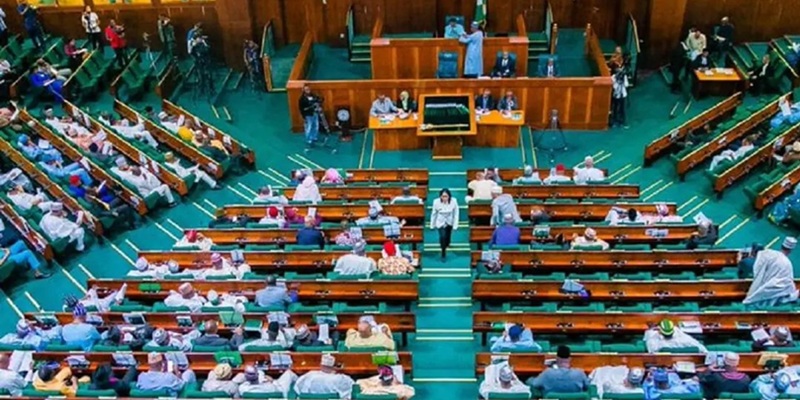
THIS DAWN — A major legislative controversy has erupted in Nigeria’s National Assembly as the House of Representatives Minority Caucus calls for the immediate suspension of four newly enacted tax laws.

Minority Leader, Hon. OK Chinda, alleged that the gazetted versions of the laws differ significantly from what was debated and passed by lawmakers.
They raised concerns about legislative integrity and constitutional procedure.
The Laws in Question
The disputed laws include:
- Nigeria Tax Act 2025
- Tax Administration Act 2025
- Revenue Service Act 2025
- Joint Revenue Board Act 2025
These laws were signed into law in June 2025 and are scheduled to take effect on January 1, 2026.
They form the backbone of the Federal Government’s new tax framework.
The framework, Government claims, aims at boosting revenue generation and streamlining tax administration across the country.
Allegations of Post-Passage Alterations
The alarm was first raised by Rep. Abdussamad Dasuki.
Dasuki claimed that the versions of the tax laws the Executive published in the official gazette contain provisions not part of the bills passed by the National Assembly.
This revelation prompted the House to set up an investigative committee to review the discrepancies.
They will also determine whether officials made unauthorized changes after legislative approval.

Rep. Chinda and other minority lawmakers have described the situation as a direct attack on legislative independence.
They argue that any alteration of bills after passage undermines the constitutional role of the legislature and threatens democratic governance.
Broader Political and Civil Society Reactions
The controversy has triggered widespread reactions beyond the National Assembly.
Prominent voices including former Vice President Atiku Abubakar and Labour Party presidential candidate Peter Obi have joined the call for suspension of the laws pending a full investigation.
The Nigerian Bar Association (NBA) and the Nigeria Labour Congress (NLC) have also expressed concern.
NBA warned that implementing laws with questionable legitimacy could erode public trust and provoke legal challenges.
Both organizations have urged the government to prioritize transparency and constitutional compliance.
Federal Government’s Position on New Tax Laws
Despite mounting pressure, the Federal Government has maintained that implementation of the new tax laws will proceed as scheduled.
Officials argue that the reforms are critical to Nigeria’s fiscal sustainability and economic recovery, especially in light of declining oil revenues and rising debt obligations.
However, critics insist that the integrity of the legislative process must not be sacrificed for expediency.
They argue that any law not signed by both the Clerk to the National Assembly and the President should be considered invalid and disregarded by the public.
Legislative Response to New Tax Laws and Next Steps
In response to the uproar, the House of Representatives has ordered a comprehensive review of the gazetted laws and is considering a re-gazetting process to ensure that only the authentic versions are implemented.
The investigative committee will expectedly report its findings in early January, just days before the laws will take effect.
Lawmakers have also called for tighter controls over the gazetting process to prevent future occurrences of post-passage tampering.
Some have proposed digital tracking systems and mandatory publication of side-by-side comparisons between passed bills and gazetted versions.
The demand by Nigeria’s House Minority Caucus to suspend the implementation of four new tax laws has exposed serious concerns about legislative transparency and executive accountability.
As the January 1 deadline approaches, the controversy threatens to derail key fiscal reforms and deepen political tensions.
The outcome of the House investigation and the government’s response will likely shape the trajectory of Nigeria’s tax policy and democratic process in 2026.