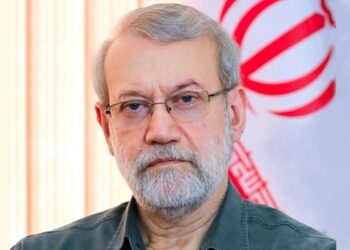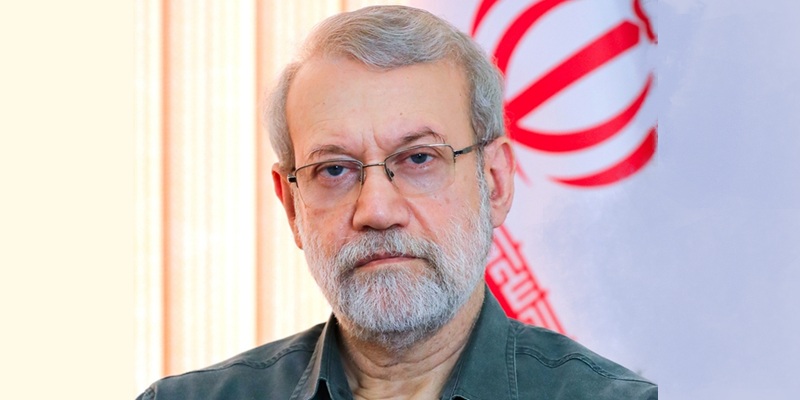
The Israel Defense Forces (IDF) announced that Ali Larijani, Secretary of Iran’s Supreme National Security Council and widely regarded as the regime’s effective leader, has been eliminated.

Larijani was described as the most significant targeted killing since the war began on February 28.
The IDF also claimed it killed IRGC Basij chief Gholamreza Soleimani, his deputy Seyyed Karishi, and the IRGC’s Aerospace Force chief.
Larijani, a veteran figure in the Iranian leadership, was considered one of the closest associates of Supreme Leader Ali Khamenei.
Over decades, he held senior positions within the regime, including serving as Speaker of Parliament and later as Secretary of the Supreme National Security Council, where he oversaw key strategic and security decisions.
His influence extended beyond formal titles, with many analysts describing him as one of the regime’s most powerful behind-the-scenes operators.
A Longtime Power Broker in Tehran
Born in Najaf, Iraq, in 1957 to a prominent clerical family, Larijani rose through the ranks of Iran’s political establishment after the 1979 Islamic Revolution.
He held multiple senior posts, including head of state broadcasting and Minister of Culture and Islamic Guidance.
He was later appointed chief nuclear negotiator during the mid-2000s.
His tenure as Speaker of Parliament from 2008 to 2020 cemented his reputation as a pragmatic yet staunch defender of the regime’s hardline policies.
Despite occasional clashes with other factions, Larijani remained a fixture of Iran’s ruling elite.
His ability to navigate between conservative clerics, the Revolutionary Guard, and technocratic administrators made him a central figure in maintaining regime cohesion.
Role in Regional Conflicts and Domestic Crackdowns
According to the IDF statement, Larijani played a central role in directing Iran’s regional combat operations against Israel and neighboring countries.
He was instrumental in shaping Tehran’s military and intelligence strategies, particularly its support for proxy groups across the Middle East.
Domestically, Larijani was accused of advancing violent enforcement measures and repression campaigns.
During recent waves of nationwide protests against the Iranian government, he allegedly supervised the crackdown that resulted in the massacre of demonstrators.
Human rights organizations have long criticized his role in silencing dissent and consolidating authoritarian control.
See IDF poster announcing the killing of Larijani below:

Strategic Implications
His reported elimination marks a significant development in the ongoing conflict between Israel and Iran, potentially reshaping the balance of power within Tehran’s leadership structure.
Analysts suggest that the loss of such a senior figure could trigger both internal instability and escalations in regional tensions.
- Internal Fallout: Larijani’s absence may intensify factional rivalries within Iran’s leadership, particularly between hardliners and more pragmatic conservatives.
- Regional Impact: Israel’s announcement underscores the deepening confrontation with Iran, raising concerns of retaliatory action by Tehran or its allies.
- Global Reactions: International observers are closely monitoring the situation, as Larijani’s elimination could affect negotiations over Iran’s nuclear program and broader Middle East security dynamics.
Ali Larijani’s reported death removes one of the most seasoned and influential figures in Iran’s political hierarchy.
Whether his elimination leads to a power vacuum or sparks further escalation remains to be seen.
Meanwhile, the development underscores the volatility of the Israel-Iran confrontation and the fragility of Iran’s internal stability.