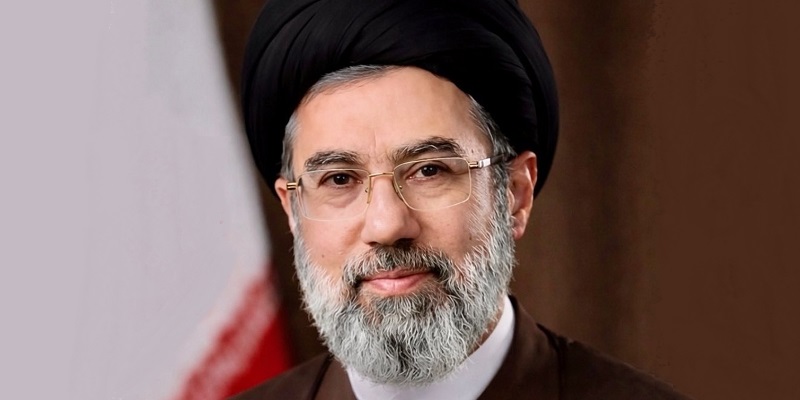
TDIran’s newly appointed Supreme Leader, Ayatollah Mojtaba Khamenei, issued his first statement Thursday, demanding the immediate closure of U.S. military bases across the Middle East.

Khamenei urged Arab nations to use the Strait of Hormuz as leverage against Washington and its allies.
The statement, read on state television by a news anchor, marked Khamenei’s debut since assuming leadership.
He did not appear on camera, and Israeli intelligence assessments suggest he was wounded in the war’s opening strikes.
“All U.S. bases must close immediately or be attacked,” Khamenei declared.
He vowed to avenge Iranian casualties, including those killed in a strike on a school.
He warned that if the United States refuses to pay reparations, Iran would seize or destroy American assets.
Escalating Conflict in the Gulf
Iran’s attacks on Gulf Arab neighbors and shipping lanes have intensified, disrupting traffic through the Strait of Hormuz — a vital waterway through which one-fifth of the world’s oil passes.
Brent crude surged above $100 a barrel Thursday, nearly 40 percent higher than before the war began on February 28.
Iranian officials insist the campaign will continue until Tehran receives security guarantees against future assaults.
President Masoud Pezeshkian said the world must recognize Iran’s “legitimate rights” and provide reparations.
Parliamentary Speaker Mohammad Bagher Qalibaf warned that any attempt to seize Iranian islands would “make the Persian Gulf run with the blood of invaders.”
Regional Fallout
The conflict has spread across the region:
- Israel & Hezbollah: Hezbollah militants fired 200 rockets into northern Israel overnight, prompting Israeli airstrikes on Tehran and Lebanon. At least 11 people were killed.
- Lebanon: Israel warned civilians in southern Lebanon to evacuate north of the Zahrani River, signaling a possible ground escalation.
- Displacement: The U.N. refugee agency reports 3.2 million people displaced inside Iran and 759,000 in Lebanon.
- Gulf States: Iranian drones struck Kuwait, Bahrain, the UAE, and Saudi Arabia, targeting airports, oil facilities, and residential areas.
Residents in northern Israel described a night of fear as rockets rained down.
“The noise was extraordinary, it was really scary,” said Naama Porat, who fled to a shelter with her son.
“They have stocks of weapons and it just doesn’t end. We don’t know how much and what to expect,” she added.
Nuclear Tensions
Israel confirmed strikes on an Iranian nuclear facility, reviving concerns about Tehran’s atomic ambitions.
The U.S. and Israel maintain that dismantling Iran’s nuclear program is a central war objective, while Iran insists its program is peaceful.
The Israeli military said it had destroyed the “Taleghan 2” site in October 2024.
However, satellite images earlier this year suggested Iran was attempting to restore it.
Global Stakes
With shipping halted in the Strait of Hormuz, oil markets remain volatile, surging as high as $120 a barrel in recent days.
Analysts warn that prolonged disruption could trigger a global energy crisis, intensifying pressure on governments worldwide.
U.S. President Donald Trump has vowed to “finish the job,” insisting Iran is “virtually destroyed.”
According to reports, the Islamic Republic’s leadership shows no sign of backing down.
The war has become a test of endurance — each side seeking to inflict maximum pain.
Iran is betting that economic disruption will force concessions, while the U.S. and Israel are determined to dismantle Iran’s military and nuclear infrastructure.
For millions displaced across Iran and Lebanon, the human toll is already devastating.
With oil markets rattled and regional tensions spiraling, the conflict threatens to reshape global geopolitics for months, if not years, to come.