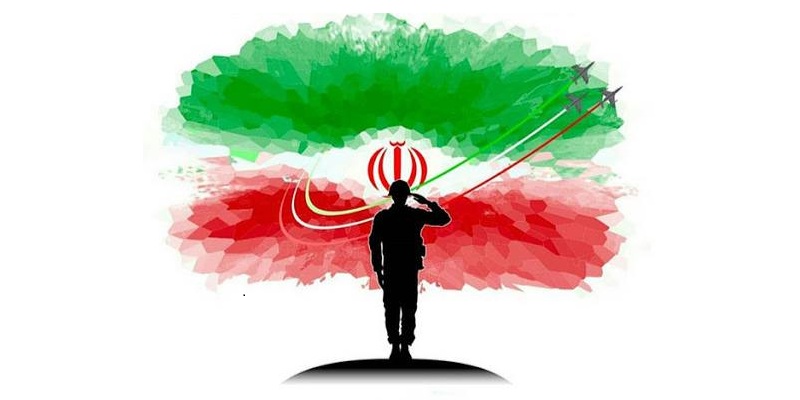
THIS DAWN — The Foreign Minister of Iran, Seyed Abbas Araghchi, has issued a stern warning to the United States, declaring that Iran’s armed forces are “prepared—with their fingers on the trigger” to respond to any aggression.

The statement comes amid rising tensions following President Donald Trump’s threat of a military strike “far worse” than Operation Midnight Hammer.
See a screenshot of the threat below:

Iran Responds
In a strongly worded statement, Iranian Foreign Minister—Araghchi said Iran’s military is fully prepared to defend its territory against any U.S. attack.
“Our brave Armed Forces are prepared—with their fingers on the trigger—to immediately and powerfully respond to ANY aggression against our beloved land, air, and sea,” Araghchi declared.
He referenced the “valuable lessons learned from the 12-Day War,” suggesting that Iran’s defense capabilities have been significantly enhanced.
While the details of the 12-Day War remain classified, analysts believe it refers to the brief but intense conflict in mid-2025 involving U.S. and Iranian forces in the Strait of Hormuz.
Despite the combative tone, Araghchi reiterated Iran’s commitment to diplomacy.
“Iran has always welcomed a mutually beneficial, fair and equitable NUCLEAR DEAL—on equal footing, and free from coercion, threats, and intimidation,” he said.
He emphasized that Iran seeks peaceful nuclear technology and has “NEVER sought to acquire” nuclear weapons.
Iran’s UN Mission Echoes Warning
Iranian Mission to the United Nations issued a parallel statement, drawing historical comparisons to past U.S. military engagements.
“Last time the U.S. blundered into wars in Afghanistan and Iraq, it squandered over $7 trillion and lost more than 7,000 American lives,” the statement read.
While expressing openness to dialogue, the mission warned:
“Iran stands ready for dialogue based on mutual respect and interests—BUT IF PUSHED, IT WILL DEFEND ITSELF AND RESPOND LIKE NEVER BEFORE!”
The message was widely interpreted as a direct response to President Trump’s recent post on social media.
In the post, he announced a “massive armada” heading to Iran, led by the aircraft carrier Abraham Lincoln.
Trump warned that the next attack would be “far worse” than Operation Midnight Hammer, a 2025 strike that targeted Iranian nuclear facilities.
Diplomatic Fallout and Global Reaction
The exchange of threats has triggered alarm across global capitals.
European Union officials urged restraint and called for renewed negotiations.
Russia and China condemned the U.S. posture, warning that further escalation could destabilize the region.
Middle Eastern allies of the U.S., including Israel and Saudi Arabia, expressed support for Trump’s hardline stance.
They cited Iran’s regional activities and missile development as ongoing threats.
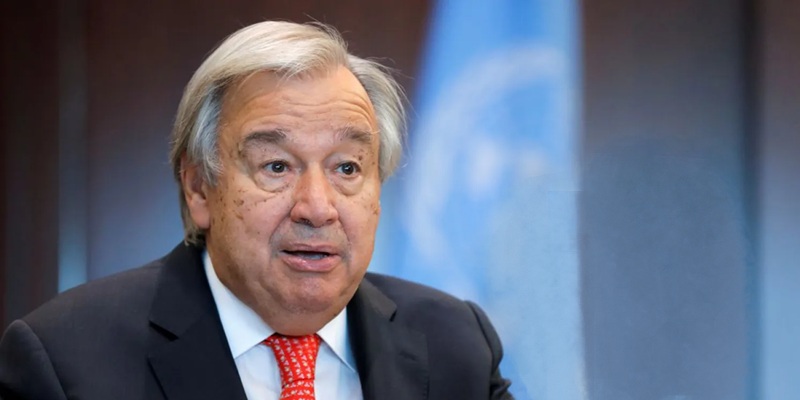
Meanwhile, the United Nations Secretary-General called for “urgent de-escalation” and offered to mediate renewed talks on nuclear non-proliferation.
Strategic Calculations
Iran’s emphasis on peaceful nuclear technology and rejection of weapons development aligns with its longstanding position under the Nuclear Non-Proliferation Treaty (NPT).
However, Western intelligence agencies have repeatedly accused Tehran of covert enrichment activities.
Araghchi’s statement appears aimed at reinforcing Iran’s diplomatic posture while signaling military readiness.
The reference to the 12-Day War suggests that Iran views recent confrontations as proof of its resilience and tactical evolution.
Trump’s invocation of Operation Midnight Hammer and his warning of a “far worse” attack indicate that Washington is prepared to escalate if Iran refuses to negotiate on U.S. terms.
What Comes Next?
With both sides entrenched, the risk of miscalculation is high.
Analysts warn that even a minor incident in the Persian Gulf could trigger a broader conflict.
Yet, the parallel emphasis on diplomacy from both Tehran and Washington suggests that backchannel negotiations may still be possible.
The coming days will be critical.
If Iran responds militarily to U.S. deployments, or if Trump orders a preemptive strike, the region could plunge into a new phase of warfare.
Conversely, renewed talks—perhaps brokered by neutral parties—could offer a path forward.