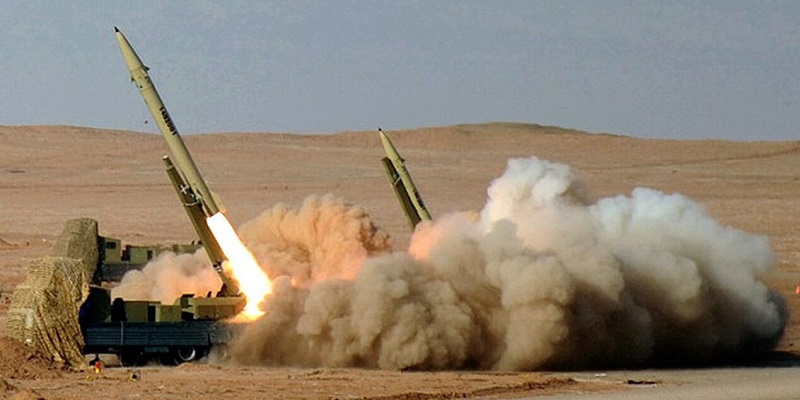

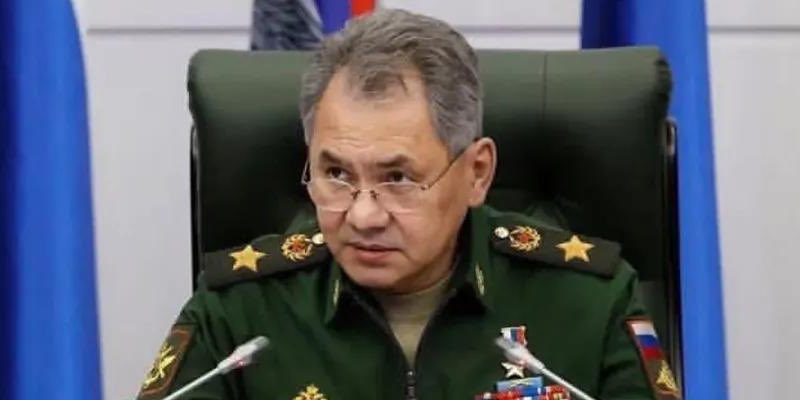
Russia’s Defense Minister, Sergei Shoigu, has asserted that Iran possesses offensive missile systems more advanced than those of the United States.
He claimed Iran has “highly advanced missiles that have not yet been used” and a stockpile capable of “destroying the entire Middle East, not just Israel.”
The minister urged Washington and Tel Aviv to halt military operations against Iran, warning that failure to do so would result in “surprise losses and damage.”
Shoigu said: “What we are saying is true: Iran possesses offensive missile systems that the United States does not have.
“There are highly advanced missiles that have not yet been used.
“Iran has a stockpile capable of destroying the entire Middle East, not just Israel.
“We call on the United States and Israel to immediately stop the war and declare the failure of the military operation against Iran.
“Otherwise, the losses and damage will be a surprise.”
Analysts note that such rhetoric underscores Moscow’s alignment with Tehran and signals a potential shift in the balance of power in the region.
Israel Responds Amid Rising Tensions
Israel’s Foreign Ministry has not yet issued a comprehensive response, but officials are reportedly assessing the implications of Moscow’s remarks.
Israel Foreign Ministry posted on social media:
“The Iranian regime is the mastermind of a global terror network.
“With its long-range missiles & through the IRGC and its proxies – Hezbollah, Hamas, PIJ, the Houthis – it fuels chaos and bloodshed far beyond its borders, from the Middle East to Europe and beyond.
“The Iranian regime is the greatest threat to world peace and the free world.”
The Iranian Octopus
The Ministry illustrated Iran’s activities using a symbolism of octopus to convey a message about Middle Eastern geopolitics.
See the octopus below:
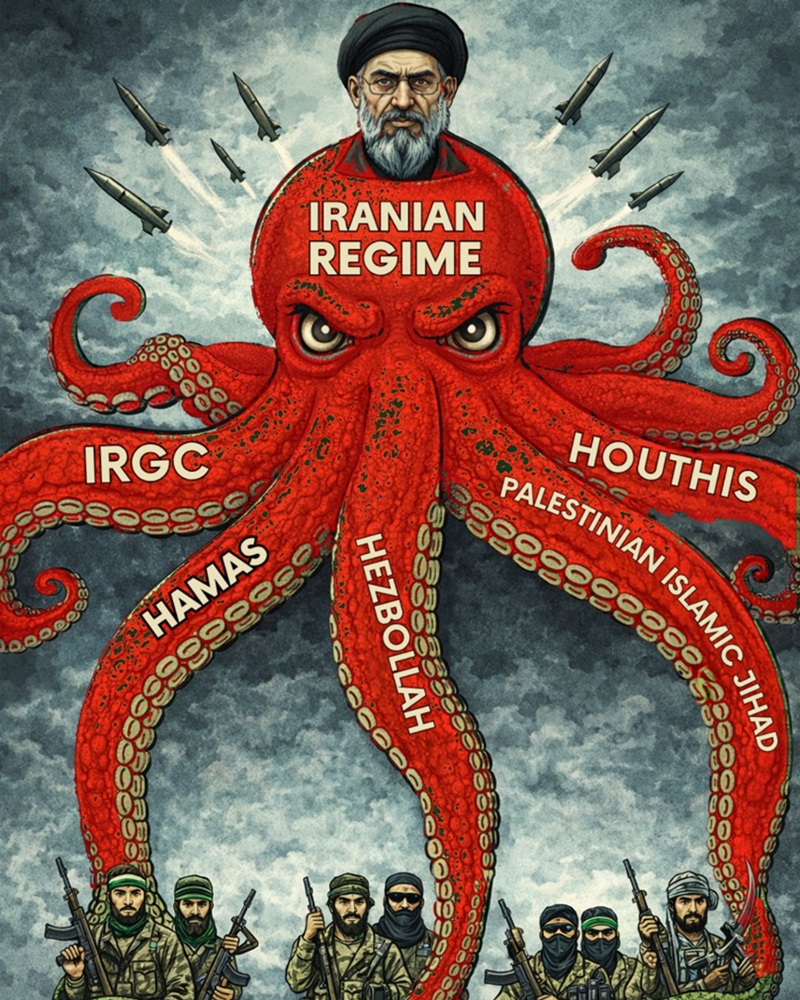
At the center is a large red octopus labeled “Iranian Regime,” with an angry facial expression.
Sitting atop the octopus’ head is a figure resembling Ali Khamenei, depicted as overseeing or controlling it.
The octopus’ tentacles stretch outward, each labeled with different groups: IRGC (Islamic Revolutionary Guard Corps), Hamas, Hezbollah, Houthis, and Palestinian Islamic Jihad—suggesting influence or connection.
Above the octopus, several missiles are shown launching or flying, reinforcing a theme of military power or conflict.
Below, there are armed fighters in military-style clothing, representing militant groups or forces tied to the labels on the tentacles.
Overall, the illustration uses the octopus metaphor to depict a central power extending influence through multiple branches or allied groups across a region.
The tone is critical and portrays the subject as aggressive and expansive in its reach.
The statement comes at a time of heightened regional volatility, with Israeli defense forces already on high alert.
Diplomatic observers warn that Russia’s intervention could embolden Iran while complicating U.S. and Israeli military strategies.
IAEA Raises Concerns Over Nuclear Safety
On its part, the International Atomic Energy Agency (IAEA) voiced grave concern following reports of military activity near Iran’s Bushehr Nuclear Power Plant.
Director General Rafael Grossi emphasized the need to protect civilian nuclear facilities.
He warned that any strike near Bushehr could trigger catastrophic fallout across the region.
The IAEA called for restraint and renewed dialogue to prevent escalation into a nuclear crisis.
IAEA cautioned all parties after recent reports concerning military activity near the operating Bushehr Nuclear Power Plant in Iran.