TDTensions in the Gulf escalated sharply today as Iran’s Islamic Revolutionary Guard Corps (IRGC) announced it had fired four ballistic missiles at the U.S. aircraft carrier USS Abraham Lincoln.

Iranian state media claimed the missiles struck the vessel, marking what would be a major escalation in hostilities.
However, U.S. Central Command (CENTCOM) immediately rejected the assertion.
In a statement, CENTCOM said: “The Lincoln was not hit. The missiles launched didn’t even come close.”
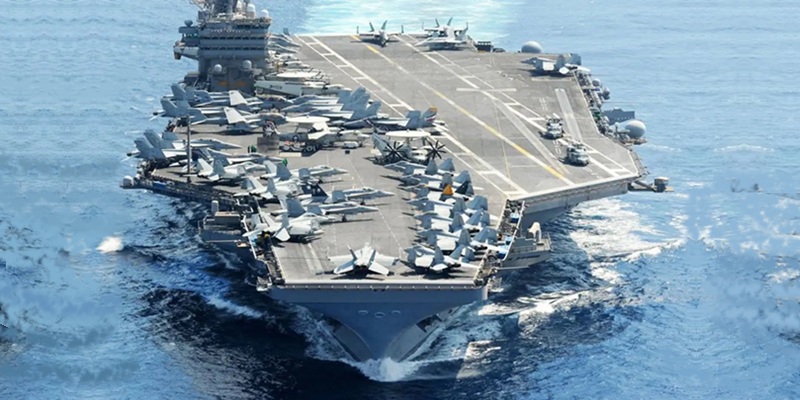
Officials emphasized that the carrier remains fully operational and continues to launch aircraft in support of ongoing missions.
Independent confirmation of either side’s claims has not yet been established.
Key Points
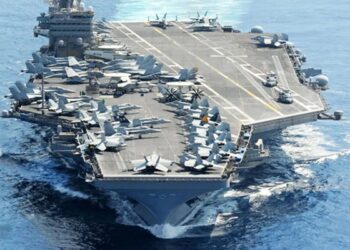
Images released by U.S. military sources show the USS Abraham Lincoln undamaged and at sea, reinforcing Washington’s denial of Iranian reports.
The key points, therefore, are as follows:
- Iran’s Claim: IRGC says four ballistic missiles struck the USS Abraham Lincoln.
- U.S. Response: Pentagon denies any damage, stating missiles missed the carrier entirely.
- Current Status: The carrier continues operations; no verified evidence of a successful strike.
- Context: The incident comes amid escalating hostilities between Iran and U.S. forces in the region.
Background and Context
The USS Abraham Lincoln is a Nimitz-class aircraft carrier, one of the most powerful warships in the U.S. Navy’s arsenal.
It has been deployed to the Gulf as part of ongoing U.S. operations aimed at deterring Iranian aggression and ensuring freedom of navigation in one of the world’s most strategically vital waterways.
The carrier typically hosts more than 5,000 personnel and dozens of aircraft, making it a central pillar of U.S. military presence in the Middle East.
Iran’s claim of striking the vessel, if true, would represent a dramatic escalation in the long-running tensions between Tehran and Washington.
Ballistic missile attacks on a U.S. carrier would be unprecedented and could trigger a significant military response.
However, the U.S. denial and evidence of the ship’s continued operations suggest that Iran’s announcement may be part of an information campaign designed to project strength domestically and regionally.
Escalating Hostilities
This incident comes against a backdrop of rising confrontation in the Gulf.
In recent weeks, Iran has increased its military activity, including missile tests and naval maneuvers, while the U.S. has reinforced its presence with additional ships and aircraft.
Analysts note that both sides are engaged in a dangerous cycle of provocation and denial, raising fears of miscalculation that could spiral into open conflict.
The IRGC’s statement may also be intended to rally domestic support and demonstrate defiance against U.S. pressure.
Meanwhile, Washington’s swift denial underscores its intent to maintain credibility and reassure allies that U.S. forces remain secure and capable.
What’s Next?
The situation remains fluid, with conflicting narratives from Tehran and Washington.
Independent verification will be critical in determining the truth of today’s events.
For now, the USS Abraham Lincoln continues its mission, symbolizing U.S. resolve in the region.
Military analysts warn that even if the missiles missed, the attempted strike highlights Iran’s willingness to escalate and the vulnerability of U.S. assets in contested waters.
The coming days may reveal whether this incident is an isolated provocation or the beginning of a broader confrontation.