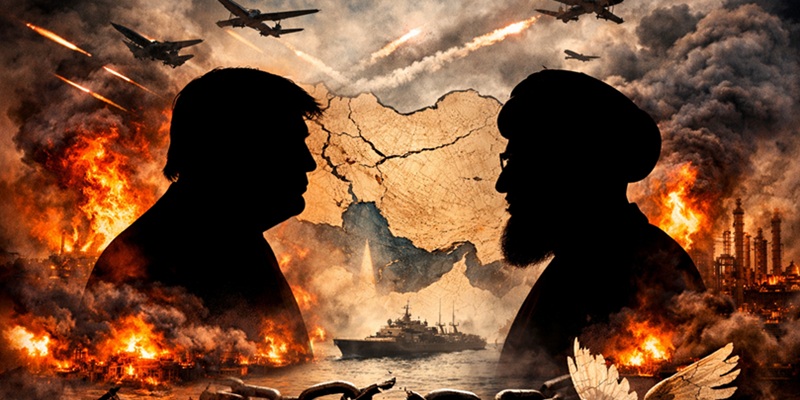
TDIn a dramatic turn of events, Iran has agreed to reopen the Strait of Hormuz under military control for two weeks, halting what U.S. President Donald Trump had described as a looming “rain of fire.”

The decision comes amid tense negotiations mediated by Pakistan’s Prime Minister Shehbaz Sharif.
Sharif announced that a conditional ceasefire between the United States and Iran took effect immediately.
The deal allows shipping traffic to resume through the vital Gulf waterway, which carries a significant portion of the world’s oil exports.
The reopening is contingent on Iran’s military coordination and is framed as part of a broader ceasefire agreement.
Trump’s Ultimatum and Ceasefire
President Trump had threatened that “a whole civilisation will die tonight” if Iran did not reopen the strait.
He declared the agreement “one of the most important moments in the long and complex history of the World.”
He confirmed that the U.S. would suspend bombing and attacks on Iran for two weeks, citing that “all military objectives have already been met and exceeded.”
In a post on Truth Social, Trump said the ceasefire was provisional but offered hope for a longer-term peace deal.
His threats earlier in the week drew condemnation from the United Nations Secretary-General and Pope Leo XIV, both warning against escalation.
President Donald Trump took to a social media post to hail the ceasefire deal.
In the statement, Trump claims the United States will now work closely with Iran following what he describes as a “productive regime change.”
Key points from the post:
- No uranium enrichment will be allowed in Iran.
- The U.S., working with Iran, will remove deeply buried nuclear materials (“nuclear dust”), monitored under satellite surveillance by Space Force.
- Trump says tariff and sanctions relief talks with Iran are underway.
- He notes that many of the 15 points in negotiations have already been agreed upon.
In essence, the post frames the situation as a turning point in U.S.–Iran relations.
It emphasized nuclear disarmament, surveillance, and potential economic concessions.
See a screenshot of the post below:

Iran’s Position
Iran agreed to allow vessels safe passage through the Strait of Hormuz, coordinated by its military.
Tehran also issued a 10-point plan, demanding:
- Complete cessation of war in Iran, Iraq, Lebanon, and Yemen.
- Lifting of U.S. sanctions and release of frozen Iranian assets.
- Compensation for reconstruction costs.
- A commitment not to pursue nuclear weapons.
It also says, “Iran fully commits to not seeking possession of any nuclear weapons“.
“Iran’s victory in the field would also be consolidated in political negotiations,” Iran’s Supreme National Security Council said in a statement.
Iran also warned that the U.S. would be treated as a direct party to any Israeli attack, vowing decisive retaliation.
Israel’s Response
Sirens sounded in Israel shortly after Trump’s announcement, with the Israel Defense Forces (IDF) reporting missile interceptions from Iran.
Loud booms were heard in Jerusalem late Tuesday.
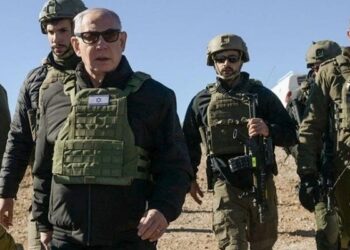
Prime Minister Benjamin Netanyahu expressed conditional support for Trump’s ceasefire, stating:
“Israel supports President Trump’s decision to suspend strikes against Iran for two weeks subject to Iran immediately opening the straits and stopping all attacks.”
However, he stressed that the ceasefire “does not include Lebanon,” where Israel continues operations against Hezbollah.
Regional Fallout
Despite the ceasefire, Kuwait reported Iranian drone attacks damaging power plants, desalination facilities, and oil installations.
Its military claimed to have intercepted 28 drones targeting the state.
Meanwhile, oil prices fell below $100 per barrel following the announcement, though they remain 30% higher than before the war.
Global markets rallied on hopes of reduced tensions.
At the Pentagon, U.S. Defense Secretary Pete Hegseth declared “Operation Epic Fury” a historic victory,
He, meanwhile, warned that Iran must surrender its uranium stockpile “voluntarily, or the U.S. will take it.”
Next Steps
Pakistan has invited delegations from both countries to meet in Islamabad on Friday to negotiate a conclusive agreement.
White House Press Secretary Karoline Leavitt confirmed discussions were ongoing but said “nothing is final until announced by the President or the White House.”
Trump hinted at possible sanctions relief and tariff discussions with Iran, suggesting economic incentives could form part of a longer-term settlement.
The reopening of the Strait of Hormuz marks a fragile pause in hostilities between the U.S. and Iran.
While the two-week ceasefire offers breathing space, continued strikes in Lebanon and Kuwait highlight the volatility of the situation.
Whether this truce evolves into a lasting peace or collapses under renewed violence will depend on the delicate negotiations in Islamabad.
For now, the world watches as two adversaries step back from the brink of catastrophic escalation.