THIS DAWN — The International Society for Civil Liberties and Rule of Law (Intersociety) has issued a detailed rebuttal of a New York Times report published on Sunday, January 18, 2026.

Intersociety described it as a compilation of falsehoods, misrepresentations, and dangerous insinuations against the organization and its leader, Criminologist Emeka Umeagbalasi.
According to Intersociety, the publication gravely distorted the content of a December 16, 2025, interview.
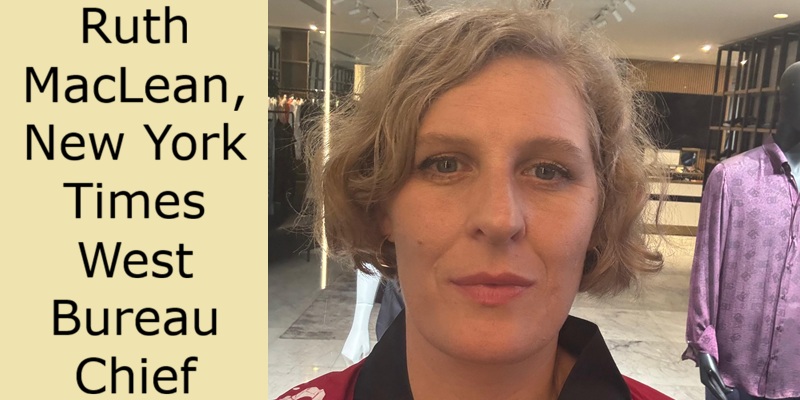
The interview was granted to Ruth Maclean, the newspaper’s West African Bureau Chief.
It stated categorically that Maclean wrongly attributed statements and positions never expressed during the engagement.
Background of the December 16 Interview
Intersociety disclosed that the New York Times visit was formally approved by its Board.
The interview was conducted during the organization’s off-office pre-Christmas period.
Ruth Maclean was accompanied by a female Christian photographer from Kwara State and Mr. Dave Eleke of This Day Newspaper, Awka.
Mr. Eleke, he noted, has maintained a long-standing professional relationship with Intersociety’s leadership.
The interview, according to the CSO, lasted no fewer than three hours and was followed by an additional one-hour photography session at a market.
Intersociety emphasized that the interaction was extensive, transparent, and conducted in good faith.
That, it said, makes the subsequent distortions in the published report particularly shocking and disappointing.
Profile of Emeka Umeagbalasi
Intersociety strongly objected to how its leader was portrayed.
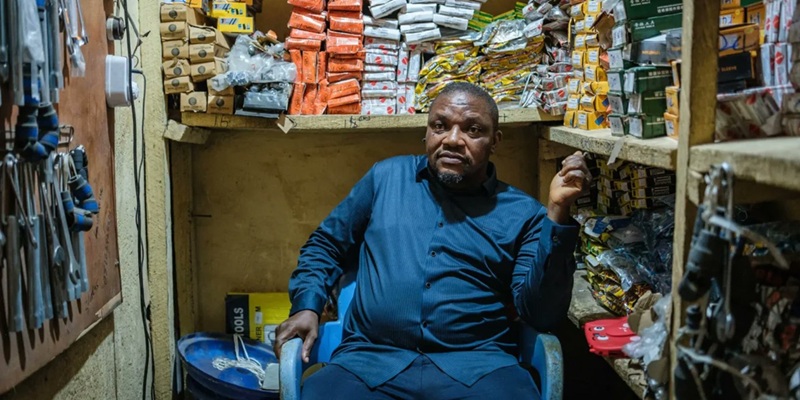
The organization clarified that Emeka Umeagbalasi, aged 56, is a legitimate and successful businessman who has operated in Onitsha as a screwdriver and wrenches merchant since completing his apprenticeship in 1993 at the age of 24.
From this modest but lawful commercial foundation, he advanced academically and professionally.
He earned both first and postgraduate degrees in Criminology, Security Studies, Peace Studies, and Conflict Resolution.
Intersociety stressed that these credentials were either trivialized or misrepresented in the New York Times report.
This goes alongside his decades-long work in human rights documentation and religious freedom advocacy
Denial of Political or Foreign Alignment
The organization categorically rejected any suggestion that its work is linked to U.S. President Donald Trump, American partisan politics, or ideological divisions within the United States.
Intersociety maintained that its reports on the massacre of Christians in Nigeria since 2009 are strictly grounded in international best practices under United Nations and African Union frameworks.
It further clarified that its findings are independent of U.S. domestic debates on party politics, gender rights, or ideological movements.
It should, therefore, not be framed within such contexts.
Religious Freedom and Data Credibility
Intersociety reaffirmed its position that religious freedom remains the “First Freedom” globally and benefits adherents of all faiths, including Christians and Muslims.
It reiterated its long-standing data.
It indicated that since 2009, approximately 125,000 Christians and 60,000 Muslims have been killed outside the protection of religious freedom in Nigeria.
The report, meanwhile, indicated that an estimated 19,100 churches attacked, burned, or destroyed.
The CSO rejected insinuations that its work could be undermined by lobbying or the use of borrowed public funds.
It stated that its data-driven advocacy remains unaffected by external pressure or inducement.
Objection to Headline Framing and Security Risks
One of Intersociety’s strongest objections concerned the New York Times’ decision to link the December 16 interview to U.S. airstrikes.
The airstrikes were carried out in Sokoto on December 25, 2025—nine days after the interview.
The organization described this linkage as mischievous, misleading, and potentially life-threatening.
Intersociety questioned the relevance of its interview to the airstrikes.
It noted that the Nigerian Government, the Armed Forces, and the Office of the National Security Adviser publicly acknowledged joint responsibility for the operation with the U.S. government.
The CSO warned that such framing could expose its leadership and staff to serious security risks.
The organization, therefore, formally placed the world on notice that it holds the New York Times and its West African Bureau Chief vicariously liable for any harm that may befall Emeka Umeagbalasi, his family, or Intersociety offices in Onitsha, Enugu, and Aguata.
It also stated that Nigerian state and non-state actors would be held directly responsible should any untoward incident occur.
Detailed Allegations of Misrepresentation
Intersociety outlined multiple areas where it believes the New York Times grossly misrepresented facts and falsely attributed statements:
- First, it objected to the personalization of collective institutional positions through the use of “I” instead of “We”.
It stressed that all positions expressed were organizational, not personal.
- Second, it denied claims that its Board Chair admitted to not verifying data.
It explained that the interview clearly detailed its use of both primary data (direct field collection) and secondary data (credible third-party sources).
- Third, the organization rejected assertions that its work relied mainly on Nigerian media, Christian interest groups, or Google searches.
It cited extensive field deployments in Southern Kaduna, Taraba, the South-East, South-South, and recent investigations in Eha-Amufu and Ezeagu in Enugu State.
- Fourth, Intersociety denied any comparison between its leader and CNN journalist Christiane Amanpour.
It clarified that Amanpour was referenced only as an example of journalistic excellence and integrity.
Victim Identification and Boko Haram Casualties
The CSO further stated that it clearly explained its methodology for identifying the religious identities of victims, particularly in known Christian-populated areas across northern Nigeria.
It disputed the claim that many Boko Haram victims were Muslims.
It cited data from 2009 to 2017 and a June 2020 report by the Church of Brethren in Nigeria, documenting the killing of 8,600 of its members and the destruction of over 300 church districts.
Clarifications on Abductions and Pastoralist Policy
Intersociety clarified that it never claimed that many of the 24 abducted Kebbi schoolgirls were Christians but stated that some were likely involved based on the area’s demographics.
It also rejected allegations of hate speech against Fulani people, explaining that its criticism was directed at government ranching policies, not any ethnic group.
Intersociety concluded that while disagreement and constructive criticism of its research are legitimate, deliberate misrepresentation and false attribution are unacceptable.
The organization reaffirmed its commitment to rigorous human rights monitoring, religious freedom advocacy, and evidence-based reporting in Nigeria since 2009.
It called on the New York Times to uphold journalistic integrity by correcting what it described as dangerous and injurious inaccuracies.