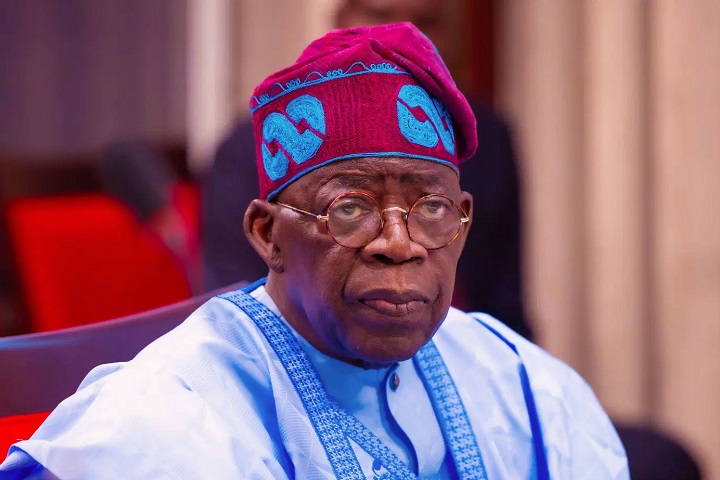
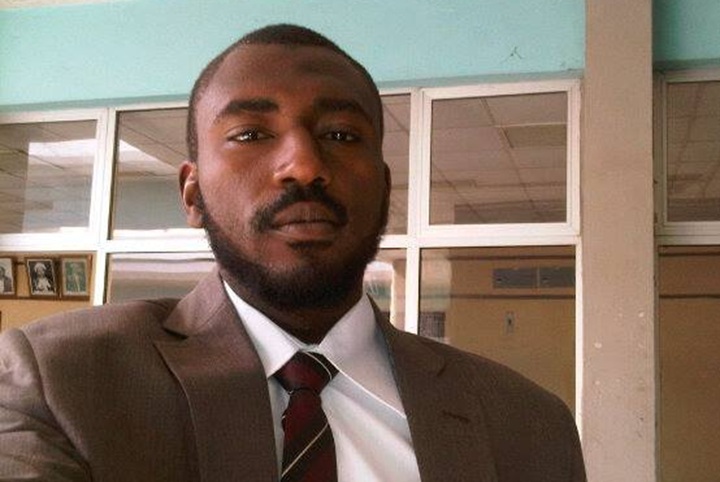
THIS DAWN — A strongly worded public letter authored by a Kano-based lawyer and commentator, Umar Sa’ad Hassan, has reignited debate over the pace and depth of President Bola Ahmed Tinubu’s anti-corruption campaign.

In the piece titled “No Halfway Fight Against Corruption: A Letter to President Tinubu,” the writer commended the administration’s early discipline.
He, however, insisted that Nigerians deserve a far more aggressive and uncompromising purge of alleged economic crimes, especially those linked to former officials of the Muhammadu Buhari government.
Hassan opened his letter by acknowledging what he described as a “notable departure” from the alleged impunity that characterised early years of the previous administration.
He praised President Tinubu for maintaining tighter control over public finance, suspending cabinet members accused of misuse of funds, and prosecuting high-profile figures, including former Central Bank of Nigeria (CBN) governor Godwin Emefiele.
He also referenced the arraignment of ex-Aviation Minister Hadi Sirika over the controversial Nigeria Air project, calling these steps early proof that “wanton looting” is no longer the norm.
However, the writer insisted that Nigerians expect deeper reforms and stronger political will.
According to him, Tinubu’s growing political capital, especially the surge of governors defecting to the ruling All Progressives Congress (APC), now frees the president from concerns about regional or ethnic backlash.
“If you split the votes in the north and sweep everything in the south, you have all but won,” he argued.
He urged the president to prosecute all major corruption allegations without regard for political alliances or regional optics.
Sadiya Umar Farouq as case study
Hassan’s strongest criticism was aimed at former Humanitarian Affairs Minister, Hajiya Sadiya Umar Farouq.
He described her as the face of “perhaps the largest corruption scheme in recent times,” referring to controversies surrounding cash transfer programs for the poor.
He lamented that despite her arrest by the Economic and Financial Crimes Commission (EFCC) over an allegedly unaccounted-for ₦37 billion, she has not yet been prosecuted or cleared.
The writer also zeroed in on former Attorney-General of the Federation, Abubakar Malami.
Citing the controversial instruction allegedly shielding former NIRSAL boss Aliyu Abdulhameed from investigation, as well as questions surrounding disposal of recovered assets, Hassan argued that Malami’s influence under Buhari made him central to what he called “the brutal rape of this country.”
He welcomed the EFCC’s ongoing probe into a $17 million legal fee linked to the Abacha loot recovery, stressing that such cases must be pursued to their logical conclusion.
“Malami must be charged to court if indicted. Same as Hajiya Sadiya Farouk,” he wrote.
Hassan added that Nigerians cannot move forward economically unless the past is fully accounted for.
The letter also highlighted what the author described as widespread financial irresponsibility under Buhari.
These, he said, include:
- unchecked borrowing,
- questionable expenditures, and,
- allegations involving individuals close to the former first family.
“Too wealthy to loot”?
Hassan contrasted this with Tinubu’s claim that he did not accept political funding from donors during his presidential bid—a statement the writer says reinforced perceptions that the president is “too wealthy to loot the nation.”
Despite acknowledging Tinubu’s relative success in curbing internal scandals, he warned that the administration must confront long-standing corruption legacies head-on.
“The sacrifices Nigerians have had to make for the economy would have been minimal if a minute few weren’t borrowing, recovering, and then stealing our resources.
“Let none of them be spared,” he wrote.
The letter has since generated debate among political observers, with some agreeing that the administration must accelerate prosecutions, while others argue that judicial processes take time.
Nonetheless, Hassan’s intervention underscores growing public pressure for President Tinubu to go beyond selective probes and deliver what many hopes will be Nigeria’s most decisive anti-corruption campaign in decades.