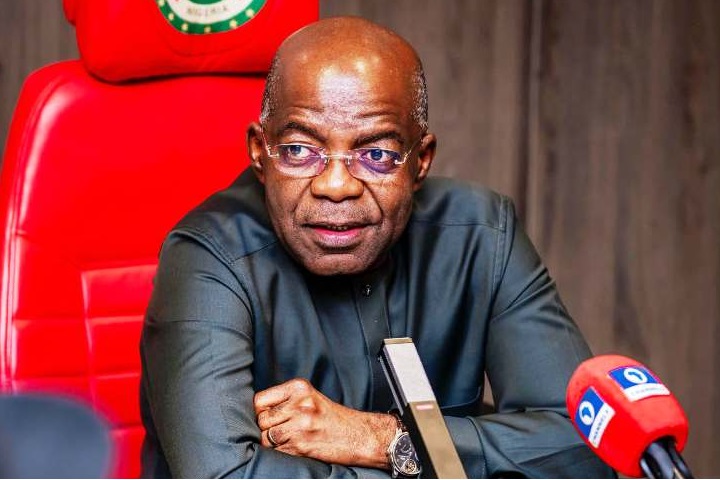
THIS DAWN — The Labour Party’s 7th January 2026 communiqué may read as a formal assertion of legality and procedural compliance, but beneath the polished language lies a high-stakes power recalibration—and at the center of it is Governor Alex Chioma Otti.

With Peter Obi’s exit and Julius Abure’s removal from the National Chairmanship, the Labour Party confronted a leadership vacuum that threatened both internal cohesion and national relevance.
The NWC’s decision to recognize Otti as National Leader is not just symbolic; it is a strategic move to consolidate authority around a figure with executive power, political networks, and the financial leverage that can sustain a national party apparatus.
In essence, Otti has become the Party’s new fulcrum of power.
But the move is fraught with tension.
The Party Constitution is ambiguous on the scope of a National Leader’s authority, raising inevitable questions:
-
Who really calls the shots?
-
How will Otti’s influence intersect with that of National Chairman Senator Nenadi Usman and other NWC stalwarts?
The State of Affairs
Sources within the Party suggest that while many senior members outwardly accept the communiqué, behind closed doors, factional rivalries simmer, particularly among those who had anticipated greater influence in a post-Obi realignment.
The communiqué’s legalistic framing—citing the Supreme Court and INEC—serves a dual purpose: it projects institutional legitimacy while attempting to preempt challenges to the new leadership structure.
Yet legality does not automatically translate into political authority on the ground.
Labour’s ability to mobilize, organize, and retain members in key states will be the true test of whether Otti can unify the Party or merely preside over a fragile coalition of competing factions.
Peter Obi’s departure adds another layer of complexity.
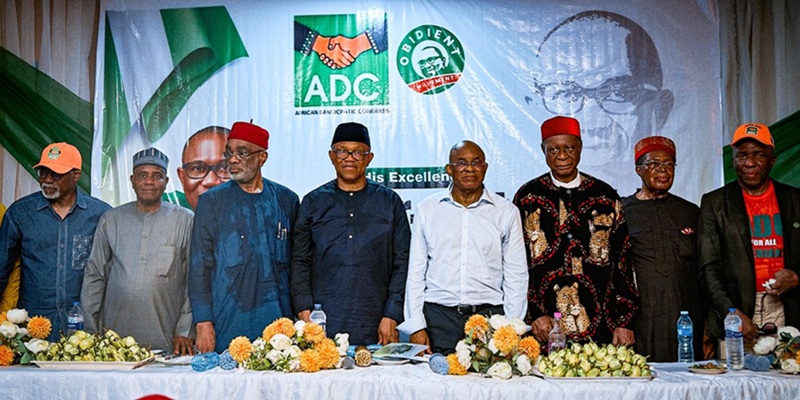
While the communiqué diplomatically wishes him well, his supporters remain a potential base of discontent, capable of forming splinter movements or weakening the Party’s grassroots cohesion.
Otti’s challenge will be to integrate or neutralize these interests while asserting his leadership—no small task given Nigeria’s fractious party politics.
Way Forward for Labour Party
Electoral implications loom large.
By elevating Otti, the Labour Party signals a pivot toward executive credibility and regional leverage, but it has yet to articulate a coherent national strategy.
The risk is that internal consolidation around one figure could alienate potential allies or energize rival factions within the Party.
Observers note that Labour’s survival and resurgence now hinge less on ideology or messaging and more on Otti’s political dexterity and ability to manage internal power dynamics.
In the end, the communiqué reads like a carefully staged declaration of control, but the real story is inside the Party.
Alex Otti stands as both the Party’s greatest asset and its most visible gamble.
His success—or failure—will likely define whether Labour emerges as a credible force in the post-Obi political landscape or fragments under the weight of its own factional tensions.
For political watchers, Labour’s next months will be a window into Nigerian party politics at its most strategic and ruthless: a test of leadership, loyalty, and the capacity to transform legal legitimacy into electoral relevance.
And at the center of that test is one man—Alex Otti.
Ogbuefi Ndigbo, London