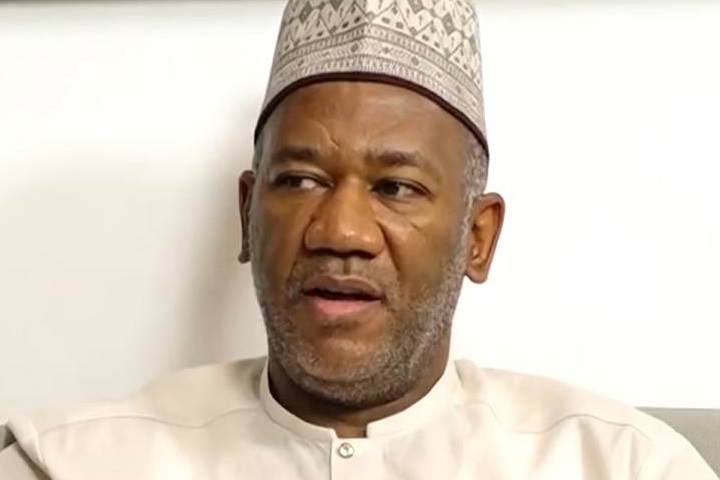
THIS DAWN — In a television interview that left even seasoned journalists stunned, Dr Yusuf Datti Baba-Ahmed, the 2023 Labour Party vice-presidential candidate, fought back tears as he accused the ruling All Progressives Congress (APC) of deliberately weaponising insecurity to capture and retain power in Nigeria.

“Insecurity is part of APC,” he declared on Channels Television’s Politics Today in September. “Insecurity has been APC’s way of getting and staying in power.”
The statement, delivered with raw emotion, has reignited one of the country’s most toxic debates: is Nigeria’s decade-long spiral of banditry, insurgency and mass abduction the result of mere incompetence – or something far darker?
From Opposition Rhetoric to National Indictment
Baba-Ahmed’s central charge is chronological and chilling. According to him, the seeds of today’s chaos were sown before the APC even existed as a party.
“Insecurities were brought into Nigeria in the pre-2015 elections,” he said. “The desperation to get Jonathan out of power caused insecurity in Nigeria.”
He pointed to the fall of Muammar Gaddafi in 2011, claiming that arms and fighters spilled across the Sahel and were later exploited by political actors desperate to unseat President
The former Baze University chancellor also accused figures close to Muhammadu Buhari – including Nasir El-Rufai – of using “incendiary rhetoric” after the 2011 polls that left over 800 dead in post-election violence.
Most explosively, Baba-Ahmed linked the APC’s alleged strategy to the 2015 Zaria massacre of Shia Muslims and to revelations from his own family’s ordeal: the 2024 kidnapping of his nephew, during which the released captive reportedly told negotiators that the bandits’ grievances echoed statements made publicly by El-Rufai.
Fact-Check: What Holds, What Crumbles
Independent verification paints a more nuanced picture.
Boko Haram’s violent phase began in 2009 – four years before the APC was formed – and escalated dramatically under Jonathan’s watch, with the 2014 Chibok abduction becoming a global symbol of state failure.
Arms from post-Gaddafi Libya did flood the region, but analysts say the primary drivers of Nigeria’s insurgency remain local: poverty, weak borders and the brutal 2009 extrajudicial killing of Boko Haram founder Mohammed Yusuf.
The 2015 Zaria massacre, in which the Nigerian Army killed between 347 and over 1,000 members of the Islamic Movement in Nigeria (IMN), occurred seven months after Buhari took office – not before the election, as Baba-Ahmed’s timeline sometimes implied.
Amnesty International called it “one of the darkest days” for human rights under the new APC government, but no evidence ties it to pre-election plotting.
Where Baba-Ahmed’s accusations gain traction is in the area of political rhetoric and governance failure.
El-Rufai’s 2011 tweets threatening “infidels” and his later admission of paying off Fulani militias in 2016 remain documented and deeply controversial.
Corruption in security spending is equally undeniable: Nigeria’s defence budget has soared past ₦3 trillion in recent years, yet the country recorded over 43,000 violent deaths between 2015 and 2023, according to the Council on Foreign Relations.
Expert Voices: A Chorus of Concern and Caution
As Baba-Ahmed’s claims ripple through the political landscape, security analysts and civil society leaders are weighing in, offering a mix of validation for the underlying governance failures and warnings against oversimplifying a multifaceted crisis.
Dr Nduka Eze, director of the Lagos-based Centre for Democracy and Development (CDD), a nonprofit focused on human security and governance, echoes the sentiment that elite indifference – not just partisan plots – is the true culprit.
In a recent interview with The Guardian, Eze elaborated on CDD’s ongoing work training community leaders in conflict resolution across northern states like Kaduna and Zamfara.
“Corruption, poor coordination and elite indifference are the real enemies.
“Blaming one party risks distracting from the systemic rot that predates and will outlast any administration.
“We’ve seen this in our peacebuilding programs: when we train Hakimis and Ardos – traditional district heads – on non-violent dispute resolution, the gains are immediate, but without sustained federal funding and accountability, bandits exploit the gaps.
“The APC’s manifesto promised security as a core pillar, yet our 2025 monitoring shows security votes in 21 states totaling ₦132.73 billion with little transparency – that’s not complicity per se, but it breeds it,” Eze said.
CDD’s initiatives, including a national stakeholders’ conference with the Nigerian Governors Forum earlier this year, have highlighted how underfunding non-kinetic operations – like youth employment in volatile regions – perpetuates the cycle.
“Insecurity isn’t imported; it’s homegrown neglect.
“A Presidential Truth and Accountability Commission, with international oversight, could expose the profiteers – from corrupt officials to those sharing intel with networks – but it requires political will the current government hasn’t shown,” Eze added.
Security consultant Jonathan Onoja, speaking on TVC News in September, took a sharper tone, accusing not just the APC but specific actors of direct involvement.
Onoja, who has advised on counter-banditry in the northwest, pointed to Zamfara State Governor Dauda Lawal’s public admissions about knowing bandit hideouts as evidence of complicity at state levels.
“Protection rackets”
“If the governor cannot make any headway in addressing the issue of insecurity in his state, he should resign.
“We’ve raided camps based on intel, only to find state resources funneled back to criminals.
“This isn’t incompetence; it’s a web of protection rackets.
“The federal government’s failure to designate bandits as terrorists – a step even APC chieftains like Abdulrahoof Bello now admit is a ‘major lacuna’ – leaves us hamstrung,” Onoja declared.
From the opposition side, Buba Galadima, a Board of Trustees member of the New Nigeria Peoples Party (NNPP), framed the APC’s priorities as politically myopic.
In a November interview on Arise TV, Galadima lambasted the ruling party for fixating on defections over security.
He said: “The Federal Government has given 99% of its time to politicking.
“Instead of tackling the ills of insecurity, the APC is busy receiving defectors and destroying opposition parties.
“Governance is serious business – if you’re president, you get six hours for leisure; the rest is hands-on.
“But under Tinubu, we’re seeing orchestrated sabotage, with internal actors amplifying terror for 2027 gains.”
Even within APC circles, cracks are showing.
Kwara State chieftain Abdulrahoof Bello, in a Daily Post interview last week, called for constitutional amendments to enable regionalism as a “factory setting” fix.
“The non-declaration of bandits as terrorists is a major challenge,” Bello admitted.
He urged decisive action amid U.S. pressure over Nigeria’s recent Country of Particular Concern designation for religious persecution.
International observers add gravity.
A November Crisis Group report warns that Nigeria’s distracted leadership has eroded its regional clout, allowing insecurity to fester unchecked.
“Domestic flux and acute crises at home have sidelined bold diplomacy,” the report notes, recommending gender-specific deradicalization and economic equity – measures CDD has long championed but seen under-implemented.
A Nation on Edge
The timing of Baba-Ahmed’s outburst could hardly be more charged.
President Bola Tinubu declared a “security emergency” only weeks ago, after yet another mass school kidnapping in Katsina.
The former VP candidate dismissed the declaration as “a joke”, accusing the government of parroting extremist narratives while Vice President Kashim Shettima is reduced to attending weddings and condolence visits.
The Department of State Services has already summoned Baba-Ahmed for separate “inciteful” remarks against the military – a move critics see as intimidation of dissent.
Echoes in a Traumatised Country
Across social media, Nigerians are divided but exhausted.
“Datti spoke the truth many are afraid to say,” wrote one user with over 100,000 likes. Others called it “dangerous tribal baiting”.
Yet in villages still mourning fresh massacres and in ransom-weary cities, Baba-Ahmed’s tears – and the experts’ measured indictments – have struck a nerve.
For millions of Nigerians, the question is no longer whether their leaders have failed them – but whether some have actively profited from that failure.
As 2027 looms, one thing is certain: the accusation that insecurity is being used as a political weapon will not disappear quietly.
In a country where funerals now outnumber celebrations, that may be the most frightening prospect of all.