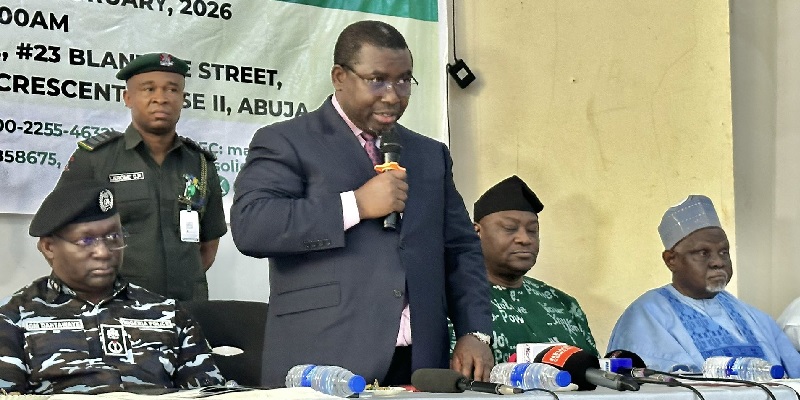
TDThe Independent National Electoral Commission (INEC) has officially unveiled a revised timetable and schedule of activities for the 2027 General Election, while also announcing a new date for the Osun State Governorship Election.

The changes, according to the Commission, are designed to align Nigeria’s electoral calendar with the provisions of the newly enacted Electoral Act 2026, which has introduced significant adjustments to statutory timelines governing pre-election and electoral processes.
Key Changes to the 2027 General Election
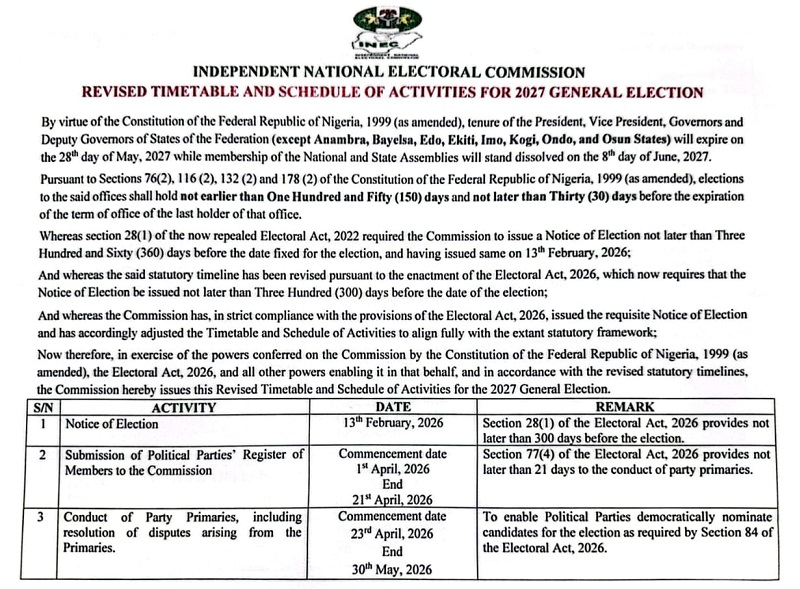
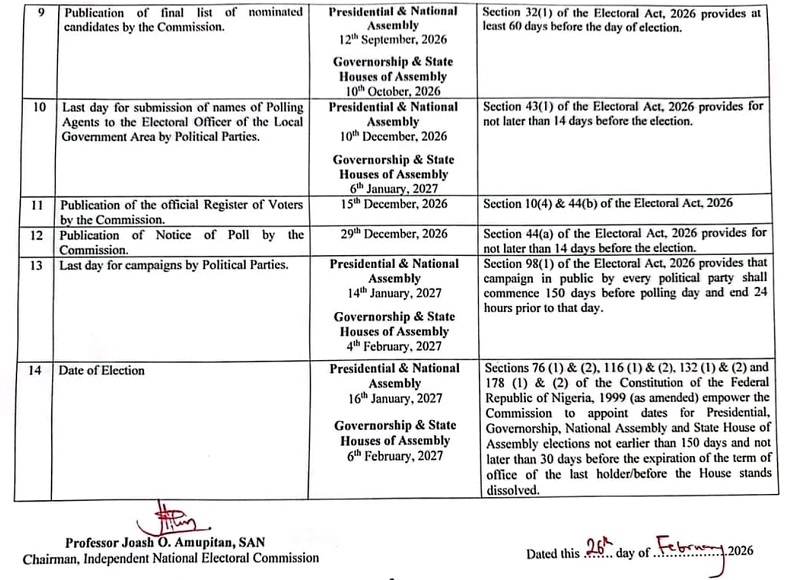
- Presidential and National Assembly Elections: Rescheduled to Saturday, 16th January 2027, a full month earlier than the previously fixed date of February 20, 2027.
- Governorship and State Houses of Assembly Elections: Now set for Saturday, 6th February 2027, instead of March 6, 2027.
INEC explained that these changes were necessitated by the repeal of the Electoral Act 2022 and the enactment of the Electoral Act 2026, which redefined timelines for party primaries, campaigns, and other pre-election activities.
Timetable Milestones
The Commission outlined several critical milestones that will shape the electoral process:
- Conduct of Party Primaries: April 23 – May 30, 2026
- Resolution of Primary Disputes: To be completed within the same window
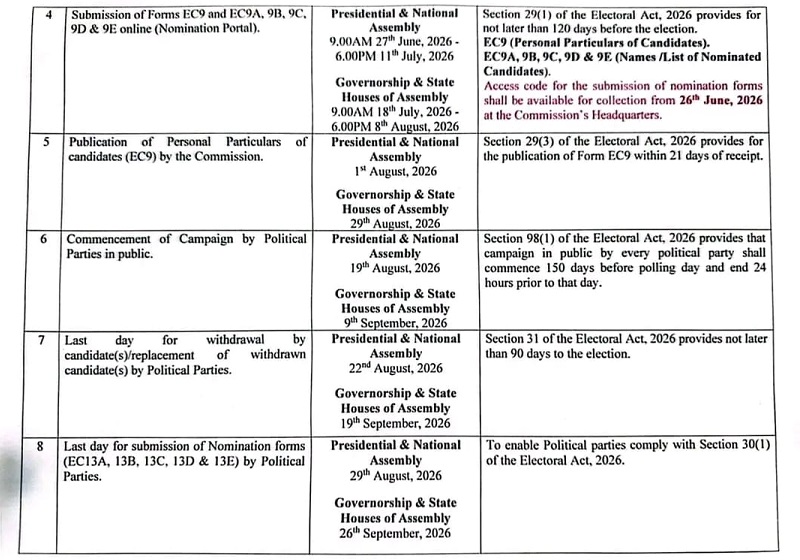
- Presidential and National Assembly Campaigns: Commence August 19, 2026
- Governorship and State Assembly Campaigns: Begin September 9, 2026
- Campaigns End: 24 hours before Election Day, in strict compliance with the law
INEC stressed that political parties must adhere strictly to these timelines, warning that enforcement measures will be applied to ensure compliance.
Osun Governorship Election Rescheduled
The Commission also announced a shift in the date for the Osun State Governorship Election, moving it from August 8, 2026 to August 15, 2026.
INEC clarified that while some activities relating to the Ekiti and Osun governorship polls have already been conducted, the remaining processes will now be implemented strictly in line with the new Electoral Act 2026.
It emphasized that the revised dates are fully consistent with the Constitution of the Federal Republic of Nigeria, 1999 (as amended) and the Electoral Act 2026.
The Commission underscored that the adjustments are not arbitrary but are rooted in the need to ensure that Nigeria’s elections are conducted within the framework of the law.
INEC’s Call to Stakeholders
In its statement, INEC reiterated that the successful conduct of the forthcoming elections is a collective responsibility.
The Commission called on political parties, candidates, civil society organizations, and the electorate to cooperate in ensuring peaceful, credible, and inclusive elections that reflect the sovereign will of Nigerians.
The announcement was signed by Mallam Mohammed Kudu Haruna, National Commissioner and Chairman of the Information and Voter Education Committee.
INEC said it underscored its commitment to transparency and proactive communication with the public.
This revised timetable marks a significant shift in Nigeria’s electoral calendar, setting the stage for an earlier-than-expected general election season.
It also signals INEC’s determination to enforce compliance with the new legal framework.
Meanwhile, it reminded stakeholders that credibility and inclusiveness remain the cornerstone of Nigeria’s democratic process.
See an updated version of the timetable below: