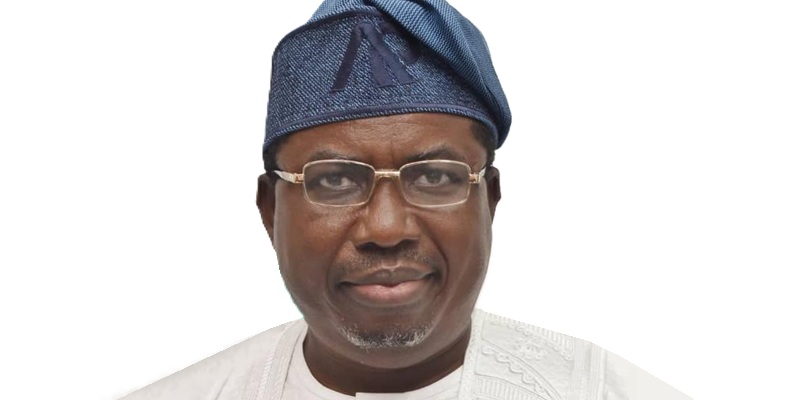
TDThe Chairman of the Independent National Electoral Commission (INEC) has publicly denied allegations that he is a card-carrying member of the ruling All Progressives Congress (APC), following the circulation of claims suggesting otherwise.

In a statement addressing the controversy, the INEC boss dismissed the reports as false and misleading, emphasizing his independence from any political party.
“I want to address a recent claim circulating that I am affiliated with or working for the ruling party, APC,” he said. “Let me state this clearly and without ambiguity — I am not a member of APC, nor do I work for or represent the party in any capacity.”
He further stressed that his actions and decisions are guided strictly by his professional responsibilities and commitment to neutrality.
According to him, his role demands impartiality, especially in overseeing Nigeria’s electoral processes.
“My views and engagements are based solely on my personal opinions, professional responsibilities, and commitment to truth and fairness.
“I operate independently and do not take directives from any political group or interest,” the statement added.
Reason for the Denial
The denial comes amid growing public scrutiny and political tension, as stakeholders continue to demand transparency and accountability from electoral authorities ahead of future elections.
However, despite the chairman’s clarification, some circulating materials online have been presented by critics as “proof” of alleged political affiliation.
Political analysts note that allegations of partisanship against electoral officials can significantly impact public trust in the democratic process.
They urge citizens to rely on verified information and avoid spreading unconfirmed reports.
The INEC chairman concluded his statement by calling for responsible public discourse.
“I encourage everyone to verify information before drawing conclusions.
“Let’s keep conversations respectful, factual, and free from unnecessary accusations,” he stated.
As the debate continues, observers say maintaining confidence in institutions like INEC is critical to safeguarding Nigeria’s democracy.
Mixed Reactions Trail INEC Chairman’s Denial
Nigerians have taken to social media to react strongly to the statement by the Chairman of the Independent National Electoral Commission (INEC), denying affiliation with the All Progressives Congress (APC).
Nigerians also point out the closing remarks of the statement and noted that it was a mere AI generated response.
The comment reads:
“If you want, I can make it more aggressive, more diplomatic, or shorter for quick posting.”
Beyond the “AI response “, while some users expressed support, many others questioned the credibility of the denial, citing alleged “evidence” circulating online.
Skepticism and Distrust Dominate
A large segment of Nigerians reacted with doubt, arguing that public officials often deny political affiliations.
“This is Nigeria, everyone is neutral until proven otherwise,” one user wrote.
Others claimed that “proof” being shared online contradicts the chairman’s statement, though such materials remain unverified.
Some commenters pointed to Nigeria’s history of electoral controversies, saying trust in electoral institutions remains fragile.
Neutral Voices Urge Transparency
Some Nigerians adopted a middle-ground stance, calling for transparency rather than outright dismissal or acceptance.
“INEC should provide clear clarification with evidence to settle this,” one comment read.
Others suggested that public trust can only be restored through openness and accountability.
Broader Concerns About Electoral Integrity
Beyond the individual claim, many reactions reflected deeper concerns about Nigeria’s electoral system.
Analysts note that allegations of political bias—whether proven or not—can weaken confidence in democratic processes, especially ahead of future elections.
Summary of Public Sentiment
Skeptical majority: Questions credibility, demands proof
Supportive minority: Urges fairness and fact-checking
Neutral observers: Call for transparency and evidence.
The reaction to the INEC chairman’s statement highlights a broader issue—public trust in electoral institutions remains deeply divided.