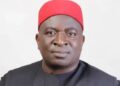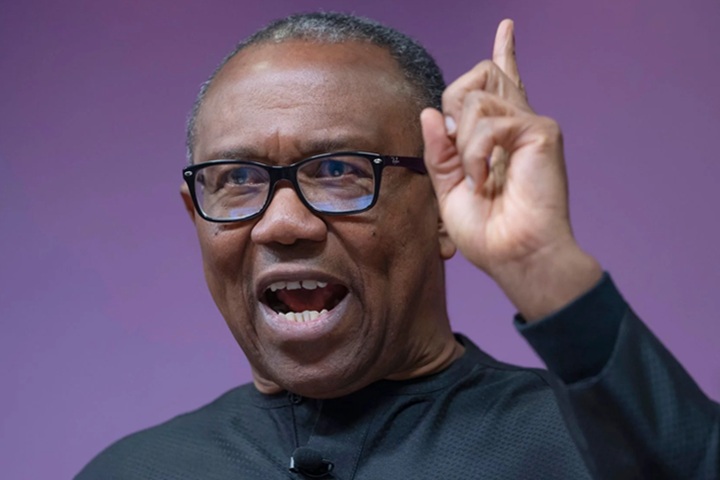
THIS DAWN — Former Anambra State Governor and Labour Party presidential candidate, Peter Obi, has raised serious concerns about Nigeria’s economic direction following the announcement that India has overtaken Japan to become the world’s fourth-largest economy by nominal Gross Domestic Product (GDP).

According to International Monetary Fund (IMF) estimates for 2025, India’s GDP is projected at approximately $4.187 trillion, marginally surpassing Japan’s estimated $4.186 trillion.
India is now positioned to challenge Germany, whose economy stands at about $4.74 trillion, for the third spot globally.
While the development marks a major milestone for India, Obi argues that it also serves as a sobering reminder of Nigeria’s economic decline, particularly when viewed through the lens of historical comparison.
A Shared Starting Point, Divergent Outcomes
Obi, in a memo titled “Concerning Issues as India Surpasses Japan“, noted that Nigeria and India once followed comparable economic trajectories, making their current divergence especially troubling.
Data from the World Bank shows that at the end of 2007, during the administration of President Olusegun Obasanjo, India’s nominal GDP per capita stood at about $1,022, while Nigeria’s was significantly higher at approximately $1,816.
By 2015, at the end of the Yar’Adua/Jonathan administration, both countries had recorded growth.
India’s nominal GDP per capita had risen to about $1,584, while Nigeria’s climbed to roughly $2,586.
At that point, Nigeria still appeared to be on a stronger per-capita income path.
However, projections by the IMF World Economic Outlook indicate a dramatic reversal by 2025.
India’s nominal GDP per capita is estimated to rise further to about $2,878, while Nigeria’s is projected to fall sharply to around $807.
Revenue Growth Without Development Impact
Despite Nigeria recording significant revenue inflows in recent years, Obi described the country’s economic performance as deeply concerning.
He pointed out that between 2023 and 2025, Nigeria’s combined revenue is estimated at approximately ₦200 trillion, equivalent to about $135 billion.
In addition to these revenues, the country has benefited from fuel subsidy savings and unprecedented levels of borrowing—exceeding the total borrowing of all previous administrations combined between 1999 and 2023.
Yet, Obi noted that these resources have not translated into tangible improvements in the lives of citizens.
Worsening Social and Economic Conditions
According to Obi, key indicators of human development have deteriorated despite increased government spending.
Poverty levels continue to rise, insecurity persists across several regions, and access to quality healthcare and education remains inadequate.
Small and medium-sized enterprises, which form the backbone of the Nigerian economy, are reportedly shutting down daily due to high operating costs, lack of credit, and unreliable electricity supply.
Power remains erratic and expensive, while the cost of living—including rent, transportation, and food—has escalated beyond the reach of ordinary Nigerians.
Call for Competent and Compassionate Leadership
Obi reiterated his call for national unity aimed at building a leadership consensus anchored on competence, compassion, and character.
He stressed that Nigeria’s leadership must prioritise citizens’ welfare and strategically invest in critical sectors such as healthcare, education, infrastructure, agriculture, and technology.
He also emphasised the need to cut waste, reduce the cost of governance, and entrench transparency and accountability so Nigerians can track progress and hold leaders responsible.
The Path Forward for Nigeria
According to Obi, a responsive government must:
- empower citizens economically,
- create sustainable jobs,
- support businesses,
- strengthen security,
- ensure reliable energy and food security,
- promote innovation, and,
- invest in human capital development.
Restoring trust in public institutions through accountability, he said, is essential for national recovery.
He concluded that only through collective action, transparency, and visionary leadership can Nigeria close the widening gap with countries like India and convert its vast resources into prosperity, security, and opportunity for all.
“A new Nigeria is POssible,” Obi affirmed.