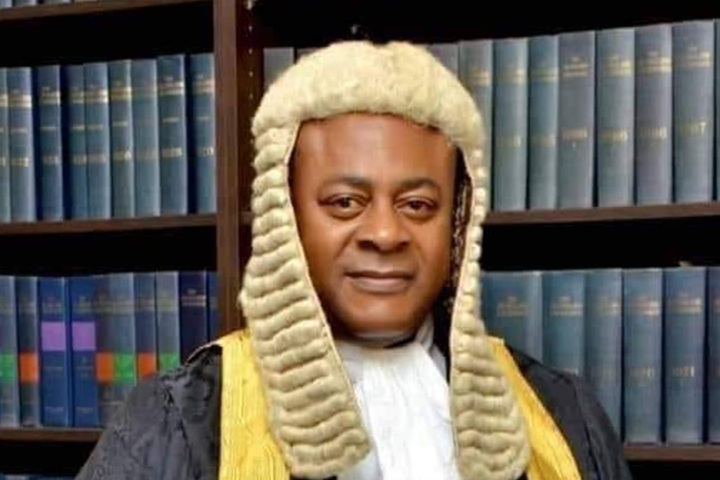
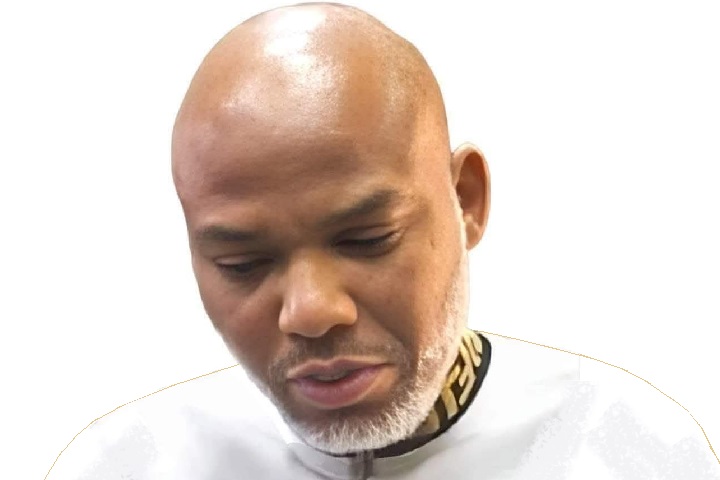
THIS DAWN — Fresh controversy has erupted over the legal battles of the convicted leader of the Indigenous People of Biafra (IPOB), Mazi Nnamdi Kanu, following new revelations by one of Nigeria’s most respected legal luminaries, Onyechi Ikpeazu SAN.

In a recent interview, Ikpeazu disclosed how Nnamdi Kanu jeopardised his own defence through what he described as unilateral, ill-advised actions.
He said that contrary to widespread narratives, it was Kanu himself that jeopardised the case, not the prosecution, not the court, and not his legal team.
According to Ikpeazu, who was among the Senior Advocates previously representing Kanu, the IPOB leader repeatedly acted without consulting his legal team.
According to him, Kanu filed motions and applications on his own, despite the sensitive nature of the terrorism-related charges he was facing.
The SAN noted with concern that Kanu’s actions indicated a deep level of mistrust and disregard for professional guidance.
An observer’s reaction
“I came to the conclusion that Nnamdi Kanu personally, out of arrogance, ignorance, and ‘I-too-know,’ destroyed his case himself.
“It is unfortunate reading from the SAN that he went behind them to file applications challenging the court’s jurisdiction without the consent of the learned silks representing him,” said an observer, Eneh Victor Chigozie, while reacting to the interview.
In the interview, Ikpeazu explained that they discovered—through the prosecution, that Kanu had independently filed a motion challenging the court’s jurisdiction, personally signing the document.
Kanu did that before the Senior Advocates could meet Kanu to prepare a coordinated defence, he added.
Even more surprising, he had also filed an application seeking a subpoena to bring 23 witnesses, all without his lawyers’ knowledge.
“He was confronted with this information, and he admitted to filing the motions himself,” Ikpeazu stated.
When asked whether he understood the implications of such actions, Kanu insisted that he did, adding that he was prepared to defend himself.
The turning point
The turning point came in open court when another SAN, Kanu Agabi, formally announced the development.
The presiding judge asked Kanu to confirm, and he did—openly declaring that he preferred to defend himself.
Ikpeazu recalled that the truth was that the client exercised his constitutional right to take over his own defence.
This was contrary to circulating claims suggesting the lawyers abandoned Kanu or were pushed out by external interference.
The Senior Advocate lamented that misinformation was being peddled by persons attempting to twist the narrative.
He stressed that the legal team had already mounted a strong defence strategy.
We had “done enough to cast reasonable doubt based on the evidence led by the prosecution.
“Regardless of sentiments, the material thing is that we had a case to do.
“But the client had a right to take over his case and conduct it personally, and that was what eventually happened,” Ikpeazu said.
He emphasised that the termination or retention of counsel is a constitutional prerogative of every accused person.
Kanu exercised that right—albeit in a manner the SAN described as detrimental to his own legal prospects.
The interview has reignited debate among supporters, critics, and legal analysts.
Many are now reassessing how Kanu’s courtroom decisions may have shaped the trajectory of his high-profile case.