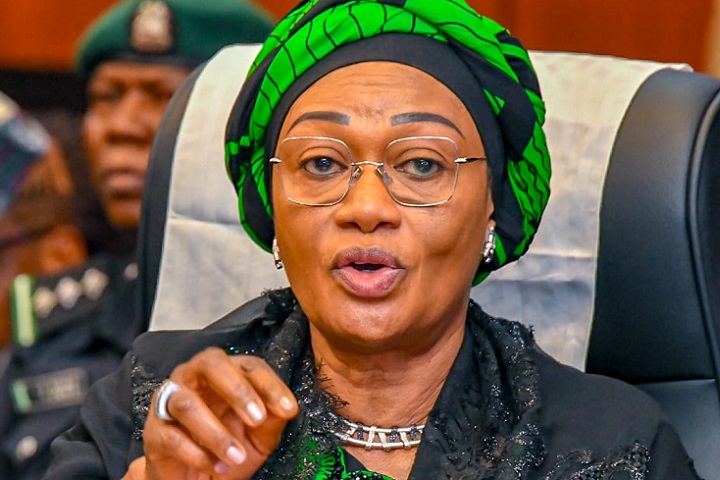

American broadcaster Tony Perkins, host of the conservative program Washington Watch, has disclosed that Nigeria’s First Lady Remi Tinubu sought to appear on his show to discuss religious freedom in Nigeria.
Perkins said he declined the request, asserting that he would not allow his platform to be used to “cover up” ongoing concerns about religious persecution in the country.
Perkins’ Disclosure
Perkins made the revelation during a broadcast featuring U.S. Congressman Chris Smith, a long-time advocate for global religious freedom.
While Smith criticized the Nigerian government for denying the scale of Christian killings and hiring American lobbyists to downplay the issue, Perkins interjected with his own account:
“The First Lady of Nigeria was here this week, and in fact, they wanted to come on the programme to talk about religious freedom, and I said, ‘I’m not gonna meet with them or have a meeting with anybody.’”
He added: “I’m not gonna give them a platform to cover up what they’re doing in Nigeria.”
This blunt refusal underscored the skepticism among U.S. religious leaders and policymakers regarding Nigeria’s official narrative on religious violence.
Context of the Visit
Remi Tinubu’s U.S. Trip: The First Lady attended the National Prayer Breakfast in Washington, a high-profile annual event that brings together global leaders, diplomats, and faith communities.
Her presence was acknowledged by President Donald Trump, which pro-Tinubu supporters celebrated as a diplomatic win.
Background Pressure: Nigeria has been under increasing scrutiny from the U.S. government over allegations of widespread killings of Christians.
In November 2025, President Trump designated Nigeria a “Country of Particular Concern” under U.S. religious freedom laws, citing systemic violence and government inaction.
Lobbying Efforts: Reports indicate that the Tinubu administration has spent millions of dollars on Republican lobbyists to rehabilitate its image in Washington.
This followed Trump’s scathing remarks in 2025, when he described Nigeria as “a disgrace” under Tinubu’s leadership.
Reactions and Debate
The revelation has triggered heated debate among Nigerians and international observers:
Critics of the Government: Many argue that sending the First Lady abroad was part of a broader lobbying strategy designed to soften international criticism rather than address the root causes of violence at home.
Civil Society Concerns: Advocacy groups warn that attempts to reframe Nigeria’s religious freedom crisis through international media appearances risk undermining the credibility of victims’ experiences.
Public Sentiment: Online commentators accused the government of prioritizing image management over substantive reforms.
Some noted that Perkins’ rejection reflects a growing unwillingness among U.S. influencers to provide cover for Nigeria’s leadership.
Broader Implications of Tinubu’s Cover Up and Lobbying
Perkins’ refusal highlights the fragile state of Nigeria’s international reputation on religious freedom.
It illustrates how lobbying and diplomatic outreach may falter when confronted with skepticism from influential voices in Washington.
The episode also underscores the difficulty of reconciling Nigeria’s domestic realities with its efforts to project stability abroad.
For the Tinubu administration, the incident is a reminder that international credibility cannot be purchased through lobbying alone.
Addressing religious violence transparently and decisively remains the only path to restoring confidence among both Nigerians and global partners.
Tony Perkins’ decision to block Remi Tinubu from appearing on his program reflects the growing mistrust among U.S. religious freedom advocates toward Nigeria’s handling of Christian persecution.
As Nigeria faces mounting international pressure, the episode underscores the urgent need for genuine reforms at home rather than reliance on diplomatic optics abroad.