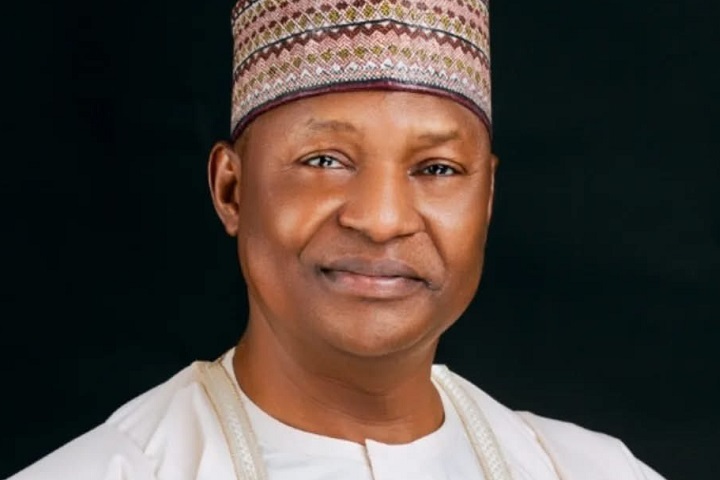
THIS DAWN — Hundreds of residents of Jega, Kebbi State, took to the streets over the weekend to demand the immediate release of former Attorney-General of the Federation (AGF) and Minister of Justice, H.E. Abubakar Malami (SAN). The protest, which drew large crowds of youths, women, and community leaders, reflects growing discontent over Malami’s continued detention by the Economic and Financial Crimes Commission (EFCC).

Background to the Detention
Malami, who served as Nigeria’s chief law officer during the administration of former President Muhammadu Buhari, is currently being held by the EFCC over allegations of financial misconduct and alleged links to terrorist financing. His arrest followed raids on his residences in Abuja and Kebbi State, where EFCC operatives reportedly seized documents and electronic devices as part of their investigation.
The EFCC insists that its probe is part of a broader crackdown on corruption and illicit financial flows. However, Malami has described the investigation as politically motivated, claiming that he is being targeted by rivals seeking to tarnish his reputation.
The Protest in Jega
On Sunday, December 21, 2025, demonstrators flooded the streets of Jega, chanting solidarity songs and carrying placards with inscriptions such as “Free Malami Now”, “Justice for Malami”, and “Stop Political Witch-Hunt.”
Eyewitnesses reported that the protest was largely peaceful, with security operatives monitoring the procession to prevent escalation. Protesters accused the EFCC of bias and demanded that Malami be released immediately pending the outcome of investigations.
Community leaders emphasized Malami’s contributions to Kebbi State and Nigeria at large, describing him as a respected figure whose detention has unsettled the region. “We are not saying the law should not take its course, but justice must be fair. Malami deserves to be treated with dignity,” one protester told reporters.
Political Reactions
The Kebbi State chapter of the African Democratic Congress (ADC) has also called for Malami’s release, accusing the EFCC of bias and political motivation in its handling of the case. Party officials argued that the prolonged detention without a clear charge undermines the rule of law and sets a dangerous precedent.
Supporters of Malami point to his record as AGF, where he oversaw several high-profile prosecutions and legal reforms, as evidence of his commitment to justice. They argue that his current ordeal is ironic, given his role in strengthening Nigeria’s anti-corruption framework.
EFCC’s Position
The EFCC has remained firm, insisting that its investigation is based on credible intelligence and documentary evidence. Officials say Malami’s detention is necessary to prevent interference with ongoing inquiries and to ensure accountability.
While the commission has not disclosed a timeline for concluding its investigation, sources within the agency suggest that charges may be filed if sufficient evidence is established.
Implications for Kebbi and Nigeria
The protests in Jega highlight the tension between anti-corruption efforts and political perceptions in Nigeria. Analysts warn that the case could deepen divisions in Kebbi State, where Malami enjoys significant grassroots support.
Nationally, the incident raises questions about the balance between due process and the fight against corruption. Critics argue that prolonged detentions without trial erode public trust in institutions, while supporters of the EFCC maintain that thorough investigations are essential to dismantling entrenched corruption networks.
Conclusion
As hundreds of protesters continue to demand Malami’s release, the case underscores the complex interplay of law, politics, and public opinion in Nigeria. For residents of Jega, the detention of their most prominent son has become a rallying point, symbolizing broader frustrations with governance and justice.
Whether Malami is eventually released or formally charged, the outcome will have significant implications for Nigeria’s legal and political landscape. For now, the streets of Jega remain a vivid reminder of the power of public protest in shaping national discourse.