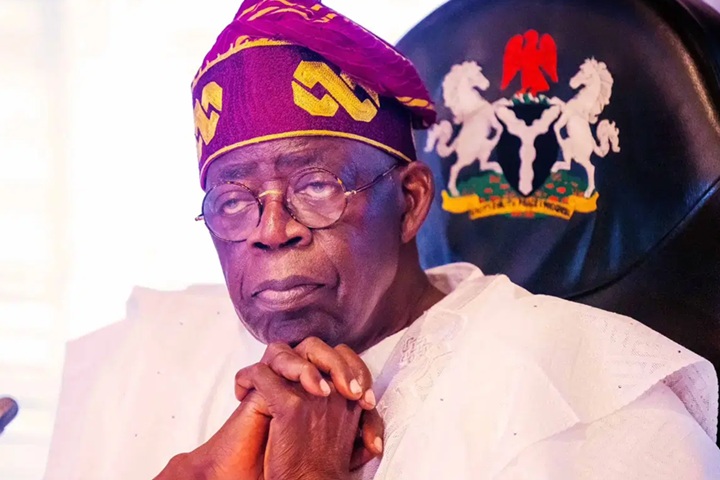
Introduction: How Tinubu’s Government Cut Off Its Nose to Spite Its Face
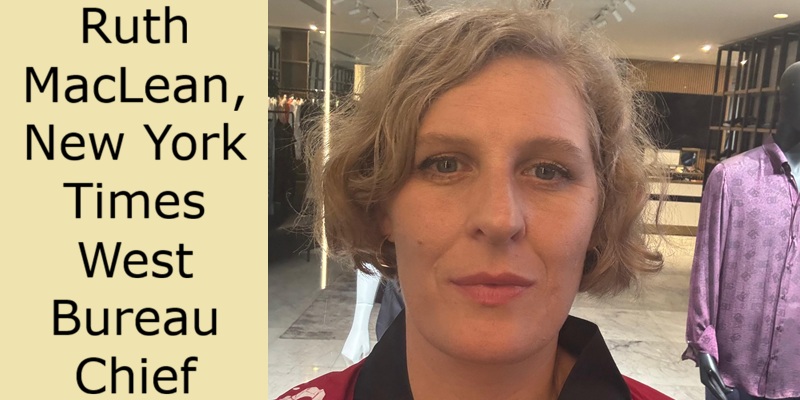
On January 18, 2026, the New York Times published a report that misrepresented the work of the International Society for Civil Liberties and Rule of Law (Intersociety), led by criminologist Emeka Umeagbalasi.

Instead of focusing on the urgent issue of systematic attacks on Christians and churches in Nigeria, the report caricatured Umeagbalasi as a “screwdriver salesman” and implied that U.S. airstrikes in Sokoto were based on his information.
Rather than correcting the record, the Tinubu administration seized upon the flawed report to discredit civil society watchdogs.
In doing so, it not only undermined Nigeria’s credibility but also embarrassed itself internationally—especially after revelations that it paid $9 million to a lobbyist whose efforts ended up disparaging both the American and Nigerian governments.
The NYT Misreporting
The New York Times article suggested that U.S. President Donald Trump authorized airstrikes in Sokoto based on information from Umeagbalasi, whom it labeled a “screwdriver salesman.”
This framing was not only inaccurate but also insulting, trivializing years of painstaking research by Intersociety into religious violence.
As This Dawn reported, the NYT’s portrayal was riddled with misquotes and distortions.
It implied that Intersociety’s data was unverified and largely based on secondary sources.
It ignored the organization’s extensive fieldwork in hotspots such as Southern Kaduna, Taraba, and Enugu.
Intersociety’s Rebuttal
Intersociety issued a detailed rebuttal on January 19, 2026, clarifying what was actually said during the December 16 interview with NYT Bureau Chief Ruth Maclean. Key points included:
- Data Verification: Intersociety explained its multi-layered data collection process, involving direct field research and eyewitness accounts.
- Church Attacks: It reported 19,100 churches attacked or destroyed since 2009, not “close to 20,000” as misquoted.
- Derogatory Remarks: It never referred to Fulanis as “animals.” Instead, it suggested Niger State as a viable hub for modern cattle ranching.
- Professional Integrity: Umeagbalasi never compared himself to CNN’s Christiane Amanpour; he encouraged Maclean to emulate her journalistic integrity.
The rebuttal underscored that Intersociety’s work is rooted in international best practices, not partisan politics. Its reports are humanitarian alarms, documenting the deaths of 125,000 Christians and 60,000 Muslims since 2009.
Intersociety’s Verified Data vs. New York Times Misquotes |
|
Verified ✔ |
Misquote ✖ |
| Intersociety reported 125,000 Christians and 60,000 Muslims killed since 2009, with 19,100 churches attacked. | NYT claimed ‘close to 20,000 churches’ and suggested data was mainly secondary sources. |
| Intersociety explained multi-layered data collection including direct field research in Southern Kaduna, Taraba, Enugu, etc. | NYT alleged leader admitted he often does not verify data. |
| Intersociety clarified they never compared Umeagbalasi to CNN’s Amanpour but encouraged Ruth Maclean to emulate her integrity. | NYT claimed such comparison was made. |
| Intersociety never called Fulanis ‘animals’; they suggested Niger State as a viable cattle ranching hub. | NYT alleged derogatory remarks. |
Tinubu Government’s Opportunism
Rather than defending civil society or correcting the NYT’s errors, the Tinubu administration exploited the misreporting to discredit Intersociety.
This opportunism reflects a broader pattern of suppressing dissent and avoiding accountability.
By amplifying a flawed foreign report, the government trivialized the suffering of religious minorities and undermined Nigeria’s moral standing.
It was a textbook case of cutting off one’s nose to spite one’s face—sacrificing truth for political expediency.
The Lobbyist Fiasco
Adding to the embarrassment, revelations emerged that the Tinubu government paid $9 million to a foreign lobbyist to influence U.S. policy and media narratives.
Instead of bolstering Nigeria’s image, the lobbying effort backfired spectacularly.
The narrative that emerged disparaged both the American and Nigerian governments as lacking intelligence capacity.
It depicts the two governments as relying instead on “roadside information” to justify military action.
This not only undermined confidence in Nigeria’s counterterrorism efforts but also embarrassed the United States by suggesting its military decisions were based on dubious sources.
The Global Embarrassment
The absurdity of the situation was captured in a viral post by commentator J.C. Okechukwu (@jcokechukwu) on X:
“Hi @RepRileyMoore ahead of your meeting with @POTUS to formally brief him and give your team’s recommendations on Nigeria, here’s what they’ve been up to lately:
“They now say President Trump, leader of the greatest nation on earth with access to the finest Intelligence in our world, relied on information from a screwdriver seller in the predominantly Christian city of Onitsha, to authorise the strikes against terrorist bases in Sokoto.
“Nearly every media organization in Nigeria has reportedly been mobilised to push this utter lunacy, despite the Nigerian government admitting in a press release that it authorised the airstrikes and coordinated it with the United States.
“This is the level of mind-numbing unseriousness that Nigeria exudes with in reality.
“No commitment to end the criminality, only an insatiable appetite to propagandize.”
This statement encapsulates the international ridicule Nigeria now faces.
Instead of being seen as a serious partner in counterterrorism, the government is perceived as unserious, propagandistic, and opportunistic.
Conclusion
The New York Times’ misreporting was a journalistic failure. But the Tinubu government’s exploitation of that failure was a strategic blunder.
By attempting to discredit Intersociety, the administration undermined a credible civil society organization and exposed itself to global ridicule.
The $9 million lobbying fiasco compounded the embarrassment, creating a narrative that disparaged both Nigeria and the United States.
The viral backlash, epitomized by J.C. Okechukwu’s post, has left Nigeria’s image in tatters.
If the Tinubu government is truly committed to ending religious violence, it must engage constructively with watchdogs like Intersociety, not vilify them. Anything less is a betrayal of the very people it claims to protect.
Editorial Analysis
-
The NYT’s errors were journalistic failures, but Tinubu’s government exploited them opportunistically.
-
By amplifying misquotes, the administration undermined Nigeria’s credibility and trivialized persecution data.
-
Intersociety’s reports are humanitarian alarms, not partisan talking points.
-
The government’s actions represent cutting off its nose to spite its face: sacrificing truth for expediency.
-
Nigeria deserves engagement with civil society watchdogs, not their discrediting.