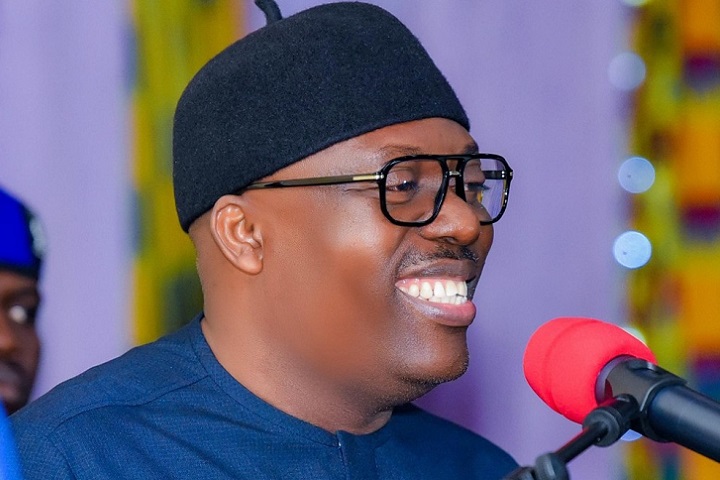
THIS DAWN — Rivers State politics has entered a decisive new phase following the dramatic defection of Governor Siminalayi Fubara from the Peoples Democratic Party (PDP) to the All Progressives Congress (APC).

Observers saw the move as the final rupture in his long and bitter estrangement from his political godfather and predecessor, Nyesom Ezenwo Wike.
Beyond the symbolism of party switching, the defection has effectively ended Wike’s once-formidable grip on both Fubara and the political machinery of Rivers State.
Meanwhile, it opened fresh fault lines within the ruling APC at the national level.
Central to the political chess move was Imo State Governor and Chairman of the APC Governors’ Forum, Senator Hope Uzodimma.
A video recording obtained by This Dawn shows how Uzodimma personally escorted Fubara to President Bola Ahmed Tinubu.
The move ensured that the Rivers governor’s entry into the APC was sealed at the highest level of power.
Watch video footage of Uzodimma leading Fubara to Tinubu:
Fubara Smiles, as Wike Weeps
The manoeuvre deliberately sidelined Wike, now Minister of the Federal Capital Territory.
Wike had reportedly expected to remain the primary gatekeeper between Rivers politics and the presidency.
By securing direct presidential acceptance, Fubara neutralized the leverage Wike had long exercised over him.
In Nigerian politics, access to the president is synonymous with political protection, relevance, and survival.
With Uzodimma’s intervention, Fubara was effectively “handed over” to Tinubu as the new APC leader in Rivers State.
That granted him a seat at the table with fellow APC governors and inclusion in collective decision-making within the ruling party.
For Fubara, the move was not merely defensive but strategic.
Since assuming office, he had faced sustained political pressure, legislative obstruction, and open hostility from factions loyal to Wike.
By crossing over to the APC, Fubara escaped the internal sabotage that had paralysed governance in Rivers.
He also repositioned himself within the dominant national power structure ahead of the 2027 election cycle.
Quiet Undercurrents and Fireworks
However, Fubara’s calculated escape has triggered heavy undercurrents and quiet fireworks within the APC.
While party leaders publicly welcomed him, insiders acknowledge unease among some APC stakeholders in Rivers and beyond.
The sudden elevation of a former PDP governor to party leadership in a politically sensitive state has unsettled long-standing APC aspirants who fear marginalization.
The move has also complicated internal power equations within the South-South, where party loyalties remain fluid and contested.
More explosive is the fallout with Nyesom Wike.
Once regarded as a critical ally of President Tinubu during the 2023 elections, Wike has reportedly reacted angrily to being bypassed.
He is said to have accused the presidency of sidelining him despite what he claims were enormous political and financial sacrifices.
In private and public outbursts attributed to him, Wike allegedly warned that he would not accept being “used and dumped.
He reportedly claimed he spent over ₦50 billion in Rivers State resources to support Tinubu’s emergence as president.
Political Orphan
While the presidency has not responded to such claims, political observers say Wike’s frustration stems from a sudden collapse of influence.
Once a powerbroker who controlled party structures, state resources, and federal access, Wike now finds himself politically isolated.
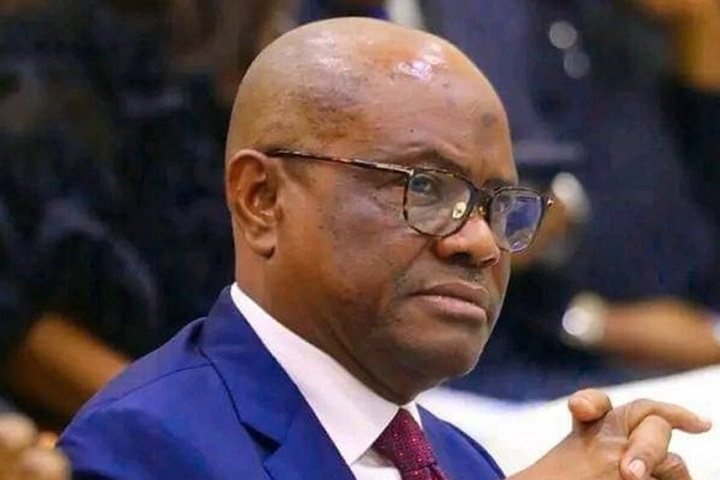
He was pushed out of the PDP, estranged from his successor, and facing diminishing relevance within the APC-led federal order.
Ironically, as Fubara settles into the APC, Wike is now effectively party-less, a sharp reversal of fortunes that underscores the ruthlessness of Nigerian power politics.
The situation has fueled speculation that Wike could adopt a confrontational posture toward Tinubu if he believes his political future is under threat.
Whether such threats translate into concrete action remains uncertain, but they add tension to an already delicate national political environment.
Life Back Home in Rivers State for Fubara
In Rivers State, reactions remain sharply divided.
Fubara’s supporters hail the defection as liberation from godfatherism and an opportunity to stabilize governance.
Critics warn that the rivalry could further distract from pressing developmental challenges.
Civil society groups have urged restraint, calling on all actors to prioritize governance over personal power struggles.
As the dust settles, one reality is unmistakable: Siminalayi Fubara has outmanoeuvred his former patron.
He also effectively dismantled an entrenched power structure and repositioned Rivers State at the heart of national politics.
In doing so, he has altered the balance of power in Rivers.
He has also ignited new tensions within the APC and unsettled one of Nigeria’s most formidable political figures.
The next phase promises even higher stakes as 2027 looms.