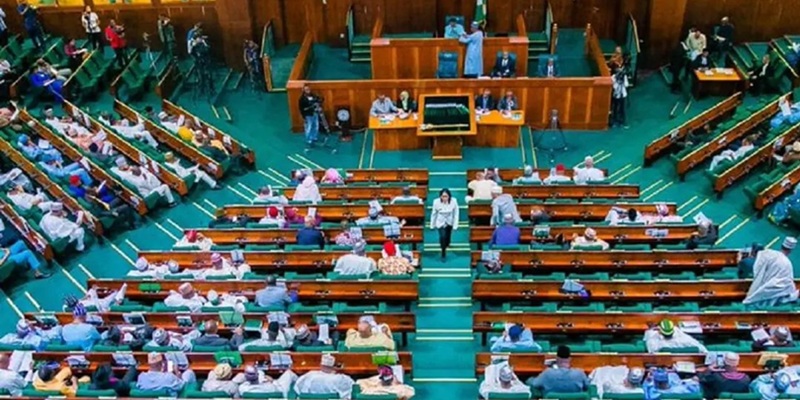
THIS DAWN — The House of Representatives has publicly distanced itself from an interim report issued by its Minority Caucus concerning alleged alterations to Nigeria’s recently enacted tax reform laws.

The House declared the caucus’s ad hoc committee procedurally invalid and without official parliamentary standing.
Official Statement from House Leadership
In a detailed press statement released late on Sunday, January 25, 2026, and shared via the official social media account, House Spokesman Rep. Akin Rotimi emphasized that only properly constituted committees have investigative authority.
He stated that only committees established by the full House in plenary session or by the Speaker under the Standing Orders hold legitimate oversight powers.
“The authority to constitute an ad hoc committee of the House rests solely with the House acting in plenary, or with the Speaker exercising powers conferred under the Standing Orders,” the statement said.
It further clarified that no political caucus, whether majority or minority, has the procedural authority to establish a committee with parliamentary status.

Minority Caucus Action and Allegations
The Minority Caucus announced on January 2, 2026, that it had formed its own ad hoc committee to probe alleged post-passage changes to tax legislation.
The laws cited included the Nigeria Tax Administration Act, 2025, and other related statutes.
The caucus later released an interim report alleging “illegal” discrepancies between versions passed by the National Assembly, gazetted copies, and final published texts.
Specific issues raised included reduced tax compliance thresholds, such as changes from ₦50 million to ₦25 million for individuals and from ₦250 million to ₦100 million for companies.
House Response and Official Verification Process
House leadership countered that these concerns had already been addressed through official institutional mechanisms.
In December 2025, the House constituted a bipartisan ad hoc committee to verify the authentic texts of the tax laws.
The committee included members from both ruling and opposition parties.
Its work led to the publication of a definitive Gazette and the issuance of Certified True Copies by the National Assembly.
The House has since formally disowned any unofficial documents, affirming that only gazetted versions and certified copies carry legal force.
Warning Against Parallel Committees
The House warned that the Minority Caucus initiative risks misleading the public and setting an unhealthy precedent.
It described the caucus-led report as non-binding, informal, and without legal or institutional consequence.
The statement stressed that such reports cannot be laid before the chamber or form part of the legislative record.
Broader Context and Public Advisory
The development reflects ongoing tensions over the tax reforms that took effect in early 2026.
While the House reaffirmed its commitment to transparency and oversight, it insisted such actions must strictly follow constitutional provisions and Standing Orders.
Members of the public were advised to treat caucus-led findings as political expressions rather than official actions of the House of Representatives.