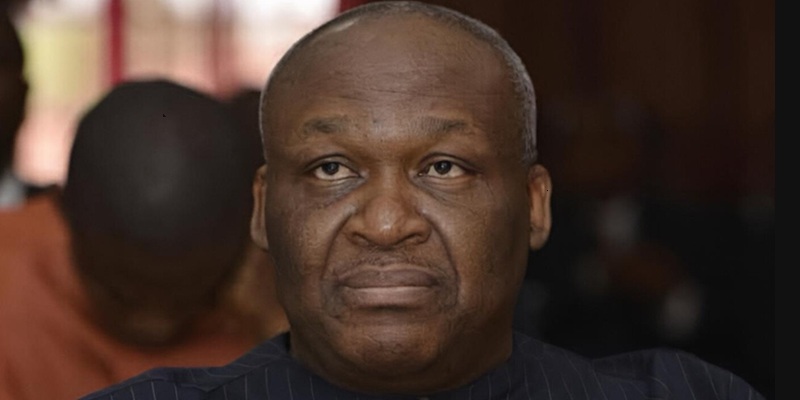
In a detailed legal opinion, Maduabum argued that the disputed provision amounts to an unlawful expansion of constitutional grounds for disqualification from elective office.

Constitution Is Supreme
Citing Section 1(1) and (3) of the Constitution of the Federal Republic of Nigeria, Maduabum emphasized that the Constitution remains the supreme law of the land and overrides any conflicting statutory provision.
According to him, qualifications and disqualifications for elective offices are exhaustively provided for in the Constitution and cannot be enlarged by legislative or administrative action.
“Where the Constitution has spoken, neither the National Assembly nor an electoral body may add to it by ordinary legislation,” he stated.
Supreme Court Authorities Cited
Maduabum referenced several landmark decisions of the Supreme Court of Nigeria to support his position:
-
In PDP v. INEC, the apex court held that the Independent National Electoral Commission (INEC) lacks the power to disqualify a candidate who satisfies constitutional requirements.
-
In APC v. Marafa, the Court distinguished between party non-compliance with statutory requirements and constitutional qualification, stressing that consequences relate to nomination validity — not new constitutional disqualifications.
-
In INEC v. Musa, the Court reaffirmed that neither the legislature nor INEC can impose additional restrictions that undermine constitutionally guaranteed political rights.
According to Maduabum, the judicial position has remained consistent: statutory provisions cannot introduce fresh substantive grounds for disqualification beyond those expressly stated in the Constitution.
Regulation vs. Constitutional Amendment
While acknowledging that regulation of political party administration is permissible, Maduabum argued that disqualifying a candidate solely because a political party failed to maintain or upload a digital membership register crosses a constitutional boundary.
He warned that such a provision effectively introduces a new ground of disqualification not contemplated by the Constitution.
“Once the consequence of party non-compliance becomes the outright exclusion of a constitutionally qualified candidate from the ballot, the law moves from regulation into unconstitutional amendment,” he noted.
Democratic Implications
Maduabum described the right to contest elections — subject only to constitutional limitations — as a core democratic safeguard.
He maintained that any section of the Electoral Act 2026 that disqualifies a candidate solely on the basis of a party’s failure to uphold or submit a digital membership register is liable to be struck down upon judicial review.
“The Constitution remains supreme. It cannot be amended by stealth through ordinary legislation,” he concluded.
The opinion is expected to reignite debate within legal and political circles over the limits of legislative authority in electoral reform and the constitutional boundaries of candidate qualification in Nigeria.