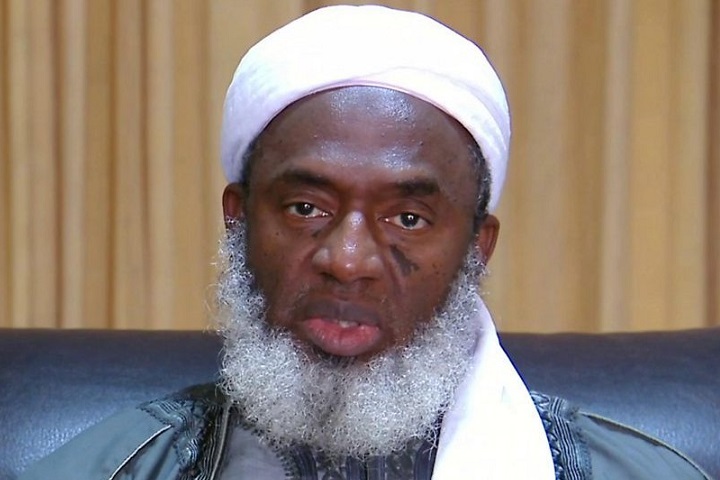
TDControversial Islamic scholar, Sheikh Ahmad Gumi, has claimed that the Nigerian Federal Government knows the names and locations of every terrorist operating in the country.

Sheikh Gumi’s recent remarks have sparked renewed debate about the government’s handling of insecurity in the country.
Gumi insisted his controversial engagements with armed groups are done with the knowledge of security agencies.
Key Highlights from Gumi’s Statement
- FG’s Awareness: Gumi stated: “The government knows every terrorist by name and location.”
- Security Agency Involvement: He explained that he never negotiates alone, but always with the police, military, and other security agencies present.
- Community Engagement: He said traditional leaders, including local emirs, and even women delegations have accompanied him into forests to promote dialogue.
- Purpose of Engagements: Gumi defended his role, saying his interactions with bandits are aimed at facilitating peace and de-escalating violence, not supporting criminality.
Background
Sheikh Ahmad Gumi, a Kaduna-based Islamic cleric, has long been a controversial figure in Nigeria’s security discourse.
He has positioned himself as a mediator between the government and armed groups, particularly bandits in northern Nigeria.
Supporters argue his approach offers a path to dialogue and peace.
Critics, however, warn that negotiating with bandits risks legitimizing criminal groups and undermining state authority.
Implications for Nigeria’s Security
Gumi’s claim raises questions about why, if the government knows terrorists by name and location, insecurity persists at such alarming levels.
His remarks may intensify calls for more transparent and decisive government action against insurgents and bandits.
With millions displaced and communities under siege, Nigerians are demanding clarity on the government’s strategy to restore peace.
Reactions
- Civil Society:
Advocacy groups are likely to press the government to confirm or deny Gumi’s claims, as they touch directly on accountability.
- Security Analysts:
Experts caution that if true, the government’s failure to act decisively could erode confidence in state institutions.
- Public Sentiment:
Many Nigerians view Gumi’s continued involvement with suspicion, questioning whether his mediation efforts embolden armed groups.
Outlook
Nigeria’s insecurity crisis remains one of the country’s gravest challenges.
The situation has spurned insurgency in the northeast, banditry in the northwest, and communal clashes in the middle belt.
Gumi’s assertion that the government already knows the identities and locations of terrorists adds pressure on authorities to move beyond rhetoric and deliver concrete results.
If the government truly possesses such intelligence, Nigerians will expect swift, transparent, and effective action to dismantle terrorist networks and restore national stability.