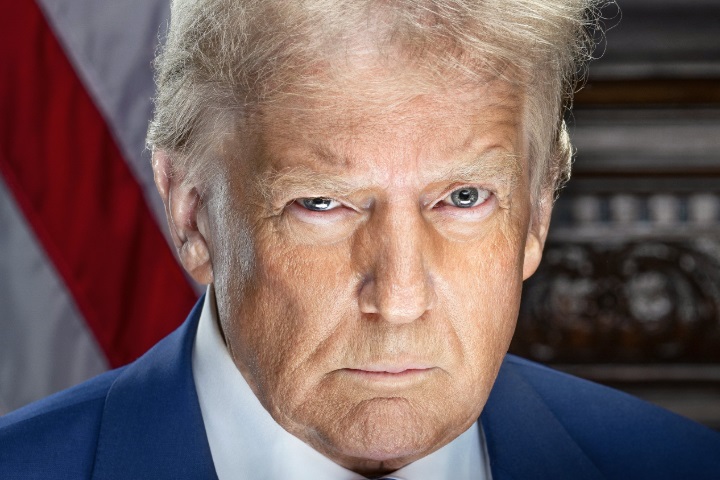
THIS DAWN — Democratic lawmakers have called for the removal of President Donald Trump from office by invoking the 25th Amendment.

Recent developments in Washington prompted the Democratic lawmakers to call for the removal of President Trump in response to what they described as “Greenland actions”.
The lawmakers’ call has sparked controversy and raised concerns about presidential judgment and fitness for office.
They argue that Trump’s actions demonstrate erratic judgment and raise questions about his fitness to govern.
This Dawn examines the constitutional framework of the 25th Amendment, the political dynamics surrounding its potential invocation, and the broader implications for U.S. governance.
Background
The 25th Amendment to the U.S. Constitution provides a mechanism for removing a sitting president if deemed unable to discharge the powers and duties of the office.
Calls for its invocation are rare and typically arise during moments of perceived crisis or questions about presidential capacity.
Democrats argued that Trump’s recent actions regarding Greenland demonstrate a serious lapse in judgment and pose risks to U.S. governance.
Political Implications
Democratic leaders have framed the Greenland issue as evidence of instability in presidential decision-making.
Republican lawmakers have largely dismissed the calls, labeling them as politically motivated and an attempt to undermine the presidency.
The White House has not yet issued an official response, though aides have suggested the president remains focused on his agenda.
If pursued, invoking the 25th Amendment would require the Vice President and a majority of the Cabinet to declare the president unfit.
Such a move would likely trigger a constitutional showdown, intensifying partisan divisions in Washington.
The controversy underscores ongoing tensions between the Trump administration and Democratic lawmakers, particularly over foreign policy and executive conduct.
Constitutional Framework
- Purpose: Ratified in 1967, the 25th Amendment was designed to address presidential succession and incapacity.
- Key Provisions:
- Section 3: Allows a president to voluntarily transfer power to the vice president during periods of incapacity.
- Section 4: Provides a mechanism for the vice president and a majority of the Cabinet to declare the president “unable to discharge the powers and duties of his office.”
- Process:
- If invoked, the vice president immediately assumes the role of acting president.
- The president can contest the declaration, triggering a congressional vote requiring a two-thirds majority in both chambers to uphold removal.
- Historical Use: Section 3 has been used temporarily during medical procedures (e.g., by Presidents Reagan, George W. Bush, and Biden).
Section 4 has never been invoked, underscoring its gravity and political sensitivity.
Political Context
- Democratic Position:
Lawmakers argue that President Trump’s Greenland-related actions reflect instability and poor judgment, warranting constitutional intervention.
- Republican Response:
GOP leaders have dismissed the calls as politically motivated, framing them as partisan attempts to weaken the presidency.
- Executive Branch Dynamics:
For Section 4 to succeed, the Vice President and Cabinet members—many of whom are loyal to Trump—would need to support removal, making the threshold politically difficult to reach.

Implications of Invocation
- Constitutional Crisis: Invoking Section 4 would likely trigger a high-stakes constitutional confrontation, testing the balance of powers between the executive and legislative branches.
- Political Fallout:
- Could deepen partisan divisions and erode public trust in institutions.
- Might set a precedent for using the 25th Amendment as a political tool rather than a safeguard for genuine incapacity.
- International Perception: Allies and adversaries alike would interpret such a move as a sign of instability within U.S. governance, potentially weakening America’s global standing.
Broader Significance
The controversy highlights ongoing debates about:
- Presidential Fitness: What constitutes “inability” under the 25th Amendment remains legally ambiguous and politically contested.
- Checks and Balances: The episode underscores the tension between safeguarding national stability and respecting electoral mandates.
- Future Governance: Calls for removal reflect broader anxieties about executive conduct, decision-making, and the adequacy of constitutional safeguards in modern politics.
Democratic calls to invoke the 25th Amendment against Trump over his Greenland actions represent a rare and dramatic escalation in U.S. politics.
While constitutionally possible, the political hurdles make actual removal unlikely.
The episode, nonetheless, underscores the fragility of American governance when presidential judgment is questioned.
It also raises enduring questions about how the 25th Amendment should be applied in practice.