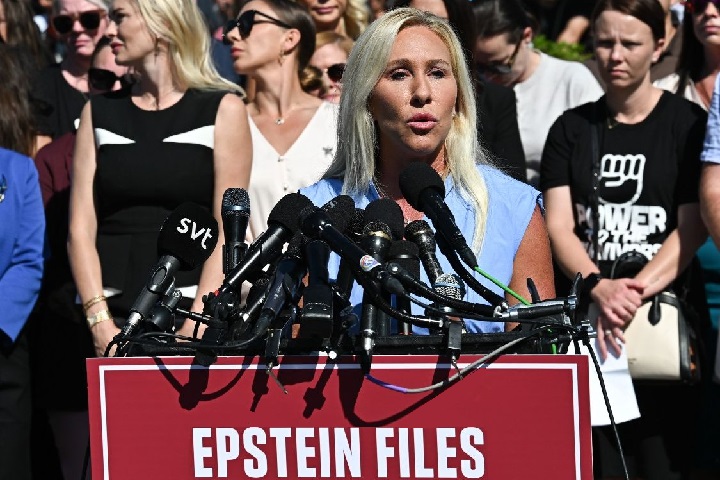
THIS DAWN — Representative Marjorie Taylor Greene (R‑GA) launched a blistering attack on President Donald Trump Tuesday following the Department of Justice’s release of a new trove of Jeffrey Epstein files.

The documents are part of the ongoing mandated disclosure under the Epstein Files Transparency Act (EFTA).
They contain multiple references to Trump, reigniting scrutiny of his past ties to the disgraced financier.
Greene Breaks with Trump
Greene, once one of Trump’s most loyal allies in Congress, took to X (formerly Twitter) to denounce the president’s resistance to the files’ release.
“This is horrifying,” she wrote.
“Trump called me a traitor for fighting him to release the Epstein files and standing with women who were raped, jailed in stalls, and trafficked to men,” she added.
Her remarks came after chilling testimony from one Epstein victim resurfaced in the newly released batch.
The woman recounted how Epstein and other men kept her in a stall and judged her harshly on her appearance.
“[Epstein] told me I was fat and ugly. So that’s what he called me,” the testimony read.
Greene responded: “Only evil people would hide this and protect those who participated. I pray for these women.”
By siding with Democratic lawmakers in demanding full transparency, Greene has positioned herself in direct opposition to Trump.
Her position underscored a widening rift within Republican ranks.
Trump’s Response
Trump, speaking at his Mar‑a‑Lago residence in Palm Beach, Florida, broke his silence Monday.
He complained that the release of Epstein‑related materials was unfairly damaging reputations.
“Everybody was friendly with this guy. But no, I don’t like the pictures of Bill Clinton being shown,” Trump said of Epstein.
“I don’t like the pictures of other people being shown – I think it’s a terrible thing.”
He argued that many individuals “innocently met” Epstein at social events and were now at risk of reputational ruin.
Trump cited former Treasury Secretary Larry Summers, who stepped back from public life after emails with Epstein surfaced, as an example of collateral damage.
“I think Bill Clinton’s a big boy, he can handle it,” Trump added.
“But you probably have pictures being exposed of other people that innocently met Jeffrey Epstein years ago and they’re highly respected bankers and lawyers and others,” he added.
Political Fallout
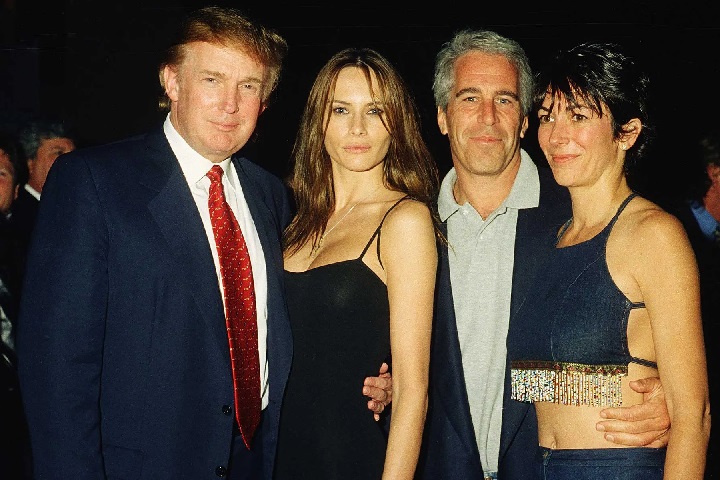
Trump has long denied any wrongdoing connected to Epstein, insisting he severed ties with him between 2004 and 2007.
Yet the president resisted the release of the files for much of this year, dismissing them as a “hoax” and claiming they were being used to distract from Republican achievements.
“What this whole thing is with Epstein is a way of trying to deflect from the tremendous success that the Republican party has,” he said.
He pointed to defense projects as evidence of progress.
Greene’s criticism, however, highlights the growing pressure from within Trump’s own party to prioritize transparency.
Survivors and lawmakers alike have expressed frustration that the Justice Department has so far released only one batch of documents, despite the EFTA’s mandate for complete disclosure by last week.
Clinton Camp Responds
Former President Bill Clinton, prominently featured in the first batch of photos, also weighed in through his spokesperson Angel Urena.
“Someone or something is being protected We do not know whom, what or why.
“But we do know this. We need no such protection,” Urena said Monday.
Urena accused the Justice Department of “using selective releases to imply wrongdoing about individuals who have already been repeatedly cleared by the very same Department of Justice.”
He urged the agency to release all remaining materials referencing Clinton, including photographs, to dispel suspicion.
Greene Creates a Divisive Moment
The clash between Greene and Trump underscores the divisive impact of the Epstein files on U.S. politics.
For survivors, the documents represent long‑awaited validation and a chance at accountability.
For politicians, they pose reputational risks and fuel partisan battles over transparency.
Greene’s sharp rebuke of Trump marks a dramatic shift in her political alignment, signaling that the fallout from Epstein’s legacy may reshape alliances within the Republican Party.
Meanwhile, Trump’s insistence that the files unfairly tarnish innocent acquaintances reflects his broader strategy of deflection, even as pressure mounts for full disclosure.
As the Justice Department faces calls from both survivors and lawmakers to accelerate the release of Epstein’s files, the political reverberations continue to grow.
Greene’s denunciation of Trump as complicit in “hiding evil” adds a new layer of tension to the debate.
Meanwhile, Trump’s complaints about reputational damage highlight the stakes for America’s political elite.
With Congress nearly unanimous in passing the EFTA, the demand for transparency is unlikely to fade.