TDWhen History Is Suppressed, It Returns as Violence
Genocide does not begin with machetes, bullets, or fire.
It begins with lies about history, with silence enforced as truth, and with power deciding whose memory deserves to live.
What Nigeria is experiencing today—especially in large swathes of Northern and Middle Belt Nigeria—is not a sudden tragedy, nor a product of climate change, nor an unfortunate collision of farmers and herders. It is unfinished history, bleeding forward.
The painstaking historical work examining Christianity in pre-jihad Northern Nigeria—particularly the evidence surrounding Gobir, Kano, Kanem-Borno, and the Fulani jihad of Shehu Usman dan Fodio—forces us to confront a truth that Nigeria has avoided for over two centuries:
The persecution of Christians in Nigeria is not new.
It is inherited.
And what is inherited but unresolved will always repeat itself as violence.

PART I
THE SCAR OF HISTORY: ISLAMIZATION WAS A PROJECT, NOT AN ACCIDENT
The dominant narrative taught in Nigerian schools, repeated in public discourse, and enforced by elite consensus claims that Northern Nigeria has always been Islamic, and that Christianity is a foreign, colonial intrusion.
History says otherwise.
Christianity predated Islam in parts of Northern Nigeria
The evidence—drawn from Arab chroniclers, European explorers, indigenous traditions, and Islamic sources themselves—establishes that:
Coptic/Nubian Christianity penetrated the Sudan long before Islam.
Trade routes across the Sahara carried not only goods, but faith, symbols, and institutions.
Gobir was identified by Fulani and Arab authorities as Christian in origin, not pagan.
The cross, not the crescent, functioned as:
a symbol of freedom
a sign of manumission
a royal and military emblem
an architectural motif in Kano
These are not trivial details. Civilizations do not casually adopt the most sacred symbol of a rival faith.
The Fulani Jihad was not merely reformist—it was eliminative
The jihad of 1804 did not simply seek to purify Islam. It sought to:
dismantle rival religious legitimacy
erase Christian political memory
replace pluralism with caliphate authority
criminalize competing identities
The banning of turbans, veils, and Islamic symbols by Gobir’s rulers—often presented as oppression of Muslims—makes sense only when read correctly: a Christian state resisting aggressive Islamization.
History was rewritten after victory. The defeated were renamed “pagans.” Their faith was erased. Their symbols were criminalized. Their memory was buried.
That burial is the scar Nigeria still carries.
PART II
THE WOUND OF TIME: WHEN UNRESOLVED CONQUEST BECOMES MODERN GENOCIDE
A scar that is never treated becomes a wound.
What we see today—mass killings of Christians, church burnings, village erasures, forced displacement, demographic engineering—is not random violence. It follows a pattern that historians recognize immediately:
Targeted communities
Repeated attacks in the same regions
Absence of accountability
State failure to protect
Normalization of death
Renaming genocide as “clashes”
This is structural violence, not episodic insecurity.
Why the violence persists
Because Nigeria refuses to name the problem:
History is denied
Motive is obscured
Perpetrators are anonymized
Victims are blamed for “retaliation”
A nation that cannot name its wound cannot heal it.
Christians in Nigeria are not merely victims of terror; they are victims of historical denial, institutional cowardice, and elite moral collapse.
PART III
LESSONS FOR PERSECUTED CHRISTIANS
Faith Without Structure Is Vulnerable Faith
One painful truth must be stated without sentimentality:
Prayer alone has not stopped genocide.
This is not a dismissal of faith; it is a demand for wisdom.
The early Christians preserved memory.
The Jews preserved documentation.
Modern persecuted peoples preserved evidence.
Nigerian Christians must do the same.
Three hard lessons
Silence does not buy peace; it invites extinction
Ignorance of history disarms resistance
Spirituality without civic intelligence is defenceless
Martyrdom without memory is wasted blood.
PART IV
THE STRUCTURES THAT MUST BE BUILT
From Mourning to Strategy
If genocide is systematic, response must be institutional.
1. A National Christian Documentation & Memory Architecture
Every attack must be:
documented
timestamped
geo-referenced
legally archived
Names must replace numbers.
Evidence must replace emotion.
2. Early Warning and Community Protection Systems
Churches must stop functioning only as worship centers and begin functioning as:
intelligence communities
alert systems
civic protection hubs
3. Legal and Constitutional Literacy for the Church
A church that does not understand:
constitutional rights
international humanitarian law
state obligations
will always be prey.
PART V
INTERNATIONAL JUSTICE: SYMPATHY IS NOT ENOUGH
The world does not act on tears.
It acts on documentation, pressure, and credibility.
What must be sought internationally
Formal genocide risk recognition
Independent investigations
Targeted sanctions against enablers
Protection-linked aid conditionality
Persistent diplomatic pressure
Christians must stop begging for sympathy and start demanding justice.
PART VI
PROACTIVE MEASURES: HOW THE FUTURE IS SAVED
Rename the crisis accurately
No more “clashes.” No more euphemisms.
Build a unified Christian civic voice
Denominations must stop fragmenting response.
Preserve martyrs as legal memory, not only sermons
Every grave must speak in court, not only in church.
CONCLUSION
Healing Justice Is the Only Cure
Nigeria stands at a crossroads.
One path continues denial, euphemism, and appeasement—until history finishes what it started.
The other path chooses truth:
Truth about history
Truth about motive
Truth about responsibility
Genocide is the scar of history.
It is the wound of time.
And only justice—deliberate, documented, unapologetic justice—can heal it.
If Nigeria will not administer that justice, history will.
And history is always more brutal than courts.
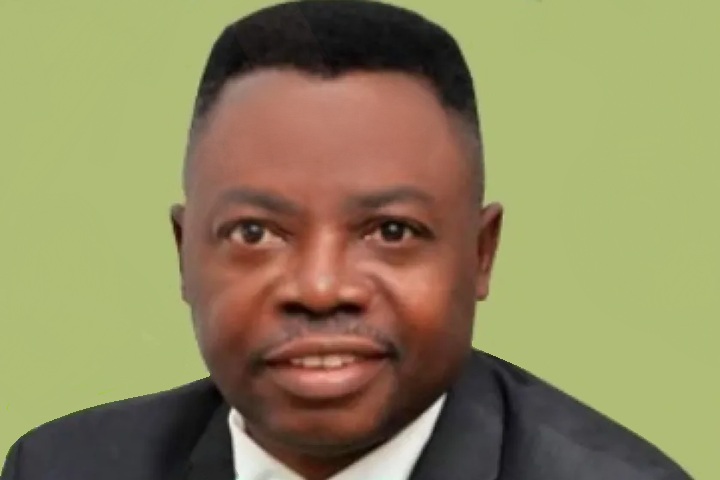
Dr. Bolaji O. Akinyemi is an Apostle and Nation Builder. He’s also President Voice of His Word Ministries and Convener Apostolic Round Table. BoT Chairman, Project Victory Call Initiative, AKA PVC Naija. He is a strategic Communicator and the C.E.O, Masterbuilder Communications.