TDWhen two U.S. Air Force F‑15E Strike Eagle crew members ejected over Iran, they were not cut off from their command. Instead, they relied on a small, rugged device clipped to their survival vest: the Combat Survivor Evader Locator, or CSEL.

Built by Boeing, the unit is designed to withstand the violence of ejection and immediately begin transmitting. It does not broadcast voice signals that can be intercepted or triangulated.
Instead, it sends short encrypted bursts—location, status, and coded messages such as “injured” or “enemy nearby.” These bursts hop across frequencies, blending into background noise and making them nearly impossible for enemy systems to detect.
That was the lifeline. Even behind enemy lines, the pilots were digitally tethered to the rescue network, silently feeding real-time data to satellites and command centers without giving away their position.
Only when extraction forces closed in would the device switch modes, allowing helicopters or aircraft to lock onto the exact coordinates.
A Pilot’s Ordeal in the Mountains
Israeli Channel 12 reported new details about the navigator’s ordeal. Knocked unconscious with a concussion during ejection, he did not transmit a distress signal at first. Regaining awareness, he climbed to higher ground to avoid detection, walked 10–12 kilometers, and hid in a mountain crevice. From there, late Friday night, he sent precise coordinates. Israel, asked to assist, refrained from striking the area and instead provided intelligence and air superiority support.
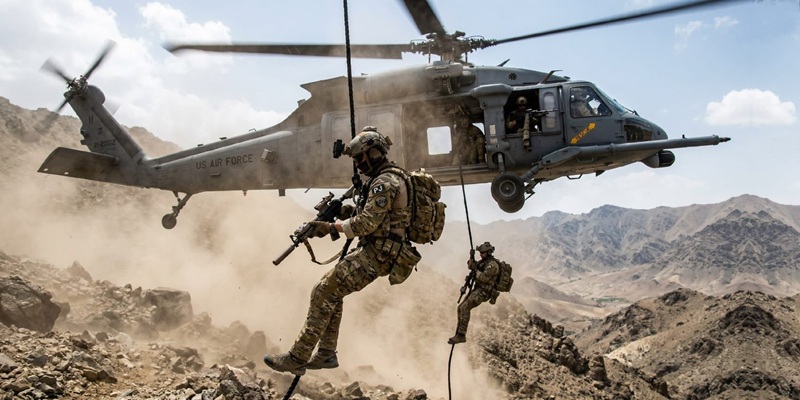
By Saturday, U.S. forces had seized a farm 18 kilometers from his hideout, landing two C‑130 Hercules transports and several MH‑6 Little Bird helicopters. One Little Bird flew to the mountain, retrieved the navigator, and returned him to the strip. But the operation quickly grew complicated.
Aircraft Stuck in the Dirt
According to a U.S. military official, both C‑130s became stuck in the sand, their nose gears sinking into the dirt. With recovery impossible, three AFSOC Dash‑8 aircraft were flown in to evacuate the navigator and roughly 100 personnel. The stranded transports and helicopters were destroyed on the spot by U.S. fighter jets to prevent capture.
The official described the scene: “One Little Bird flew to that mountain top area and rescued the WSO and brought him back to the landing strip. And of course the two C‑130s’ nose gears got stuck in the dirt. So after a few hours they had to bring in three Dash‑8s to fly out the rescued WSO and the 100 or so personnel involved in the op.”
The cost was staggering. Two C‑130s, four Little Birds, and at least two MQ‑9 Reaper drones were lost. The drones were shot down by Iranian forces during the mission. Yet, despite the losses, no U.S. personnel were killed.
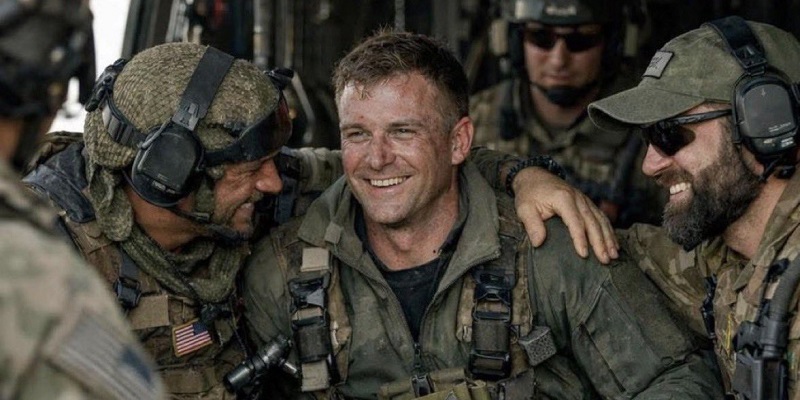
Straight Out of a War Movie
The rescue unfolded like a cinematic sequence. Late at night, U.S. special forces located the second pilot, landed a transport for extraction, and found themselves trapped.
Operators held positions under fire as additional aircraft rushed in for a high-risk rescue. At the same time, a C‑130 was immobilized at a remote base. With no recovery possible, a Delta element destroyed it on the spot.
For Iran, the operation was a shock. The country had placed a $60,000 bounty on the pilot’s head, mobilized search teams, and believed he was within reach.
Yet U.S. forces penetrated Iranian territory, conducted a complex rescue under fire, and escaped without casualties. Tehran was left stunned.
The Price of Rescue
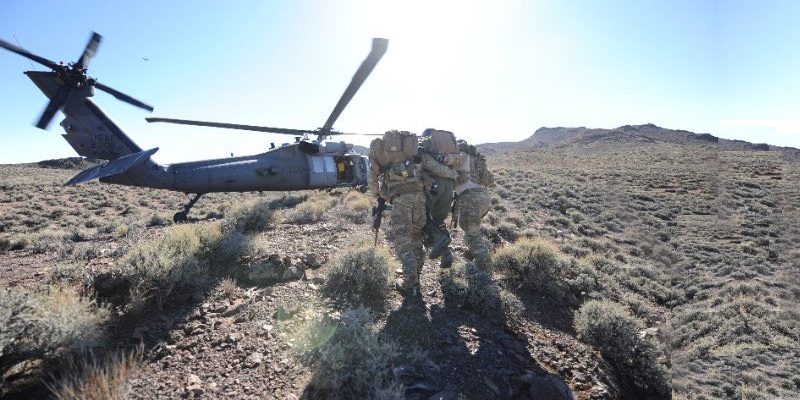
The financial cost of the mission is estimated at $386 million in destroyed aircraft alone:
- F‑15E Strike Eagle: ~$100 million
- A‑10 Thunderbolt II: ~$18.8 million
- 2× C‑130 Hercules: $150–200+ million total
- 4× MH‑6 Little Birds: ~$30 million
- 1–2× MQ‑9 Reapers: $30–60 million
The tally underscores the extraordinary expense of recovering personnel from hostile territory. Yet for the U.S. military, the calculus is simple: the value of saving a pilot stuck behind enemy lines is “priceless.”
Israel’s Role
Israel played a supporting role, providing intelligence and striking relevant targets to ensure air superiority. Channel 12 reported that Israel refrained from attacking near the pilot’s hideout to avoid endangering him. Instead, Israeli aircraft struck elsewhere, clearing the skies for U.S. operations.
The cooperation highlights the depth of U.S.–Israeli military coordination. In a region where every move is scrutinized, Israel’s restraint and targeted strikes were crucial to the mission’s success.
Strategic Implications
The rescue operation carries broader implications. For the U.S., it demonstrates the ability to project force deep inside hostile territory, conduct complex extractions, and deny adversaries propaganda victories. For Iran, it is a sobering reminder of American reach. Despite mobilizing nationwide searches and offering rewards, Iranian forces failed to capture the pilot or prevent his extraction.
The destruction of U.S. aircraft on Iranian soil also sends a message: Washington will not allow its technology to fall into enemy hands, even at enormous cost. The deliberate bombing of stranded transports and helicopters underscores the priority placed on denying Iran any intelligence windfall.
The Human Dimension
Behind the numbers and tactics lies the human story of survival. A pilot, concussed and alone in hostile mountains, relied on a small device clipped to his vest. He climbed, walked, and hid, sending encrypted bursts into the ether. Those signals, invisible to Iranian sensors, tethered him to a vast rescue network.
Hours later, helicopters arrived. Operators fought under fire. Aircraft were lost. Millions of dollars went up in smoke. But the pilot was saved.
For the U.S. Air Force, that outcome justifies the price. For Iran, it is a humiliation. And for the pilot, it is proof that even in the most hostile terrain, he was never truly alone.
Conclusion
The rescue of the downed F‑15E crew in Iran was a blend of cutting-edge technology, human endurance, and military audacity. The CSEL device kept the pilot hidden yet connected. Special forces braved hostile territory, losing aircraft but saving lives. Allies provided intelligence and air cover.
It was costly, risky, and dramatic. But in the end, the mission reaffirmed a core principle of U.S. military doctrine: no pilot is ever abandoned.