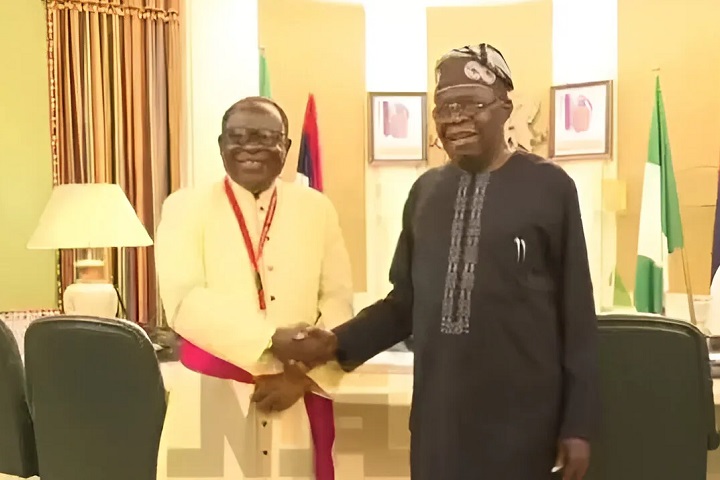
THIS DAWN — Five years after he unequivocally warned that genocide against Christian was unfolding in Nigeria, Catholic Bishop Matthew Hassan Kukah has now publicly denied that any Christian genocide exists.

The abrupt reversal has drawn scrutiny, raised questions, and sparked debate about moral consistency, political influence, and Nigeria’s shifting power landscape.
On August 7, 2020, Bishop Kukah spoke with force and clarity.
Responding to the execution of five Christian aid workers by ISWAP terrorists, he told Aid to the Church in Need (ACN) that the killings were “genocidal in nature”.
Asked directly whether Fulani militant attacks on Christians met the international legal definition of genocide, he replied: “I believe so.”
At the time, Kukah described Nigeria as a “failed state,” highlighted the complicity of government institutions, and blamed the security architecture for enabling terror networks.
His position aligned with global human-rights reports, including the UK All-Party Parliamentary Group’s, “Nigeria: Unfolding Genocide?”, which concluded that systematic attacks on Christian farming communities carried genocidal patterns.
Fast-forward to 2025, and Bishop Kukah’s public posture has shifted dramatically.
Tinubu Appointment and a New Message
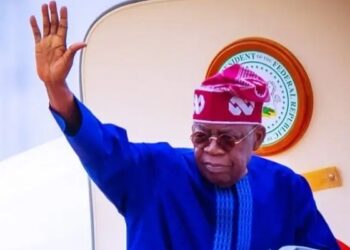
On 17 March 2025, President Bola Ahmed Tinubu appointed Bishop Kukah as the Pro-Chancellor and Chairman of the Governing Council of the newly established Federal University of Applied Sciences in Kachia, Kaduna State.
It was a prestigious national appointment—one that placed Kukah at the center of government-linked institutions, policy influence, and public administration.
Barely six months later, on November 29, 2025, Bishop Kukah declared that claims of Christian genocide in Nigeria were “exaggerated,” “unverified,” and “not supported by credible evidence.”
Speaking at the Knights of St. Mulumba Convention in Kaduna, he dismissed casualty figures widely cited by advocacy groups and insisted that no reliable data substantiates claims of religious extermination.
He stressed that the Catholic Church—known for meticulous record-keeping—had not been consulted by those pushing the genocide narrative.
He further argued that the Vatican, the Catholic Bishops’ Conference of Nigeria, and all bishops were aligned in rejecting the genocide label.
“Genocide rests on intent, not casualty figures,” he insisted.

A Stunning Reversal
The contrast between “Genocide is happening in Nigeria” (2020) and “No Christian genocide exists” (2025) is stark enough to prompt national debate.
Observers note that Kukah’s earlier warnings came under the Buhari administration, which he routinely criticized for failing to protect Nigerians from violent extremists.
Conversely, his latest denial comes months after receiving a federal appointment from the Tinubu administration.
This has prompted questions about whether access, proximity to power, or institutional interests influenced the shift in tone.
Critics argue that the timing is too striking to ignore.
A Larger Debate About Truth, Politics, and Violence
The irony exposes deeper tensions in Nigeria’s public discourse on insecurity:
-
Are religious groups being targeted because of their faith, or is the violence primarily criminal, economic, and territorial?
-
Do political appointments soften previously harsh criticisms?
-
Is the Church’s hierarchy unified—or cautious—about labeling the crisis as genocide?
What remains indisputable is the scale of violence: tens of thousands killed, churches and mosques destroyed, villages wiped out, and millions displaced.
Whether this chaos meets the legal threshold for genocide continues to divide experts.
What Kukah once described as “evidence for all to see,” he now warns must be evaluated without sensationalism.
Conclusion
Bishop Matthew Hassan Kukah’s dramatic shift—from accusing Nigerian authorities of enabling genocide to dismissing the notion altogether—stands as one of the most striking rhetorical reversals by a major religious leader in recent memory.
Whether viewed as a nuanced reassessment, a politically influenced recalibration, or an attempt to moderate public tensions, the irony is unmistakable.
And in a nation still searching for truth amid violence, it ensures the debate over genocide—defined, denied, or downplayed—will continue.
Interestingly, Kukah is not alone in this denial.
Former Minister of Aviation, Mr. Femi Fani-Kayode, and former presidential aide, Reno Omokri were once very vocal over the trending issue involving Christian Genocide in Nigeria.
Other denials
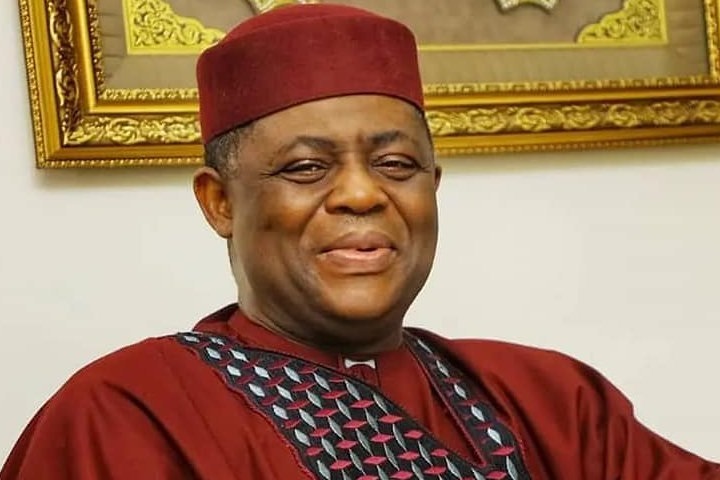
Femi Fani-Kayode
Fani-Kayode wrote on his handle @realFFK on June 18, 2018:
“The jihadists who killed the RCCG Evangelist for preaching in Abuja were set free.
“The ones who killed Bridget, the Deeper Life Pastor’s wife in Kano were set free.
“No Fulani terrorist has been reprimanded or jailed for killing more than 5,300 Christians in 2018 alone…”
Several other tweets were posted by the former Aviation Minister, who was arrested and detained during the regime of the late President Muhammadu Buhari:
“It amazes me how @CNN, @cnni, @BBCWorld, @AJENews and @AJEnglish constantly complain and report about the slaughter of Muslims by Hindus in India but hardly ever complain and report about the mass murder of Christians by Islamist terrorists and jihadists in Nigeria.”
He added: “The int. media have a moral obligation to expose evil & injustice WHEREVER it is found. This is all the more so when GENOCIDE is involved. It has nothing to do with electoral choices: it is about our collective humanity & our duty to protect the weak, the persecuted & the poor.”
On December 27, 2019, Fani-Kayode, in a long epistle, reprimanded the Sultan of Sokoto, Alhaji Muhammadu Sa’ad Abubakar III, over a statement credited to him wherein he said: “It is a lie to say Christians are being persecuted in Nigeria.” He wrote:
“You are wrong and your denial of this “WELL-ESTABLISHED FACT” (italics ours) which is backed by empirical, abundant and overwhelming evidence is deeply offensive to the Christian community.
“Were the 800 Christians that were slaughtered in their homes in [Southern] Kaduna on Christmas eve and Christmas day in 2016 by Fulani militants whilst the authorities turned a blind eye and refused to protect them or bring their murderers to justice not entitled to live their lives?
In this interview with Punch Newspaper, Fani-Kayode accused the President Buhari-led government of backing the rampaging Fulani herdsmen menace across the country.
In his words, the then ‘Buhari government is complicit in Fulani Herdsmen menace’.
Reno Omokri
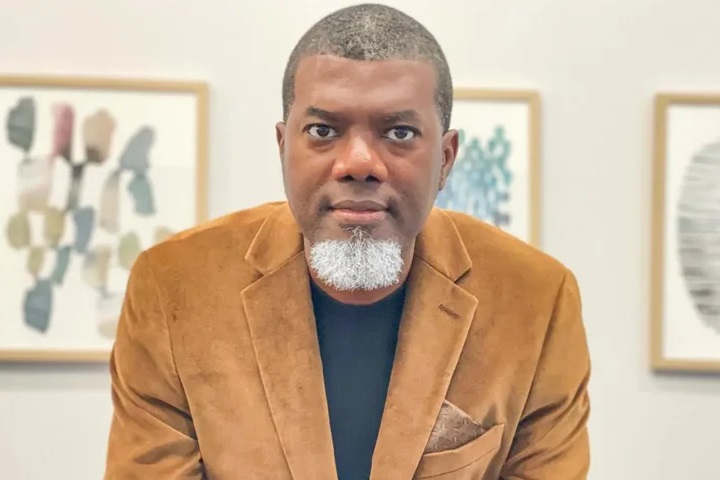
Omokri, on several occasion, also accused the Buhari government of aiding and abetting Christian genocide championed by Islamic Jihadists and Julani bandits.
Recently, though, Omokri publicly rejected the genocide characterization.
He argued on TV station that violence affects both Christians and Muslims; therefore, the claim of a targeted “Christian genocide” was misleading and “based on misinformation.”
He said that global monitors such as Open Doors International had not formally classified the situation in Nigeria as genocide — asserting that data does not support such a sweeping claim.
He also pointed to statistical data (e.g. the Global Terrorism Index) to argue that terror-related deaths in Nigeria have dropped.
He implied that the situation does not support the definition or sustained reality of genocide.
However, American fact-finder Mayor Mike Arnold, invited by Reno Omokri to defend the Nigerian Government and debunk Christian genocide in Nigeria turned against him, calling him a hypocrite, liar, spinner and Nigeria’s propaganda minister.
Mayor Arnold made the remarks in a series of tweets on “X” on Wednesday, October 15, 2025.
Arnold blasted Omokri for obfuscating Christian genocide facts in Nigeria, exposed subterfuges and said categorically that the report confirmed Christian genocide in the country.
He contended, amongst other things, that the campaign of violence and displacement in Northern and Middle Belt Nigeria constitutes a calculated, current and long-running genocide against Christians in Nigeria.
Three in Common
What do these three persons have in common?
- Three of them are “Christians”.
- Three of them were fierce critics of Buhari government and strong proponents of “Christian genocide” narrative.
- Three of them are now heavy antagonists of anyone who would propound “Christian genocide in Nigeria” narrative.
- Three of them received appointments by the Tinubu government. In fact, Fani-Kayode and Omokri are among the current list of Tinubu’s Ambassador-nominees.