
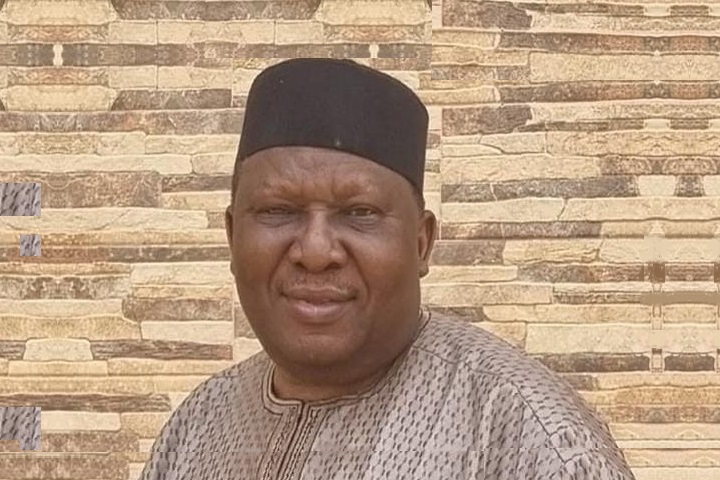
THIS DAWN — Renowned international affairs analyst, Mr. Paul Ejime, has raised alarm over what he described as the world’s drift from the ideal of a “global village” into a fragmented landscape of fortresses, nationalism, and xenophobia.

In a reflective essay, Ejime traced the evolution of the global village concept and warned of its erosion in today’s technology-driven and politically divided world.
Origins of the Global Village
Ejime recalled that the United Arab Emirates’ Global Village in Dubai, established in 1997, symbolised cultural exchange, with pavilions showcasing traditions from across the globe.
But the idea itself was popularised decades earlier by Canadian theorist Marshall McLuhan.
McLuhan, in his 1964 book Understanding Media: The Extensions of Man, argued that new technologies like television and the internet were collapsing time and space, creating a more interconnected world.
That vision, Ejime noted, gained traction in the era of globalisation, where information now travels at the speed of light.
Yet, he cautioned, the same technologies have also eroded physical human contact and interpersonal relationships.
Impact of Technology and COVID-19
Ejime pointed to the COVID-19 pandemic as a turning point that accelerated isolation. Lockdowns and remote work reduced in-person interactions, leaving behind loneliness, declining social skills, and altered lifestyles.
Even within families, he observed, digital devices now separate people seated on the same sofa.
“Family members, colleagues and friends may be so close, and yet, very far apart,” he wrote.
He lamented how social media has deepened disconnection rather than unity.
Rise of Fortress Mentality
Beyond technology, Ejime warned of the growing “fortress mentality” driven by nationalism, individualism, and anti-immigrant sentiment.
He argued that migration, as old as human history, is increasingly criminalised despite evidence that immigrants sustain economies and perform jobs often shunned by privileged citizens.
Governments and individuals, he said, now portray foreigners as intruders “taking jobs, eating their dogs, and doing all the bad things”.
Meanwhile, they forget that many nations were built by immigrants.
Policies enforcing segregation, coupled with xenophobic attacks and discrimination, have created hostile environments for migrants worldwide.
Contradictions in Global Values
Ejime highlighted the irony of a world that preaches unity, equal opportunity, peace, and justice, yet embraces exclusionary slogans such as “make our country great again” or “my country, my property.”
He noted that even religious communities committed to tolerance often fail to uphold common humanity.
“This is in the same world that swears on its commitment to tolerance and justice,” he observed.
He, thus, underscored the contradictions between professed values and lived realities.
Writing during the festive season, Ejime urged citizens to reflect on their relationships with fellow humans, which he described as the true measure of one’s relationship with the Creator.
He stressed that life’s meaning lies not in wealth or possessions but in positive impact on others.
“The world is a stage, and human life is about making a positive impact on others, not about money, vehicles, houses, or other possessions,” he said.
Ejime illustrated this with metaphors: body parts serve others, the sun shines for all, roses are admired by others, and a candle illuminates by lighting another.
He reminded readers that none of us chose our family, country, or circumstances of birth, and none can predict the time or manner of departure from life.
A Global Village Message of Hope
Ejime concluded with a message of hope and responsibility: to cultivate friends instead of enemies, cherish the present, and use it to assist others.
“Yesterday has gone, today is a present, which we must cherish to assist others, and tomorrow is pregnant and beyond our comprehension,” he wrote.
Ejime’s essay serves as both a critique of modern society’s retreat into isolation and nationalism, and a call to rediscover the essence of humanity.
As the world grapples with technological change, pandemics, and political divisions, his warning resonates:
The global village is at risk of becoming a world of fortresses, unless individuals and nations recommit to unity, empathy, and shared humanity.