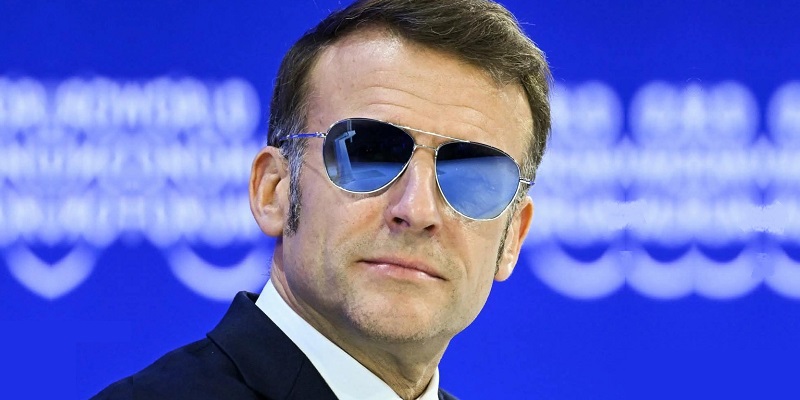
TDFrench President Emmanuel Macron has announced that France will formally enter the escalating Middle East conflict.

President Macron said France will commit a formidable naval force to safeguard international interests and support allied operations.
Military Deployment
France’s military command confirmed that the following assets will be dispatched:
- 8 warships equipped with advanced missile defense systems and long-range strike capabilities.
- 1 aircraft carrier, the flagship of France’s naval power, capable of launching sustained air operations.
- 2 helicopter carriers, designed for rapid troop deployment, amphibious support, and humanitarian missions.
These forces will be strategically positioned across the Mediterranean Sea, the Red Sea, and the Strait of Hormuz—three maritime zones vital to global commerce and energy security.
Strategic Objectives
French officials outlined the mission’s goals:
- Securing shipping lanes against potential blockades or attacks.
- Supporting allied military operations, particularly U.S. and NATO partners already active in the region.
- Deterring threats to the Strait of Hormuz, through which nearly one-fifth of the world’s oil supply passes daily.
- Projecting stability in a region where escalating strikes have threatened to spiral into a wider war.
President Macron stressed that France’s involvement is not only about military deterrence.
He said it is also about upholding international law and freedom of navigation, principles he described as “non-negotiable.”
Global Reactions
The announcement has triggered immediate responses worldwide:
- European allies praised France’s decision, framing it as a demonstration of unity and resolve in the face of growing instability.
- Middle Eastern governments voiced mixed reactions—some welcoming France’s presence as a stabilizing force.
Meanwhile, others warn that foreign intervention could inflame tensions.
- Energy markets reacted sharply, with oil prices surging amid fears that the conflict could disrupt supply chains for an extended period.
Domestic Debate in France
Within France, the decision has sparked debate.
Supporters argue that the deployment underscores France’s role as a global power and protector of international order.
Critics, however, warn of the risks of entanglement in a protracted conflict, raising concerns about potential casualties and the strain on national resources.
General Outlook
France’s entry into the Middle East war represents a significant escalation, adding one of Europe’s most capable militaries to the theater.
Analysts caution that while the deployment could bolster deterrence and reassure allies, it also risks widening the scope of the conflict.
The coming weeks will determine whether France’s intervention helps stabilize the region or accelerates confrontation in one of the world’s most volatile geopolitical landscapes.
The development underscores the fragile balance between deterrence and escalation, with France now at the forefront of efforts to shape the trajectory of the Middle East conflict.