


TDChina has reportedly directed its major banks to scale back their exposure to US Treasury securities, as the financial war between the two countries continue.

Chinese authorities repeated the directive weekend, citing concerns over market volatility and concentration risks.
The move reflects Beijing’s growing caution about reliance on American debt instruments amid shifting global financial dynamics.
Details of the Directive
- Scope: The instruction applies to some of China’s largest commercial banks.
- Objective: Reduce holdings of US Treasuries and limit new purchases.
- Reasoning: Officials highlighted “concentration risks” and “market volatility” as key drivers of the decision.
- Exclusion: China’s state-level holdings of US Treasuries, managed by the central government, are not directly affected by this directive.
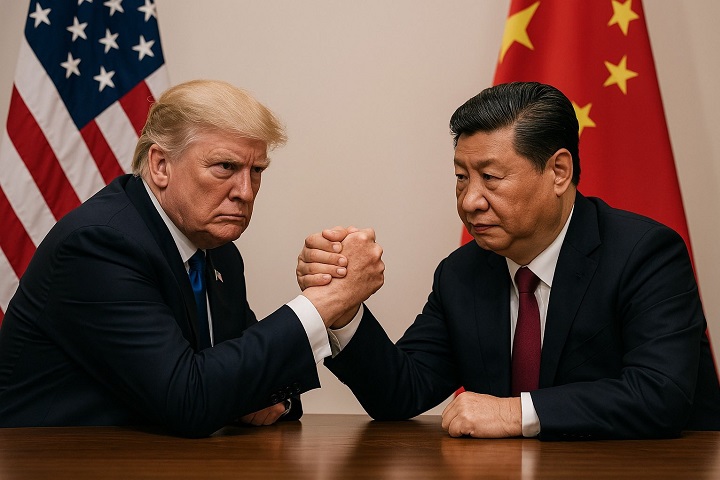
Context: Declining Holdings
China’s holdings of US Treasuries have already fallen to a 16-year low, reflecting a broader trend of diversification in foreign reserves.
Sovereign wealth managers and central banks worldwide are reassessing traditional safe-haven assets, with China increasingly turning to alternatives such as gold and other reserve currencies.
Implications
- Global Markets: Reduced Chinese demand for US Treasuries could put upward pressure on US borrowing costs, though the scale of impact depends on how aggressively banks cut back.
- Reserve Diversification: The directive signals China’s intent to diversify reserves away from US debt, potentially strengthening its position in other asset classes.
- Geopolitical Tensions: The move may be interpreted as part of Beijing’s broader strategy to reduce financial dependence on the United States amid ongoing trade and geopolitical frictions.
- Domestic Stability: By limiting exposure to US Treasuries, Chinese regulators aim to shield domestic banks from external shocks tied to US fiscal and monetary policy.
Expert Views
Financial analysts note that while China remains one of the largest foreign holders of US Treasuries, the steady decline in its holdings underscores a strategic recalibration.
Some argue that this could accelerate a global shift toward multipolar reserve management.
Meanwhile, others caution that the US Treasury market remains too large and liquid to be easily replaced.
China’s directive to banks to reduce US Treasury holdings marks another step in its cautious approach to managing foreign reserves.
With holdings already at historic lows, the move highlights Beijing’s determination to mitigate risks and diversify assets.
The decision, experts warn, could ripple across global financial markets.