TDThe United Kingdom has dramatically escalated its military involvement in the Middle East, committing its largest air presence in the region in over 15 years.

In a decisive show of force, British Typhoon and F-35 jets patrolled the air space, supported by Voyager refuelling aircraft.
So far, they claimed to have successfully intercepted and destroyed more than 40 Iranian drones during defensive patrols over Jordan, Qatar, the United Arab Emirates, and Bahrain.
UK’s Expanded Role in the Conflict
The Ministry of Defence confirmed that British pilots have now logged over 700 flying hours in the current campaign.
The figure underscores the scale and intensity of the operations.
Alongside air patrols, 500 UK personnel are stationed across bases in Cyprus to bolster air defence systems.
Meanwhile, a small team of British planners has been embedded within U.S. Central Command (CENTCOM) to contribute to operational planning aimed at securing the Strait of Hormuz — a critical global energy corridor.
This expanded footprint signals Britain’s transition from a cautious observer to an active participant in the coalition effort to counter Iranian threats.
With the recent moves, they are aligning more closely with U.S. and allied strategies to stabilize the region.
Praise for Effectiveness
The UK’s military actions have drawn praise from observers. AfriHub (@Afri_hubb) noted:
“The UK’s military operations in the Middle East deserve strong praise for their remarkable effectiveness, having successfully neutralized over 40 Iranian drones while deploying the most significant air presence in the region in 15 years to protect both British interests and regional allies.”
Such endorsements highlight the perception that Britain’s involvement has already made a tangible impact on regional security.
Political Contrast and Shifting Stance
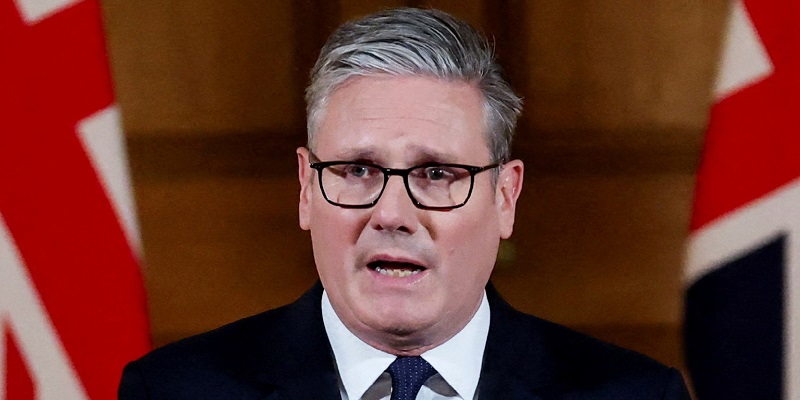
The escalation stands in stark contrast to earlier remarks by Prime Minister Keir Starmer.
Starmer had previously insisted Britain would not join offensive action against Iran.
In a widely shared statement, Starmer had declared:
“I will always make decisions in the national interest. That’s why we did not join the offensive action against Iran.
Reform and the Tories would’ve rushed us into war without a plan to get us out.”
The shift from restraint to active engagement reflects the mounting pressure on the UK government.
The government must safeguard both its regional allies and its own strategic interests, particularly as Iranian drone and missile attacks intensify.
Strategic Implications for the Region
Analysts argue that Britain’s expanded role strengthens Western military coordination against Iranian threats, while reassuring Gulf allies of London’s commitment to regional defence.
However, the move also raises questions about the sustainability of Britain’s involvement.
It further raises questions about the potential for escalation, and the political balancing act facing Starmer’s government as it navigates between caution and decisive military action.
With the UK now firmly in the fight, the Iran conflict has entered a new phase.
It is one that could reshape both regional security dynamics and Britain’s global military posture.