THIS DAWN — The Federal Government has announced a nationwide ban on the admission and transfer of students into Senior Secondary School Three (SS3) in both public and private secondary schools, as part of measures to curb examination malpractice and restore credibility to Nigeria’s education system.

The directive was contained in a press release issued on December 14, 2025, by the Federal Ministry of Education and signed by the Director of Press and Public Relations, Mrs. Boriowo Folasade.
According to the ministry, the policy will take effect from the 2026/2027 academic session.
Under the new rule, admissions and transfers will be restricted strictly to Senior Secondary School One (SS1) and Senior Secondary School Two (SS2).
Admission or transfer into SS3 will no longer be permitted “under any circumstance,” the ministry stated.
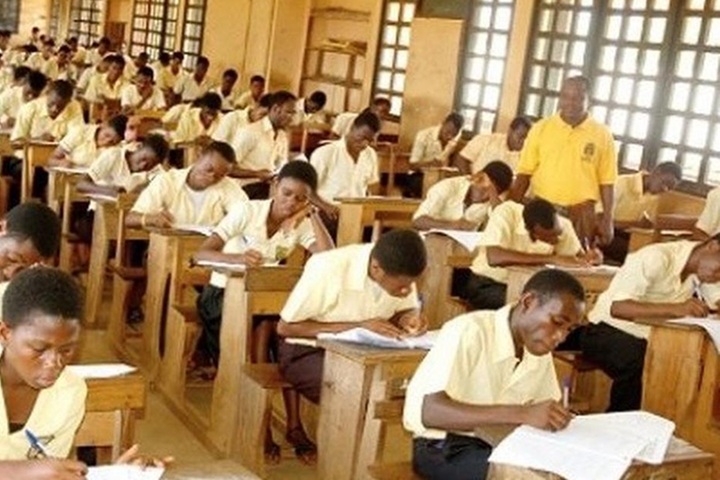
The government said the decision followed growing concerns over the rising incidence of examination malpractice, particularly the widespread use of so-called “special centres” during external examinations.
Affected examinations include the West African Senior School Certificate Examination (WASSCE) and the National Examination Council (NECO).
“These practices undermine the integrity and credibility of Nigeria’s education system,” the ministry said.
It added that last-minute movement of students between schools has become a major avenue for securing unfair examination advantages.
According to the ministry, the ban is aimed at:
- discouraging such practices,
- ensuring proper academic monitoring of students, and,
- promoting continuity in teaching and learning throughout the senior secondary cycle.
Purpose of the policy
Officials argue that students who remain in one school for a sustained period are easier to assess academically and morally, reducing opportunities for exam-related misconduct.
School proprietors, principals, and administrators across the country have been directed to ensure full compliance with the policy.
The ministry warned that any violation would attract appropriate sanctions in line with existing education laws, regulations, and guidelines.
Reaffirming its position, the Federal Ministry of Education said the policy aligns with the Federal Government’s broader commitment to:
- maintaining academic standards,
- promoting fairness, and,
- restoring public confidence in national and international examinations conducted in Nigeria.
Mixed reactions
However, the announcement has generated mixed reactions from Nigerians, particularly parents, students, and education stakeholders.
Some students expressed concern that the policy could adversely affect candidates seeking to rewrite their O’Level examinations.
A social media user, identified as Bonkee9, appealed to the ministry to reconsider the directive for students who performed poorly in previous examinations and wish to re-sit WAEC or NECO.
“Please reconsider those who didn’t do well in their O’Level the previous year and wish to rewrite WAEC/NECO.
“I am a victim of that, and this new law will affect my admission,” the user wrote.
Bonkee9 added that alternative examination options such as GCE may not suit candidates intending to use their results outside Nigeria.
Education commentators have also raised questions about enforcement. Kanoblog, an online education commentator.
They note that while the policy appears sound, it may not achieve its objective unless deeper systemic issues are addressed.
“Banning SS3 admissions will not solve exam malpractice if special centres, bribery, and negligence by officials still persist,” the post said.
The poster urged the government to focus on accountability and oversight within examination bodies and schools.
Policy’s longevity
Others were sceptical about the policy’s longevity.
Voltrix Academy, an education-focused platform, suggested the directive might face implementation challenges or eventual reversal.
“The implementation of this policy might not go beyond the file. No need to fight for the reversal.
“It will surely be reversed or cause more tension in the educational system,” the platform stated.
Despite the criticism, the Federal Ministry of Education has not indicated any intention to review the policy.
It insisted that decisive action is necessary to address long-standing weaknesses in the education sector.
As the 2026/2027 academic session approaches, attention is expected to shift to how effectively the ban will be enforced nationwide.
It also waits to be seen whether it will achieve its stated goal of reducing examination malpractice.