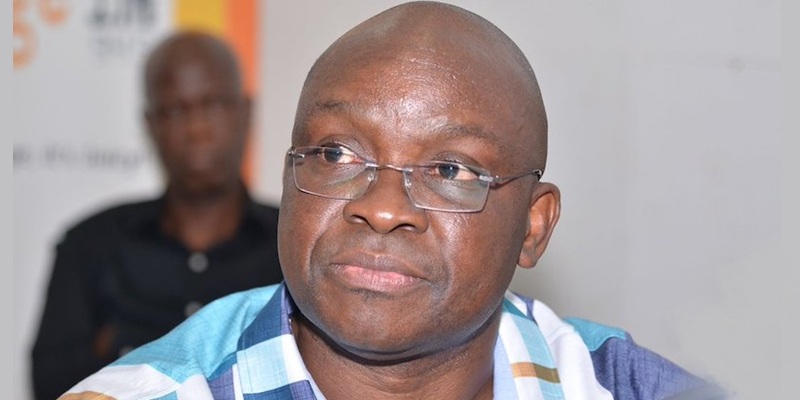
THIS DAWN — Former Ekiti State Gov Ayo Fayose’s latest outburst against Governor Seyi Makinde bears all the hallmarks of political overreach, opportunism, and a desperate search for relevance.

Cloaked as a defence of President Tinubu, Fayose’s intervention reads less like principled commentary and more like an unsolicited audition for relevance in a power configuration that has clearly moved on.
Fayose’s attempt to cast Makinde as an “emergency opposition mouthpiece” following an alleged cold reception at Aso Rock collapses under the weight of available facts.
Publicly televised images showed Makinde in a private meeting convened at the instance of Tinubu, a meeting Fayose has since tried, unsuccessfully, to reframe as a desperate lobbying visit.
That distortion is telling. It reveals more about Fayose’s political instincts than Makinde’s intentions.
Fayose — Observation or Obsession?
At the heart of Fayose’s irritation is Makinde’s candid remark that he misses the leadership style of ex-VP Yemi Osinbajo.
That statement, made openly and without malice, was neither incendiary nor subversive.
Rather, it was a metaphorical contrast between simplicity and arrogance, gentility and brashness, and tolerance and authoritarian reflexes.
To interpret it as treasonous dissent is to betray an intolerance for honest political reflection.
Unlike Fayose, Makinde has never built his political capital on noise, intimidation, or transactional loyalty. He did not lobby his way into office.
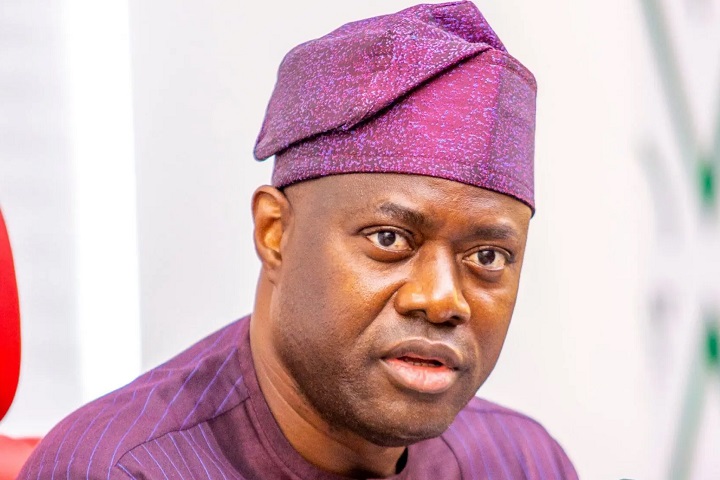
He won two elections decisively, without federal crutches or godfather indulgence.
A man who can publicly admit regret for supporting a president dares to speak frankly behind closed doors.
Fayose’s suggestion that Makinde went to Abuja seeking favour reflects a projection of his own political habits onto a man whose trajectory has been markedly different.
Scrambling for Survival?
Fayose’s credibility deficit also looms large.
This is a politician who, alongside Prof. Kolapo Eleka, once signed an undertaking witnessed by respected elders not to contest any further office after leaving power, only to renege without remorse.
It is the same Fayose whose turncoat tendencies were publicly rebuked by former President Olusegun Obasanjo, and whose bravado against President Muhammadu Buhari ended in quiet retreat after a firm warning from the presidency.
To now posture as a moral compass within opposition politics is, at best, ironic.
His attempt to situate Makinde within the same desperation matrix ignores a fundamental difference, Makinde is not scrambling for survival.
Silence, in this context, is not weakness but strategy.
Fayose’s loudness is precisely why Makinde has chosen restraint because megaphone politics eventually collapses under its own exaggerations.
Roaming Megaphone
Equally revealing is Fayose’s flirtation with judicial conspiracy theories and his insinuation that political outcomes are now pre-packaged through compromised judges.
Such claims only reinforce growing concerns that certain actors are preparing excuses in advance of political accountability.
The PDP is not comatose, nor has it surrendered to any external force. Attempts to will its demise into existence will fail.
Indeed, Makinde’s recent comments have punctured a deeper scheme exposing claims that the party was to be “held” for Tinubu by internal collaborators.
That revelation has injected fresh urgency into the PDP’s self-correction and has rattled those who assumed silence meant surrender.
Fayose is not the yardstick by which courage or conviction should be measured.
His current role as a roaming megaphone, devoid of mandate or moral authority, does little to advance serious political discourse.
In contrast, Makinde’s calm defiance, electoral legitimacy, and refusal to be baited speak louder than any press statement.
History has a way of humbling those who mistake noise for influence. And when the dust settles, megaphone politics will fade but credibility, once earned, endures.