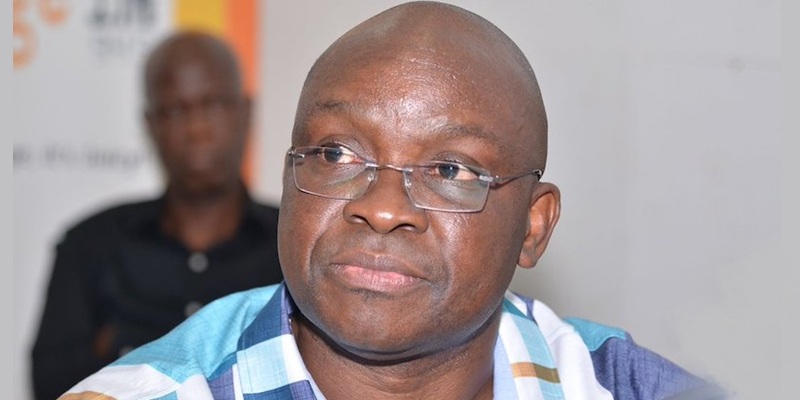
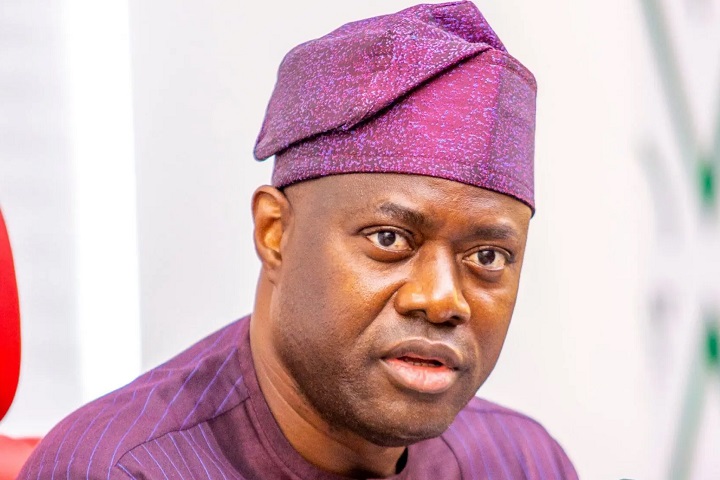
THIS DAWN — A political storm has erupted in Nigeria following claims by former Ekiti State Governor Ayo Fayose that Oyo State Governor Seyi Makinde received ₦50 billion from the Federal Government as intervention funds for victims of the January 2024 Ibadan explosion.

Fayose’s allegations, backed by a formal document from the Federal Ministry of Finance, have sparked widespread debate over transparency, accountability, and the ethical use of public funds.
Fayose’s Allegations and Documented Evidence
On December 28, 2025, Fayose released a statement asserting that Governor Makinde received ₦50 billion from President Bola Tinubu’s administration to support victims of the tragic explosion in Bodija, Ibadan.
Fayose claimed that only ₦4.5 billion was disbursed to the actual victims, while the bulk of the funds were allegedly diverted to finance Makinde’s rumored presidential ambitions.
In response to Makinde’s challenge for proof, Fayose published a document from the Federal Ministry of Finance dated August 29, 2024.
The letter, addressed to the Honourable Minister of Finance, details requests for special intervention funds from various state governments totaling ₦915.5 billion.
It confirms that ₦450.7 billion was disbursed, including ₦50 million specifically requested by Oyo State for reconstruction efforts in Old Bodija and surrounding areas following the explosion.
The document, stamped as received by the Minister’s office, provides official acknowledgment of the intervention requests and partial disbursements, lending weight to Fayose’s claims.
Conflicting Accounts and Public Reactions
Governor Makinde’s Chief Press Secretary later clarified that the Oyo State Government requested ₦50 billion but only ₦30 billion was released by the Federal Government, with ₦20 billion still pending.
This admission contradicts earlier denials that any funds were received, prompting critics to accuse the governor of misleading the public.
Political commentator Lere Olayinka added fuel to the controversy, alleging that Makinde declared ₦48 billion in assets in 2019 and “chopped” ₦45.5 billion from the intervention funds in 2024.
He described Makinde’s earlier asset declaration as “anticipatory,” implying that the governor may have foreseen future inflows and structured his declarations accordingly.
The revelation that only ₦4.5 billion was allocated to explosion victims has drawn sharp criticism from civil society groups and citizens, who argue that the funds were meant to alleviate suffering and rebuild affected communities.
Many are now demanding a full audit of the disbursements and expenditures.
Implications for Governance and Transparency
This controversy raises serious questions about fiscal transparency and the ethical use of emergency funds.
The intervention was intended to support victims of a disaster that claimed lives and destroyed property.
Allegations of diversion for political purposes undermine public trust and highlight systemic issues in Nigeria’s governance.
The Federal Ministry of Finance document serves as a critical piece of evidence, confirming that substantial funds were requested and partially disbursed.
However, the lack of clarity on how these funds were spent—especially the discrepancy between the requested amount, the released sum, and the actual support provided to victims—points to a troubling gap in accountability.
Political Fallout and PDP Crisis
Fayose’s statement also links the alleged diversion of funds to internal conflicts within the Peoples Democratic Party (PDP).
He suggests that Makinde’s actions have contributed to the party’s crisis and strained relations with President Tinubu’s administration.
By going public with official documents, Fayose positions himself as a whistleblower, challenging Makinde to take legal action if the claims are false.
This political maneuvering reflects deeper tensions within the PDP and may influence future alignments ahead of the 2027 elections.
The controversy could also prompt broader scrutiny of state-level financial management and federal interventions.
The unfolding drama over the ₦50 billion intervention fund for Ibadan explosion victims underscores the urgent need for transparency in public finance.
With conflicting accounts from Governor Makinde, his aides, and political opponents, Nigerians are left questioning the integrity of their leaders and the fate of funds meant for disaster relief.
The document from the Federal Ministry of Finance provides a factual basis for further investigation, and the public deserves a full accounting of how these funds were used.