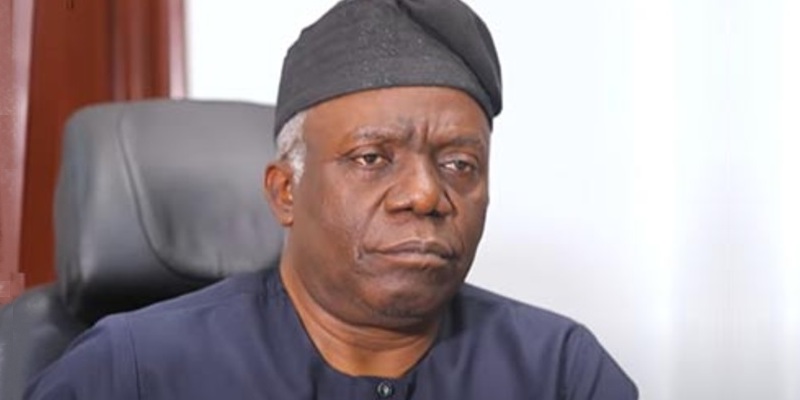
TDNigeria’s democratic future is once again under intense scrutiny following explosive allegations by respected human rights lawyer Femi Falana (SAN) and former U.S. Assistant Secretary of State for African Affairs, Tibor Nagy.

Both figures have accused President Bola Tinubu’s ruling APC, the INEC Chairman Prof. Amupitan, and senior lawyers of manipulating judicial processes to weaken opposition parties.
They warned that such actions could force Nigeria into a dangerous one-party system, detrimental to democracy.
Falana’s Alarming Accusations
Falana, one of Nigeria’s most prominent legal voices, raised concerns over the judiciary and the electoral commission.
He lamented that INEC is being weaponized against opposition parties.
His remarks centered on the African Democratic Congress (ADC) leadership crisis.
While evaluating recent developments, Falana accused INEC Chairman Prof. Joash Amupitan of deliberately misinterpreting a court order.
-
Misinterpretation of Court Orders
Falana argued that INEC wrongly applied the doctrine of status quo ante bellum, which simply means returning to the situation before the dispute began.
Instead, he claimed, INEC’s interpretation favored the ruling APC and undermined the ADC’s leadership structure.
-
Judiciary and Lawyers Enabling APC
He warned that courts and senior lawyers are being used to legitimize actions that weaken opposition parties.
Ther action, he noted, is consolidating APC’s dominance.
-
Risk of a One-Candidate Presidential Election
Falana, joined by activist Gani Adams, cautioned against judicial interference in party leadership disputes.
They warned that if it continues unchecked, Nigeria could face a scenario where only one presidential candidate contests the 2027 elections.
-
Tinubu’s Alleged Role
Reports suggest that Tinubu’s APC has exploited internal party disputes and leveraged INEC’s decisions to sideline opposition leaders.
Allegations surfaced that Tinubu used Amupitan’s pre-signed resignation letter to force the delisting of ADC leaders such as David Mark and Rauf Aregbesola.
Implications for Nigerian Democracy
Falana’s warning underscores fears that Nigeria’s democratic framework could collapse into a de facto one-party system.
-
Erosion of Multi-Party System
The accusations highlight growing concerns that pluralism and fair competition are being systematically undermined.
-
Judicial Credibility at Stake
The judiciary’s perceived complicity in political manipulation risks eroding public trust in the courts as neutral arbiters.
-
Electoral Integrity Concerns
INEC’s handling of party disputes raises questions about its independence and ability to safeguard free and fair elections.
Falana’s intervention reflects a broader crisis in Nigeria’s democratic process.
He warned that “courts and senior lawyers are helping Tinubu’s APC turn Nigeria into a one-party state” is timeous.
His warning has resonated widely among civil society groups and opposition voices.
Tibor Nagy Raises International Alarm
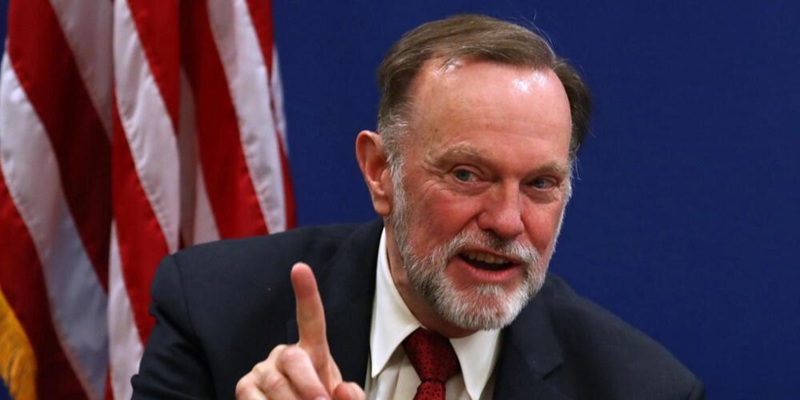
The controversy has now drawn global attention.
Former U.S. Assistant Secretary of State for African Affairs, Tibor Nagy, reacted strongly to Falana’s concerns.
In a widely shared statement, Nagy warned that if allegations of judicial manipulation aimed at crippling the opposition and forcing a one-party state are true, then the world must not look away.
See a screenshot of Tibor Nagy’s statement:

-
Global Red Flag
Nagy emphasized that Nigeria’s democratic backsliding is no longer a domestic issue alone.
“If famed Nigerian human rights lawyer Femi Falana accuses Nigeria’s ruling APC Party of manipulating the judiciary to try and bring about a one-party state by destroying the opposition, then the world should pay attention,” he said.
-
Echoing Citizens’ Fears
His intervention confirms what millions of Nigerians already fear.
They fear that state institutions are being pushed beyond neutrality and democracy itself is under siege.
-
Call for Vigilance
Nagy stressed that Nigeria cannot afford democratic backsliding.
“The opposition must not be silenced. The courts must not be weaponised.
“The will of the people must not be crushed by political desperation,” he declared.
Political Outlook
The combined warnings from Femi Falana and Tibor Nagy mark a critical moment in Nigeria’s democratic journey.
With elections approaching, the allegations of judicial manipulation and INEC’s controversial decisions have raised urgent questions about the integrity of Nigeria’s political system.
As Nagy put it: “The world is watching. Nigerians are watching. And history is watching.
“Democracy must be defended. Nigeria must not be reduced to a one-party state.”
This report captures the gravity of Falana’s accusations and Nagy’s international alarm, situating Nigeria’s democratic crisis within both domestic and global contexts.