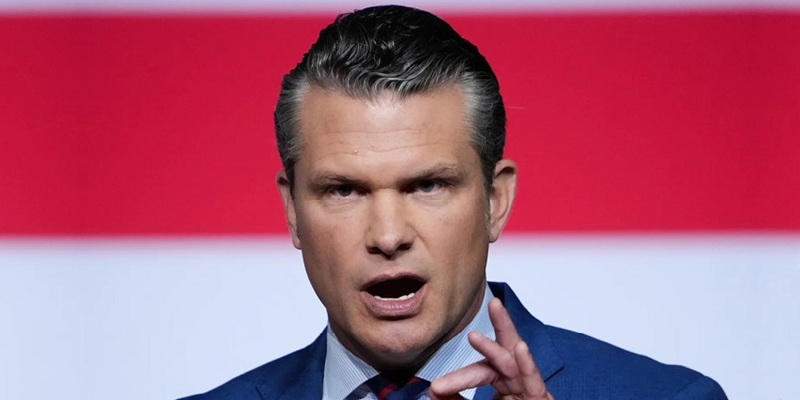
TDA statement circulating online claims that U.S. Secretary of War Pete Hegseth said Iran must hand over its uranium “voluntarily” or the United States would “take it.”

The remark has sparked concern globally, given its implications for military escalation and nuclear security.
What Hegseth Actually Said
Recent verified reports confirm that Hegseth did not use that exact phrasing but made comments with a similar strategic implication. According to credible coverage, the U.S. has kept the option of seizing Iran’s uranium stockpile, including through military means if diplomacy fails.
He emphasized that while the United States prefers a peaceful transfer of Iran’s enriched uranium, force remains “on the table” if Iran refuses to cooperate.
In a related briefing, U.S. military officials reiterated that American forces remain in the region partly to monitor Iran’s uranium stockpile and enforce compliance, again suggesting that seizure could occur if negotiations collapse.
Verdict on the Claim
- ❌ Misleading wording: There is no verified record of Hegseth saying the exact phrase “hand it over or we will take it.”
- ✅ Substantially true in meaning: His confirmed statements indicate the U.S. is prepared to use force to secure Iran’s uranium if necessary.
In effect, the viral quote simplifies and dramatizes a real policy position.
Context: Rising U.S.–Iran Tensions
The remarks come amid heightened tensions following recent conflict between the United States and Iran over its nuclear programme and regional security posture. A fragile ceasefire is currently in place, but both sides remain deeply mistrustful.
U.S. officials argue that Iran’s stockpile of highly enriched uranium poses a proliferation risk, particularly if diverted for weapons development. Monitoring and controlling that material has become a central objective of U.S. strategy.
However, Iran has not indicated any willingness to surrender its uranium reserves, and continues to assert its sovereign right to nuclear development for peaceful purposes.
Military and Strategic Implications
Experts warn that any attempt to forcibly seize nuclear material from Iran would be extremely complex and risky. Reports suggest such an operation could require hundreds or even thousands of troops, raising the possibility of a broader regional war.
Analysts also note that seizing uranium is not a straightforward task. The material may be dispersed across multiple facilities, potentially hardened or hidden, complicating any military intervention.
Within the U.S. government, there are also signs of debate over how the conflict is being presented. Some officials have raised concerns that public statements may overstate military success or underestimate Iran’s remaining capabilities.
Diplomacy vs. Force
Despite the rhetoric, diplomatic talks are expected to resume, with international stakeholders pushing for a negotiated settlement. The U.S. position appears to follow a dual-track approach:
- Encourage voluntary compliance through diplomacy
- Maintain credible military pressure as leverage
This aligns with broader non-proliferation goals but also risks escalation if miscalculated.
Conclusion
The viral claim exaggerates the wording but reflects a real and serious policy stance. U.S. officials, including Hegseth, have clearly indicated that securing Iran’s uranium—by force if necessary—remains an option.
While no immediate operation has been announced, the statement underscores how fragile the current ceasefire is and how quickly tensions could escalate if negotiations fail.