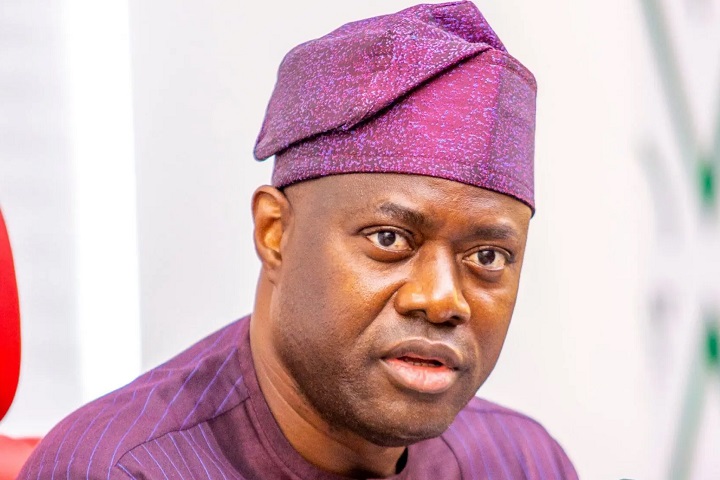
THIS DAWN — Oyo State Governor Seyi Makinde expressed regret over his decision to support President Bola Ahmed Tinubu during the 2023 presidential election.

However, there is no available recording of him issuing a public apology to Nigerians for supporting President Tinubu.
Makinde’s remarks, meanwhile, signaled a significant shift in political alignment ahead of the 2027 polls.
While Makinde stopped short of issuing a formal apology to Nigerians, his remarks during a media chat in Ibadan on December 23, 2025, have stirred widespread political debate and speculation.
Makinde, a leading figure in the Peoples Democratic Party (PDP), revealed that his support for Tinubu was based on the belief that the All Progressives Congress (APC) candidate would act in the national interest if elected.
However, he admitted that the outcome of that decision did not meet his expectations.
“I said it earlier, I’m human,” Makinde stated, acknowledging that his political judgment may have been flawed.
Fallout with Tinubu and Wike
The governor’s comments came amid revelations of a private meeting involving President Tinubu, Minister of the Federal Capital Territory Nyesom Wike, and other political leaders. According to Makinde, Wike pledged during the meeting to “hold” the PDP for Tinubu ahead of the 2027 elections—a declaration that Makinde said he firmly rejected.
“I was shocked when Wike volunteered to hold the PDP for Tinubu in 2027. He can support the president if he wants, but I will not,” Makinde said, emphasizing his commitment to the PDP and distancing himself from any cross-party alliances.
Makinde’s disapproval of Wike’s stance has deepened internal tensions within the PDP, with concerns that the party may face further fragmentation as the next election cycle approaches.
Political Repercussions and Speculation
Makinde’s decision to withdraw support from President Tinubu has prompted speculation about his future political ambitions. During the same media interaction, he hinted that he may even contest against Tinubu in 2027, though he did not make a definitive declaration.
Political analysts suggest that Makinde’s fallout with the president may have been influenced by internal disagreements, including the rejection of his ministerial nominee by the Tinubu administration. Lere Olayinka, a media aide to Wike, alleged that Makinde’s discontent stemmed from this snub, claiming that the governor would still be “clapping for the president” had his nominee been accepted.
No Formal Apology
Despite widespread interpretation of his remarks as an admission of error, Makinde did not issue a formal apology to Nigerians. His statements were framed more as a reflection on political misjudgment than a direct appeal for forgiveness.
Observers note that while regret was clearly expressed, the absence of a public apology underscores the complexity of political accountability in Nigeria. “Makinde’s comments are significant, but they stop short of a full mea culpa,” said one analyst. “It’s a recalibration, not a confession.”
Implications for PDP and 2027
Makinde’s repositioning could have major implications for the PDP’s strategy in 2027. As one of the party’s most prominent governors, his stance may influence other members to reassess their alliances and campaign strategies.
His rejection of Wike’s overtures to align the PDP with Tinubu’s re-election bid also signals a potential power struggle within the party, with competing visions for its future direction.
For President Tinubu, the loss of Makinde’s support may not be immediately damaging, but it reflects growing unease among former allies and could complicate efforts to build a broad coalition for 2027.
Conclusion
Governor Seyi Makinde’s expression of regret over supporting President Tinubu marks a pivotal moment in Nigeria’s evolving political landscape. While he has not apologized to Nigerians, his statements reflect a clear break from past alliances and a renewed commitment to his party’s independence. As the 2027 elections draw closer, Makinde’s next moves will be closely watched by allies, opponents, and the electorate alike.