

Former Minister of Education and public policy advocate Oby Ezekwesili has sharply criticized the Nigerian Senate’s newly approved provision on electronic transmission of election results.
Ezekwesili described it as “an insult on the collective intelligence of Nigerians.”
The former Finance Minister made the remarks in a post on X (formerly Twitter) on Tuesday.
Her remarks came shortly after Senate’s approval of the provision on electronic transmission of election results.
Ezekwesili Condemns Clause
Ezekwesili condemned the clause wherein the Senate decided to make electronic transmission conditional.
She warned that the clause could serve as a loophole for electoral malpractice in the 2027 general elections.
She wrote:
“That cock-eyed provision on Electoral Transmission that the Senate just passed is an insult on the collective intelligence of Nigerians.
In a functioning democracy, the elected can NEVER be greater than the collective will of those who elected them. Never.”
Ezekwesili further alleged that the Senate President and his collaborators were “brazenly giving Nigerians a heads-up that our votes will not count”.
She argued that the clause was designed to enable rigging.
Senate’s Position
Earlier, the Senate had announced that it approved the electronic transmission of results to the INEC Result Viewing Portal (IReV), but only after certification at polling units.
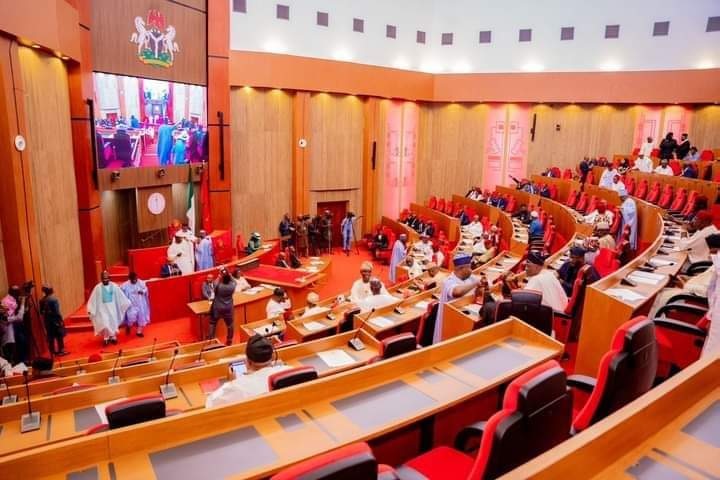
Key provisions include:
- Results must be signed by presiding officers, party agents, and security officials before upload.
- Form EC8A remains the primary source of election results.
- Lawmakers described the amendment as a milestone in Nigeria’s democratic evolution, reinforcing transparency and public confidence.
The Senate urged political parties, civil society organizations, and voters to support the measure, insisting it aligns with citizens’ yearnings for credible elections.
Public Debate
Ezekwesili’s criticism reflects growing public skepticism about the Senate’s approach.
Lawmakers argue that the amendment strengthens credibility.
However, critics contend that making electronic transmission conditional undermines transparency and leaves room for manipulation.
Observers have noted that there is a divergence between the Senate and the House of Representatives.
The lawmakers have pushed for mandatory and immediate transmission—setting the stage for a contentious harmonization process.
The Senate’s conditional approval of electronic transmission has sparked sharp reactions from civil society leaders like Oby Ezekwesili.
They warn that the clause could compromise electoral integrity in 2027.
As the National Assembly moves toward harmonization, Nigerians are watching closely to see whether lawmakers will enshrine mandatory real-time transmission or leave loopholes that critics fear could erode public trust.