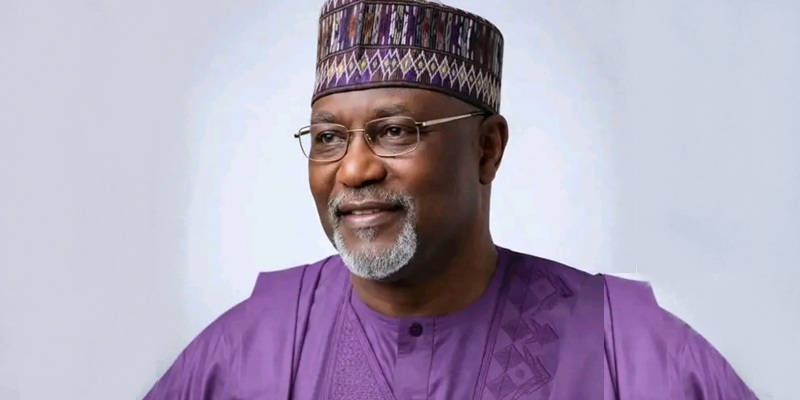
THIS DAWN — Nigeria’s political landscape is witnessing fresh realignments ahead of the 2027 general elections, with several prominent figures defecting to the African Democratic Congress (ADC), including former Director-General of the Department of State Services (DSS), Lawal Musa Daura.

Daura’s move to the ADC is seen as both a bid to support Peter Obi’s presidential ambition and to advance his own governorship aspirations.
Alongside Daura, key lawmakers from Adamawa, Kaduna, and Nasarawa have also joined the ADC.
The moves signal growing momentum for the party as it positions itself as a progressive alternative to the dominant political blocs.
Lawal Daura’s Defection
Lawal Daura, who served as DSS boss under President Muhammadu Buhari, has formally joined the ADC.
His entry into the party is being interpreted as a strategic alignment with Peter Obi, the former Labour Party presidential candidate.
Obi is widely expected to play a significant role in the 2027 elections.
Daura’s move also reflects his personal ambition to contest for governorship, leveraging the ADC platform to consolidate support.
Political observers note that his defection could reshape power dynamics in Katsina State, where the ADC has been seeking to expand its influence.
Jafaru Suleiman Ribadu Resigns from PDP
On January 8, 2026, Hon. Jafaru Suleiman Ribadu, a member of the House of Representatives and the Sarki Turawa of Adamawa, tendered his resignation from the Peoples Democratic Party (PDP).
His letter was addressed to the PDP Chairman of Bako Ward, Yola South Local Government Area.
Ribadu explained that his decision followed “careful reflection and wide consultations,” describing it as a personal realignment with his beliefs and future aspirations.
He expressed gratitude to the PDP leadership and members for their support during his time in the party.
Ribadu did not immediately disclose his next political move.
However, speculation is rife in Adamawa that he will join the ADC, given the party’s growing coalition and appeal among reform-minded politicians.
His departure from the PDP is expected to have ripple effects across the state’s political landscape.
Ibrahim A. Ismail Leaves APC for ADC
In Kaduna State, Hon. Ibrahim A. Ismail, representing Tudun Wada Constituency in the State House of Assembly, has resigned from the All Progressives Congress (APC) and joined the ADC coalition.
Ismail’s defection underscores the widening cracks within the APC, particularly in northern states where internal disputes and dissatisfaction with party leadership have fueled defections.
His move strengthens the ADC’s presence in Kaduna, a state that has historically been a battleground for Nigeria’s major parties.
Senator Muhammad Ogoshi Joins ADC
Adding to the wave of defections, Senator Muhammad Ogoshi, representing Nasarawa West, has resigned from the PDP and officially joined the ADC coalition.
His decision provides the ADC with a significant boost in Nasarawa State, where the party has been working to expand its legislative footprint.
Ogoshi’s defection is particularly notable given his influence in the Senate and his ability to mobilize grassroots support.
Analysts suggest that his move could encourage further defections from the PDP, especially among lawmakers dissatisfied with the party’s internal dynamics.
Implications for ADC and National Politics
The influx of high-profile figures into the ADC signals a growing appetite for alternatives to Nigeria’s dominant parties, the APC and PDP.
By attracting former security chiefs, senators, and state lawmakers, the ADC is positioning itself as a credible platform for reformist politics and progressive governance.
- Strengthening Peter Obi’s prospects: Daura’s support for Obi could help consolidate northern backing for the former Labour Party candidate, broadening his appeal across regions.
- Reshaping state politics: Defections in Adamawa, Kaduna, and Nasarawa enhance the ADC’s grassroots presence, potentially altering electoral calculations in these states.
- Erosion of APC and PDP dominance: The defections highlight dissatisfaction within the two major parties, raising questions about their ability to retain loyalty ahead of 2027.
The defection of Lawal Daura, Hon. Jafaru Suleiman Ribadu, Hon. Ibrahim A. Ismail, and Senator Muhammad Ogoshi to the ADC marks a significant moment in Nigeria’s evolving political landscape.
With the ADC gaining traction as a coalition of reform-minded politicians, the party is emerging as a formidable force ahead of the 2027 elections.
Whether these defections translate into electoral success remains to be seen.
Meanwhile, the moves underscore a broader trend: Nigeria’s political elite are increasingly seeking platforms that promise ideological renewal, inclusivity, and a break from the entrenched dominance of APC and PDP.